





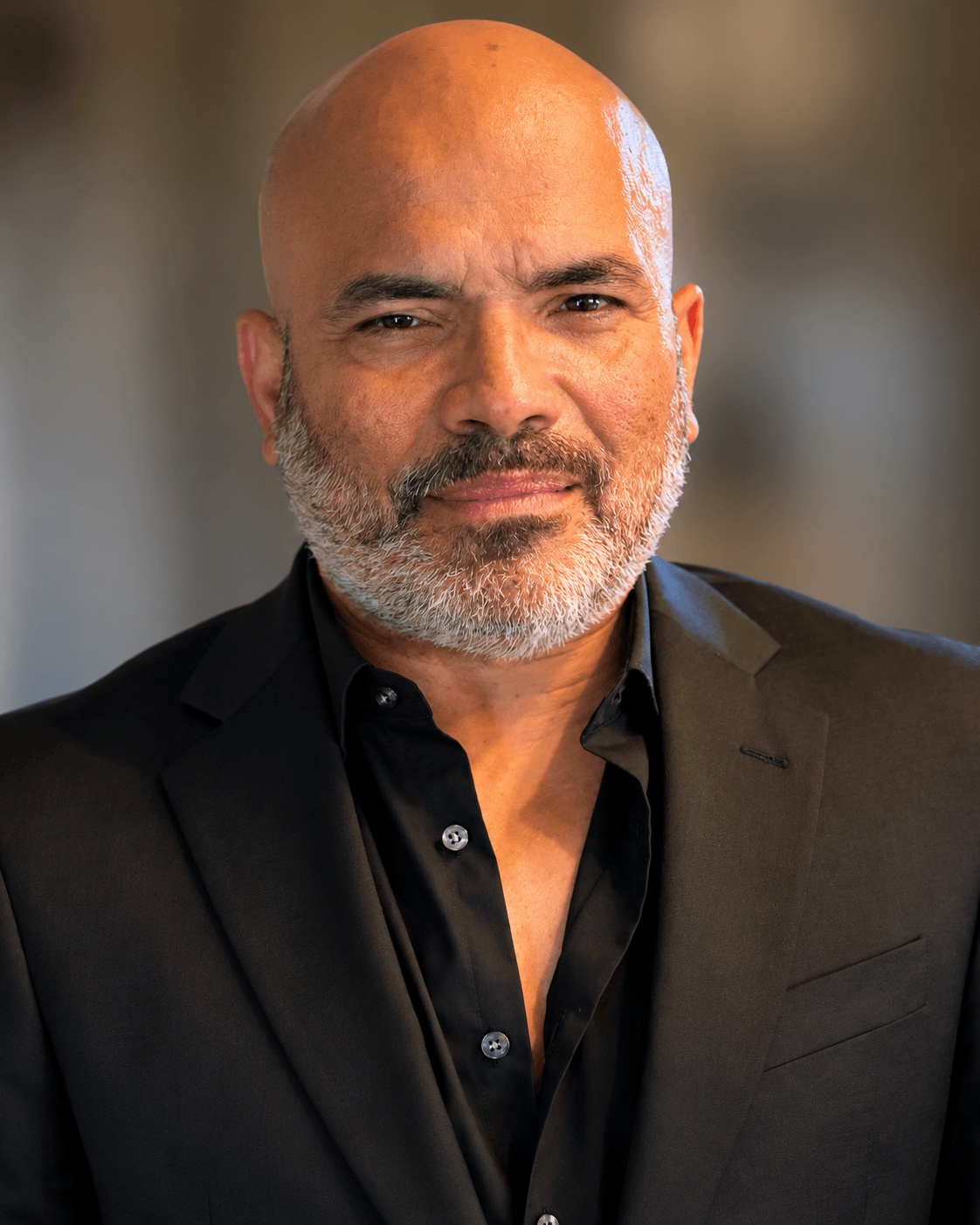
Today we’d like to introduce you to Santiago Vasquez.
Santiago, we appreciate you taking the time to share your story with us today. Where does your story begin?
I was born on July 24, 1964, in Cumaná, a coastal city in northeastern Venezuela. My mother was from Margarita Island, and my stepfather was an immigrant from Sicily, Italy. I grew up in a family of very modest means, and those early experiences helped shape who I am today.
In 1982, at the age of 18, I immigrated to the United States. I arrived speaking very little English, with limited financial resources and a lot of uncertainty about what the future might hold. Like so many immigrants, I came looking for an opportunity to build a better life.
I spent several years learning English while working and continuing my education. Eventually, I earned an associate degree in Liberal Arts from Brookdale Community College and later a bachelor’s degree in Business Administration from Baker University.
In 1992, I joined the Kansas City, Kansas Police Department. I spent more than 26 years in law enforcement, working in patrol, community policing, as a school resource officer, in undercover narcotics investigations, and as a police academy instructor. I retired in 2018.
But there’s another side of my life that has always been very important to me, and that’s the arts.
I’ve always enjoyed movies, literature, poetry, and painting. In 2004, I became involved in independent filmmaking here in Kansas City. Interestingly enough, my first two acting experiences were leading roles in short films that went on to screen at the Sundance Film Festival.
The first was First Date, directed by Gary Huggins, which screened at Sundance in 2006. The second was The Grass Grows Green, directed by Jesús Beltrán, which screened there in 2007. Both films also participated in South by Southwest (SXSW) and other film festivals.
Since then, I’ve continued working as an actor, writer, and producer. In 2023, I received Best Actor awards at the Kansas City FilmFest International and the Smodcastle Film Festival for my performance in Gary Huggins’ feature film Kick Me.
I’m currently involved in the preproduction of a feature film called The Lucidity Project, collaborating with Trai Cartwright, Toni Berrie, Meg Becker, Hassan Williams, Steve Holland, and Garrett Saunders.
Martial arts have also been an important part of my life for more than 50 years. I’m the founder of Chago Karate International in Kansas City, Kansas, where I continue teaching traditional karate and sharing the values of discipline, respect, and personal development.
I’ve had the opportunity to train in Japan, and I hold advanced black belt ranks in Karate and Shorin Kempo. Teaching martial arts has been particularly rewarding because it allows me to share something I’ve spent most of my life learning.
Today, I continue acting, writing screenplays and poetry, painting, making independent films, and teaching martial arts.
I’m proud of my Venezuelan heritage, and I’m equally proud to be an American citizen. I don’t see those identities as competing with one another. They’re both part of who I am.
When I think about the 18-year-old young man who arrived in this country in 1982, I certainly never imagined that life would take me in so many different directions. It’s been quite a journey, and I still have plenty of things I want to accomplish.
Alright, so let’s dig a little deeper into the story – has it been an easy path overall and if not, what were the challenges you’ve had to overcome?
No, not at all. But I don’t think my experience is particularly unusual. Many immigrants who come to this country face similar challenges, and some face circumstances much more difficult than mine.
When I arrived in the United States, I couldn’t communicate effectively in English. I had to adjust to a different language, culture, and way of life. Even simple things that most people take for granted could become frustrating.
I spent three years studying English as a Second Language, one year in high school and two years at community college, before I was prepared to take regular college courses.
I also married young and became a father at a young age. There were times when I was working full-time, attending college, and holding a second job to help support my family. It was exhausting, but I knew I had responsibilities and wanted to provide a better future for my children.
One of the turning points in my life happened while I was working at a restaurant in the old Indian Springs Mall in Kansas City, Kansas.
I became friends with several police officers who worked part-time providing security at the mall. One of them encouraged me to apply to the Kansas City, Kansas Police Department.
At first, I wasn’t interested. Growing up in Venezuela, I had developed a rather negative perception of law enforcement because of the reputation police officers had there.
But this officer explained that the department needed bilingual officers who could communicate with the growing Spanish-speaking population. He also pointed out that law enforcement could provide a stable career with good benefits and opportunities for advancement.
I had become an American citizen in 1988, and I began thinking that perhaps this was an opportunity to serve my community while providing a better life for my family.
I applied in 1990 and was hired in June 1992.
That decision changed my life in ways I could never have anticipated.
Police work exposed me to some very difficult realities. I witnessed violence, poverty, suffering, and situations I hadn’t imagined encountering in a country as prosperous as the United States.
I also met some extraordinary people, including individuals who had very little but were incredibly generous, compassionate, and willing to help others.
Those experiences changed the way I understood people and the world around me.
I learned that most people are simply trying to live their lives, raise their families, and make the best of their circumstances. I also learned how quickly someone’s life can change because of circumstances beyond their control.
There were difficult moments throughout my career, including the loss of fellow officers and colleagues. Those experiences stay with you, and they inevitably affect how you see life.
Looking back, I think the challenges I faced as an immigrant, a student, a young father, and a police officer taught me resilience, patience, and the importance of understanding people before judging them.
I certainly made mistakes along the way, and there were things I had to learn the hard way. But that’s part of life, isn’t it? We learn from our experiences, make adjustments, and hopefully become a little wiser as we go along.
As you know, we’re big fans of you and your work. For our readers who might not be as familiar what can you tell them about what you do?
Well, I enjoy several forms of artistic expression. I write poetry, paint, write screenplays, and have helped produce independent films here in Kansas City. But I’m probably best known for my work as an actor.
I’ve been involved in independent filmmaking since 2004, and I’ve always tried to give 100 percent to every project I’ve participated in.
I know how difficult it is to make a movie, especially an independent film with a limited budget. Sometimes you’re asking friends for favors, borrowing equipment, finding people willing to volunteer their time, and trying to make something worthwhile with very few resources.
That’s why I have so much respect for independent filmmakers. It takes an enormous amount of work and commitment to get a film made, let alone make a good one.
I’ve been fortunate to participate in some wonderful projects.
As I mentioned earlier, my first two short films screened at Sundance and SXSW. Following their success, I was encouraged to get an agent and consider moving to Los Angeles to pursue a professional acting career.
I certainly thought about it. I loved acting, and the possibility of making a living doing something I enjoyed was appealing. But I was also a husband and father with children to raise, and I had an established career as a police officer.
Moving to Los Angeles would have meant giving up the financial stability I had worked so hard to achieve, with no guarantee of success.
Acting is a wonderful profession, but it’s also extremely competitive and unpredictable. There are many talented actors who struggle to make a living, and relatively few achieve the kind of success that allows them to support themselves and their families entirely through acting.
I wasn’t willing to put my family’s financial security at risk.
So I decided to remain in Kansas City, continue my career in law enforcement, and pursue acting whenever opportunities came along.
Do I sometimes wonder what might have happened if I had moved to Los Angeles? Of course. I think that’s only natural.
But I don’t regret my decision. I was able to provide for my family, enjoy a rewarding career in law enforcement, and continue working with some wonderful filmmakers.
Later, I worked again with Gary Huggins on his feature film Kick Me, which received several awards and screened internationally, including in Brazil and Japan.
I was fortunate to receive two Best Actor awards in 2023 for my performance in that film, and I’m proud of that work. But filmmaking is a collaborative process. An actor’s performance is influenced by the director, the writing, the cinematography, and the contributions of everyone working on the production.
There’s another film that means a great deal to me, a small independent feature called Out of the Plains, which I co-wrote and produced with my dear friend Eric Atwood.
Unfortunately, Eric passed away before he had the opportunity to see the film projected on the big screen. That’s something that still saddens me because I know how much the project meant to him.
Eric was inspired by the classic American Westerns of John Ford and the Japanese samurai films of Akira Kurosawa. We wanted to combine some of those influences while making a film that had its own identity.
We also wanted to do something different within Kansas City’s independent film community.
We decided to make approximately 99 percent of the film in Spanish and give members of our local Spanish-speaking immigrant community an opportunity to participate.
We knew there were talented people in our community who loved movies but had never been given an opportunity to act in one.
What happened next was remarkable.
More than 700 Spanish-speaking immigrants, most without any professional acting experience, participated in our casting call.
We selected a group of incredibly talented people, and watching them develop their characters and become part of the filmmaking process was one of the most rewarding experiences I’ve had.
For many of them, it was their first time working on a film. They brought their own personalities, experiences, and cultural backgrounds to the production, and that gave the film something very special.
Out of the Plains went on to receive recognition at several festivals, including a special selection at the Kanazawa Film Festival in Japan and the Rick Cowan Award for Best Cinematic Heartland Film Locations.
In 2024, the film was nominated for Best Feature Film at the First City Film Festival, and I received a nomination for Best Local Actor in a Drama.
Our cast and crew also received the Andy Entwistle Spirit Award in memory of Eric Atwood.
That recognition was especially meaningful to me because it honored a dear friend and the work we had accomplished together.
I think Out of the Plains represents something I truly believe about filmmaking. You don’t necessarily need famous actors or an enormous budget to tell a worthwhile story. You need a good idea, people who believe in it, and the determination to see it through.
Outside of filmmaking, I enjoy writing poetry and painting. I’m a self-taught painter, and I find painting to be a wonderful way of expressing ideas and emotions. Poetry gives me another way to reflect on my experiences, memories, and the people I’ve encountered throughout my life.
As far as what sets me apart, I suppose it’s the combination of experiences I bring to my work.
I’ve been an immigrant struggling to learn English, a restaurant worker, a college student, a police officer, an undercover investigator, a martial artist, and an actor.
Those experiences have introduced me to people from many different backgrounds and given me a great deal to draw from when developing a character or writing a story.
But I also recognize that every artist brings something unique to their work. That’s one of the things I enjoy about collaborating with other creative people.
What makes me proudest is having been part of films that people enjoyed, working with talented filmmakers, and helping create opportunities for others.
The awards and festival selections are wonderful, and I’m grateful for them. But when I think about Out of the Plains and those hundreds of people who came to audition, I’m reminded that there’s an enormous amount of talent in our communities that sometimes goes unnoticed.
I’m glad Eric and I were able to give some of those people an opportunity to discover what they could do.
And I hope to continue doing that through future projects.
Are there any important lessons you’ve learned that you can share with us?
I think the most important lesson I’ve learned is that we’re all works in progress.
I’ve often thought of myself as a human project, someone with the capacity to continue growing, learning, and improving, but also someone capable of making mistakes and moving in the wrong direction.
I don’t think we ever reach a point in life where we have everything figured out.
One thing my experiences have taught me is that every person we encounter has something to teach us.
Sometimes we learn from people we admire. Other times, we learn from people whose behavior or decisions we disagree with. Even difficult or unpleasant experiences can teach us valuable lessons.
I’ve met people from many different cultural, educational, and socioeconomic backgrounds, and I’ve learned not to confuse formal education, wealth, or professional status with wisdom or character.
Some of the wisest and most generous people I’ve known had very little formal education or money.
I’ve also learned how important it is to remain curious and willing to listen.
Whether I’m working on a film, teaching martial arts, writing, or simply having a conversation with someone, I try to remember that there’s always something I don’t know.
And I think that’s a good thing.
I’m 62 years old, and I still have an enormous amount to learn. I still want to make films, write stories, paint, teach, and discover new things.
If there’s one thing I’d like people to take away from my story, it’s that our circumstances don’t necessarily have to define our possibilities.
We may not all have the same opportunities, and life certainly isn’t equally easy for everyone. But I believe we should continue learning, remain open to new experiences, and make the most of the opportunities we do have.
At the end of the day, I think what matters isn’t just what we’ve accomplished, but also how we’ve treated people and whether we’ve contributed something positive along the way.
That’s something I continue to work on.
I’m still learning, and I hope I never stop.
Contact Info:
- Instagram: Santiago.h.vasquez
- Facebook: Santiago Hernan Vasquez