



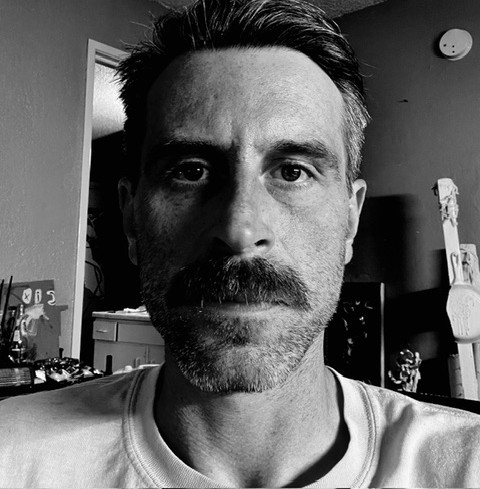
Today we’d like to introduce you to Derrick Schmidt.
Hi Derrick, so excited to have you with us today. What can you tell us about your story?
I didn’t get my start in a traditional way. I am a self-taught artist and everything I’ve learned has come from mentors, experimentation, and years of discipline.
Growing up in a “less than perfect” home, our main concerns were survival. Our family has experienced a lot of death and times of financial hardship. I didn’t really know what art was until I was around eighteen. However, once I started painting, I quickly built up an obsession over the practice.
I was a skateboarder for over a decade before finding painting. I was raised in a lower-class, blue-collar environment. Being a skater coming from a blue-collar background, it allowed me to see material usage differently, finding beauty in less than obvious ways. Over the years my studio practice has become more experimental with the subject and the materials.
I don’t look at painting as creating a “new world” but rather adding to it. We’re all pulling from external or our internal sources, but all those experiences come from this world. Pulling from themes such as labor and storied history of both European and American painting.
About a year and a half ago I started getting bored of the flat two-dimensional canvas surfaces to work on and wanted a new way to make or see painting. Given my background, I’ve been drawn to works that take a little more labor and patience. I’ve always been a self-aware person and, when times have been difficult or even in good times, I’ve caught myself reflecting in mirrors.
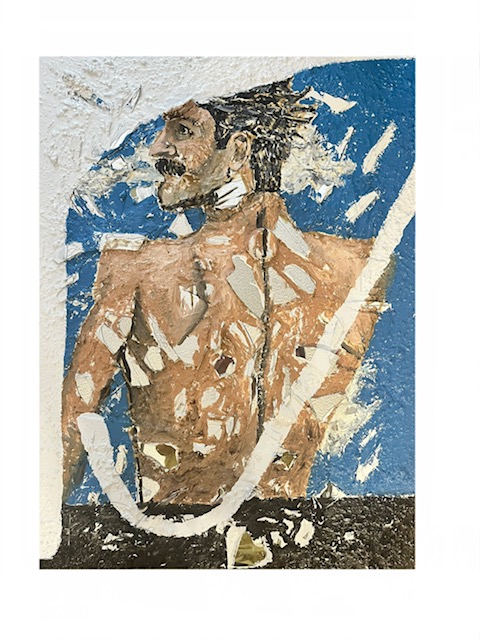
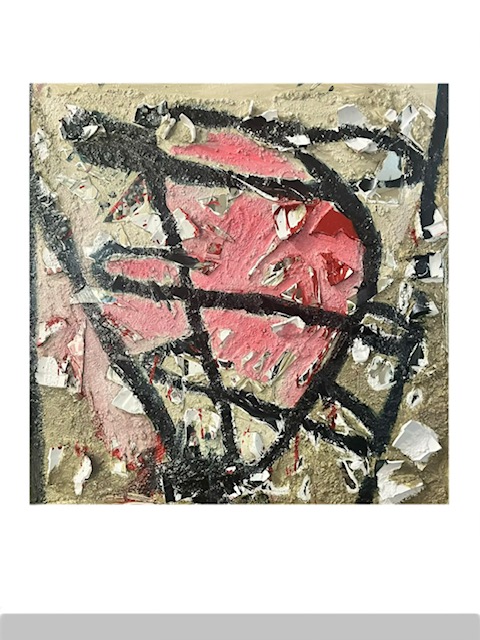
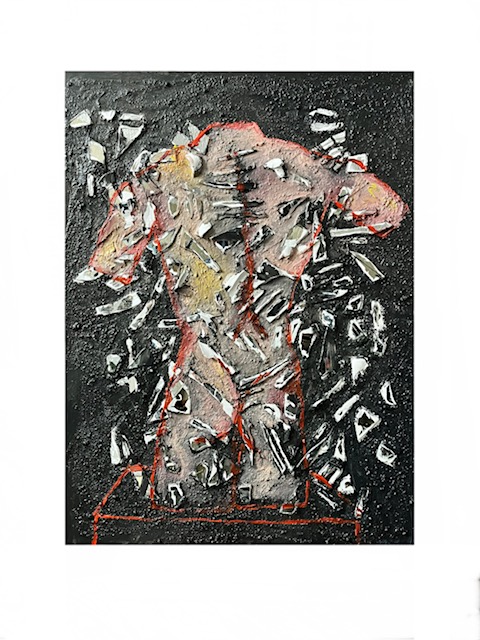
So I decided then that I was going to start breaking mirrors and embed the shards into the surfaces, using either a mixture of sand and enamel paint as the binders to hold the shards in place or a latex silicone caulk. Creating an active and visceral surface to then paint on.
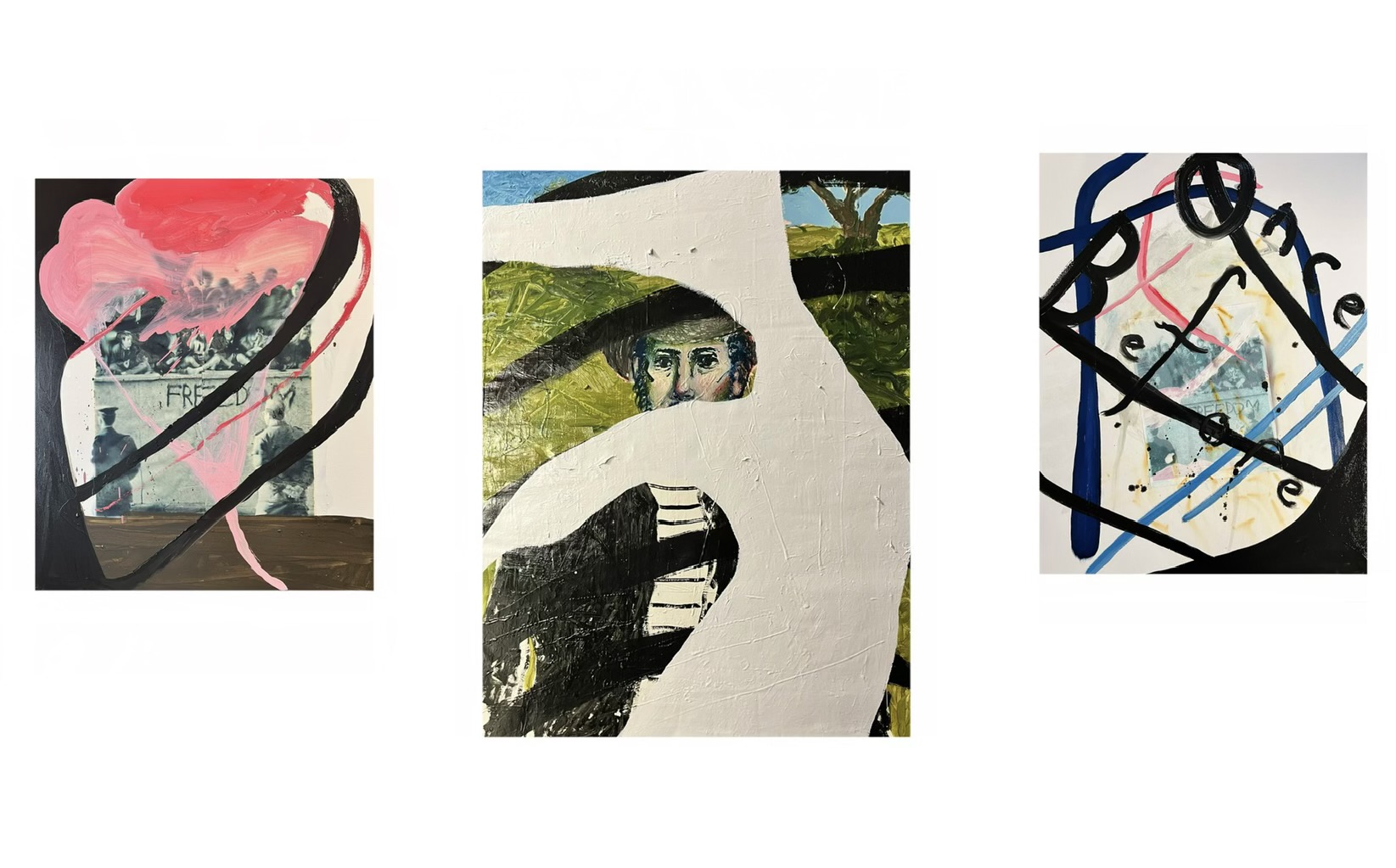
I don’t like to didactically break down the work for viewers. What’s painted on the surfaces, whether it’s a figurative representation or an abstraction, is about the act of seeing and allowing you to see your own place in the world. How have your decisions, actions, or vulnerabilities shaped your life? What barriers have you placed in front of yourself?
I look at art with questions rather than finding answers.
Alright, so let’s dig a little deeper into the story – has it been an easy path overall and if not, what were the challenges you’ve had to overcome?
The road has not been smooth. Far from it. Anything from mental struggles to financial difficulties to life’s own uncertainties. It’s a difficult road to navigate.
Most of the world lives on two plus two equals four, but in the art world it equals zebra. You have to be a little bit delusional about making art and trying to find your place in the so-called art world. But that delusion is difficult when you’re not showing the work or selling it and are just sitting on stacks of work.
With that, your mind—or at least my mind—starts to play tricks, saying, “The work isn’t any good” or “Why bother, they don’t care.” But nothing certainly does happen if you just stop or live in that frame of thinking.
I’ve always had a full-time job and, at times, two and three jobs to support myself and my studio practice. Working three jobs can pose its own difficulties when wanting or needing to create, anything from pure exhaustion to physically not having the time for it.
My studio space isn’t ideal. I’ve turned my one-bedroom apartment into an art studio. There are paintings leaning against the walls everywhere, paintings laying flat drying, and plastic drop cloths spread throughout to catch paint splatter. Shoes are a must when being in the space.
Even with the challenges an in-home studio brings, there is a certain level of intimacy I feel like I get with my work that most other artists probably don’t. I live with these painted events. I see them every day and eat around them. They are the first things I see when I wake up and the last things I see before I go to bed.
Luckily now I’m down to one job. But ultimately the goal is to be a full-time artist without the need for a traditional job, showing in galleries across the globe and building a name for myself. I figure, shoot for the moon and, with a lot of work and discipline, at least fall somewhere among the stars.
Thanks – so what else should our readers know about your work and what you’re currently focused on?
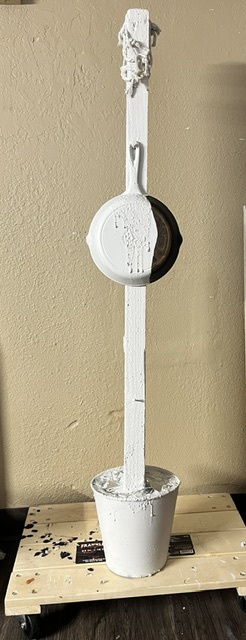
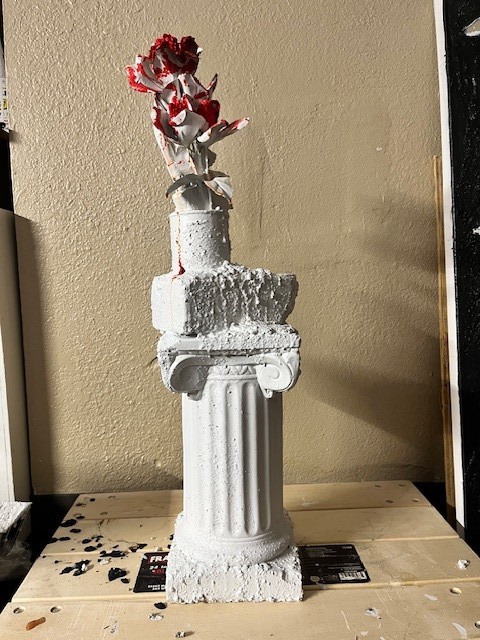
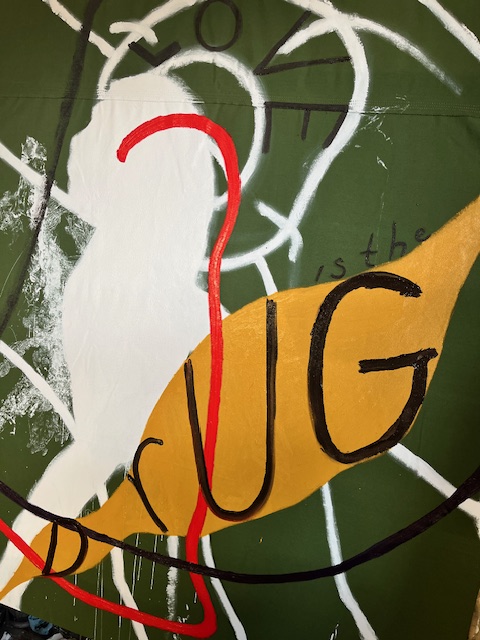
I am a painter, and sometimes I make sculptures. I like to experiment with materials and see how far they can be pushed.
I make sculptural paintings with embedded mirror shards and other breakable materials set into a sand and enamel paint mixture. That is what you could say I am most known for. I find meaning in the materials, whether they appear in the broken mirror paintings, sculptures, or inkjet prints.
For me, the art is about freedom—freeing ourselves from our own barriers. Looking at our own life through a mirror shard, a printed image from a past event, or even a cast iron skillet in a sculpture.
Rather than symbolizing a fractured self, the mirror shards create the opportunity for the viewer to confront themselves and become part of the work.
Sometimes the viewer must fight to see or “find” themselves. Sometimes we get to a point in life where that’s exactly what we must do to move forward.
All my life I’ve found myself staring into myself through mirrors. Most often it’s been out of personal reflection and “finding myself.”
I want people to bring their own emotions, their history, and interpretations to the work. All the materials used are the tools to bring forth that experience.
What sets me apart from others is that I turn the focus back onto the viewer, stepping away from delivering a clear, fixed message.
Where we are in life is often partly because of others. Who/what else deserves credit for how your story turned out?
Sean Kelley, who I’ve known for the past six or seven years, has been one of the most important. Our coffee chats have provided some of the most rewarding information and feedback I’ve received. He never sugarcoats anything and says or asks what is needed. In his own way, he truly is an artist.
A fellow artist and friend of mine, Eric Stefanski, an artist based in Chicago, has also given me great advice and feedback over the past couple of years. Our connection started simply through my admiration of his work on Instagram, and over time we began talking here and there. Those conversations eventually developed into a meaningful source of encouragement and insight.
Jackson Daughety, another friend of mine and fellow artist in Kansas City, has been another important voice. His work leans more toward technology-based painting, so it’s been refreshing to have a different set of eyes and a different way of thinking about art to learn from and feed off of.
Contact Info: