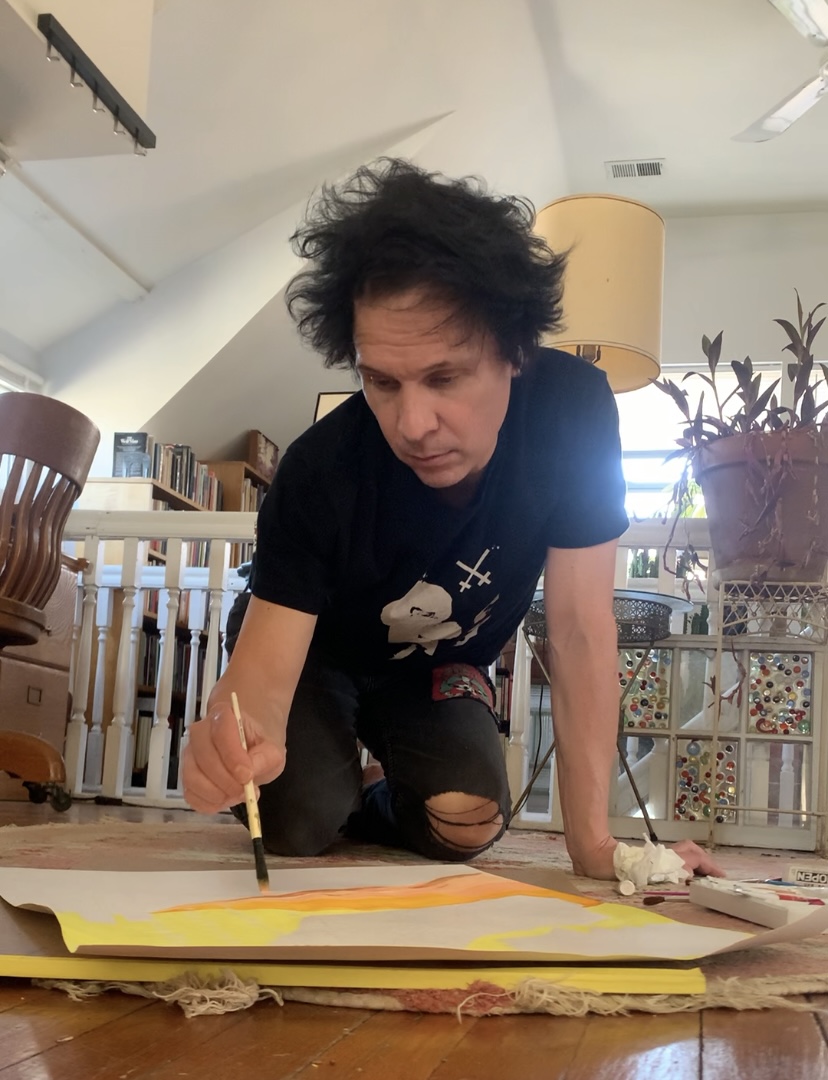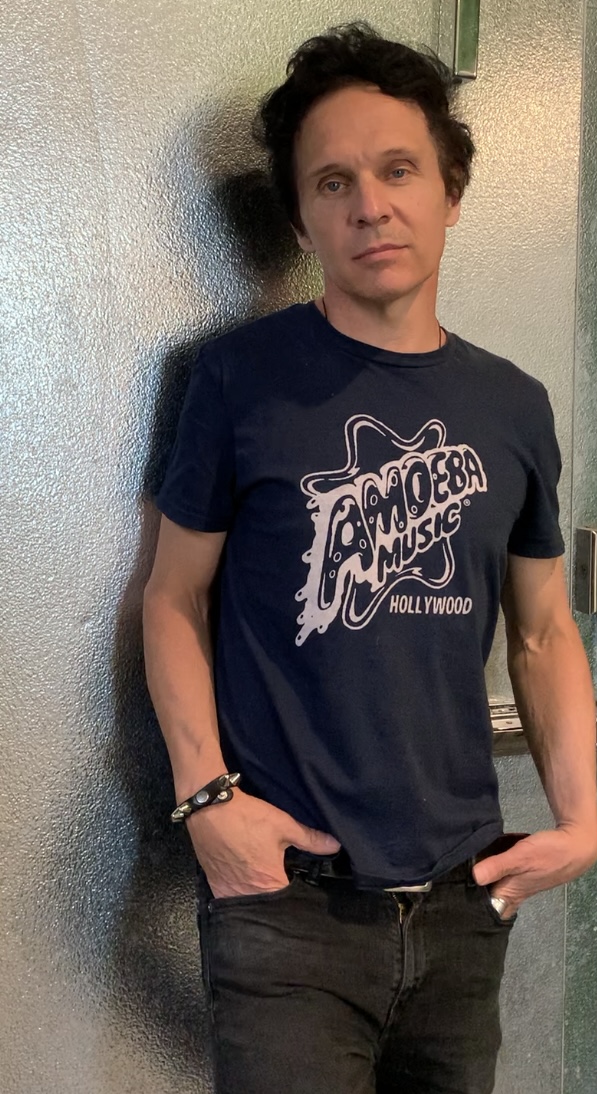






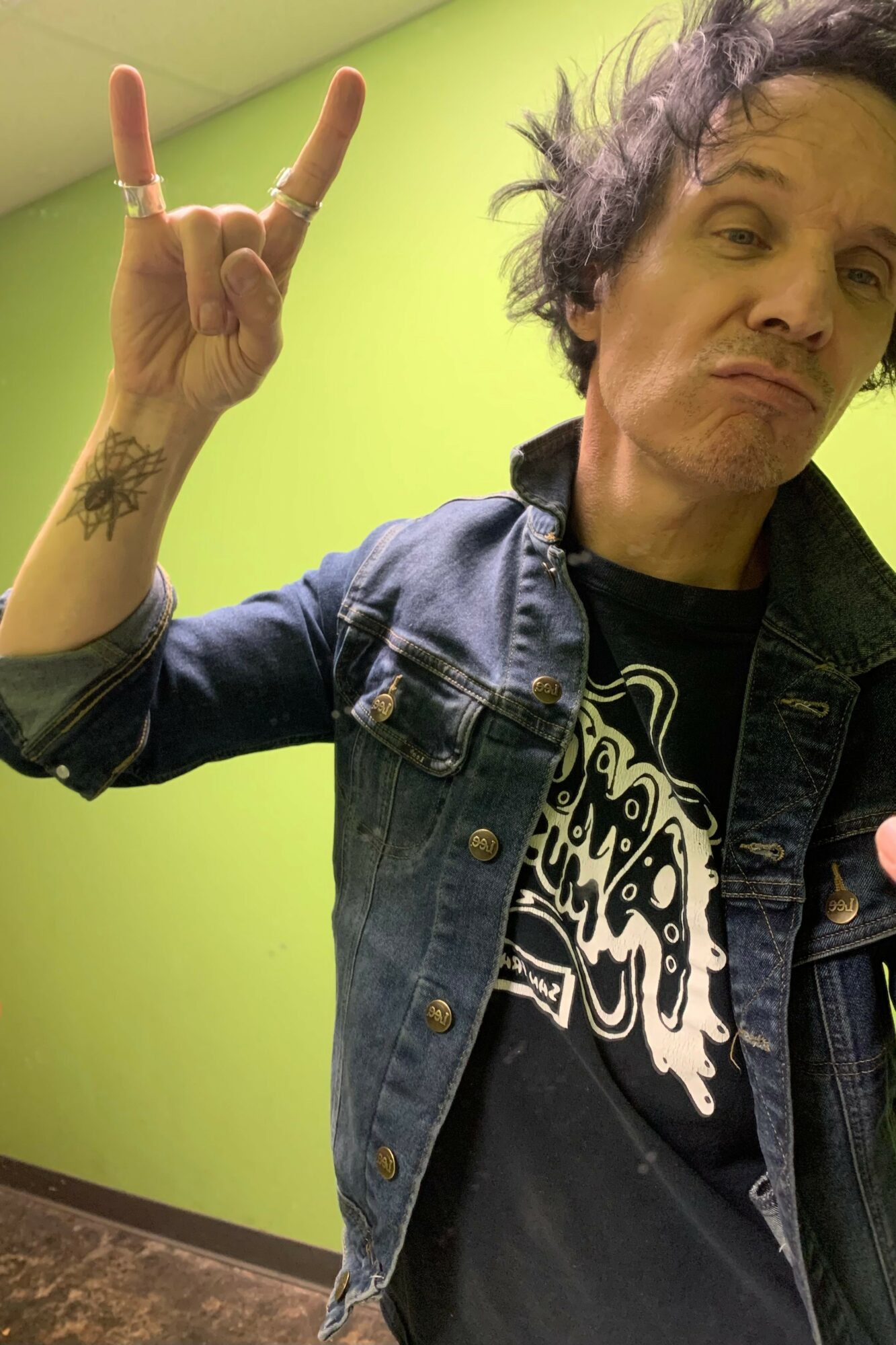
Today we’d like to introduce you to Adrian Switzer.
Hi Adrian, so excited to have you with us today. What can you tell us about your story?
I was raised in a Rock n’ Roll house. My mom loved Bob Dylan, especially the “plugged in” albums of the late-1960s and early-1970s. My stepfather had a vast vinyl collection and was a guitarist in various local Philly bands. Family lore was that I held myself up and danced to the Rolling Stones before I could walk. Years later, I somehow convinced the Principal of my high school to let me broadcast music over the intercom before morning announcements. Kids coming in off the busses were greeted by T. Rex and David Bowie – turned way up. At Lehigh University, I joined WLVR and spent four years digging through the station’s records and CDs: Playing the coolest, weirdest things I could find on my weekly show. Used my station credentials one night I saw Nirvana on what would be their last tour. Definitely, a life-changing experience. I DJed at Northwestern University (WNUR) throughout my grad school years. Because the station self-described as Chicago’s “noise experiment,” it opened my ears to far-out music that didn’t sound much like music at all – or not like the music I’d been listening to. Met so many avant-garde, groundbreaking artists in my years at WNUR it inspired me to be more experimental in my own creative writing and visual art. Finally, when the position of Curator/Digital Librarian opened up at KKFI, I knew I had to go for it. It has been a privilege to share a lifetime of music immersion with our programming staff and the Kansas City listening audience. Indeed, one of my favorite moments is when I’m playing a song in a public setting and people stop what they’re doing to listen and maybe even start dancing. What power music has! All it takes is a few chords and a melody to change everything.
I’m sure it wasn’t obstacle-free, but would you say the journey has been fairly smooth so far?
The artist life is hard. You have to trust yourself completely. Is my ear well tuned? Is my eye for color sharp enough? Is this sequence of movements captivating? And trust yourself daily and weekly and yearly for a lifetime. No artist I know ever talks about a day when they finally “knew” they’d made it or done the work they wanted to do. It is all struggle. Yet, for some of us – whatever our medium or form of expression – we cannot not do it. A life without art-making is not possible for some, hard as it is to keep going through all the questioning and wondering. Which is to say nothing about the external blocks against being a creator. Galleries, record labels, performance groups, etc. all face financial pressure. Marketable art gets patrons in the door, never mind if it is the “best” or most interesting piece that could be shown. Taste changes quickly. What was popular a year ago can be passé a year later. Do you change to keep up with what’s trendy? Or do you trust your own vision and know that popular opinion will come back around in time? In music, specifically, corporate ownership of all the major record labels and partnerships with the main arenas and large-capacity clubs in the country means certain bands with the “right” sound will be marketed while the vast majority of bands and artists go unplayed. Independent radio stations like KKFI are a necessary check against these trends. We provide a non-commercial setting for different acts to share their work and we champion artists who might never, otherwise, get airtime.
As you know, we’re big fans of you and your work. For our readers who might not be as familiar what can you tell them about what you do?
Curatorial work is unique in the arts. The goal is to center and draw focus on other artists, and to do so in a broad, inclusive manner. The more you disappear behind the work of others, the more successful you are as a curator. Yet, it is your taste and your training that informs your decision of which artists and acts to feature. A stagehand at a local theatre said it well once: She is doing her job best when no one in the audience is aware the actors on stage are being spotlighted. But the actors are well lit because they are on their mark, which the stage director mapped out long before the play begins. Over my years (and years) of music listening and study, my understanding of trends and genre-defining and defying acts have shaped my ear to new music and up-and-coming bands. Rock n’ roll in the 20th Century is not a linear history, but it has its continuities and points-of-connection and influence. Listening to today’s music through the filter of that history, while also being open to the new directions musicians can take, is my job – and my art. Unique to my curatorial work is that I come to it from jazz. Growing up in Philadelphia jazz and the history of jazz was all around me. The Sun Ra house was just a few blocks from my family’s apartment. Jazz and rock n’ roll are related in ways often overlooked. In curating both the jazz and rock collections at KKFI, I try to bring out resonances and connections between what Coltrane was doing in the 1960s, for example, and what experimental rock groups like the Velvet Underground were doing at the same time.
Where do you see things going in the next 5-10 years?
Non-commercial, public radio faces real challenges in the coming years. Funding for public arts has been severely cut. Public arts groups are scrutinized for their political position – and threatened legally if they diverge from certain, stipulated views. Changes in FCC licensing practices means stations could be silenced for things that have little if anything to do with their daily work of broadcasting news and music to listeners. Private funding to independent, public radio is also under stress as more arts groups appeal to donors for more help. Money and the arts has always been a precarious pairing. Funding may come and go – mostly go, these days – and still art will go on. Rock n’ roll will never die. How music is shared publicly will change over the next 5-10 years as broadcast platforms change. Internet radio has been a phenomenon for decades. As traditional stations go out of business or are bought up, internet broadcasting will play a bigger role in getting music out to the people. The radio industry will do well to change with the times and embrace new technologies and modes of broadcast.
Contact Info:
- Website: https://kkfi.org/
- Instagram: https://www.instagram.com/kkfi901fm/?hl=en
- Facebook: https://www.facebook.com/KKFI901FM
- Twitter: https://x.com/kkfi901fm