






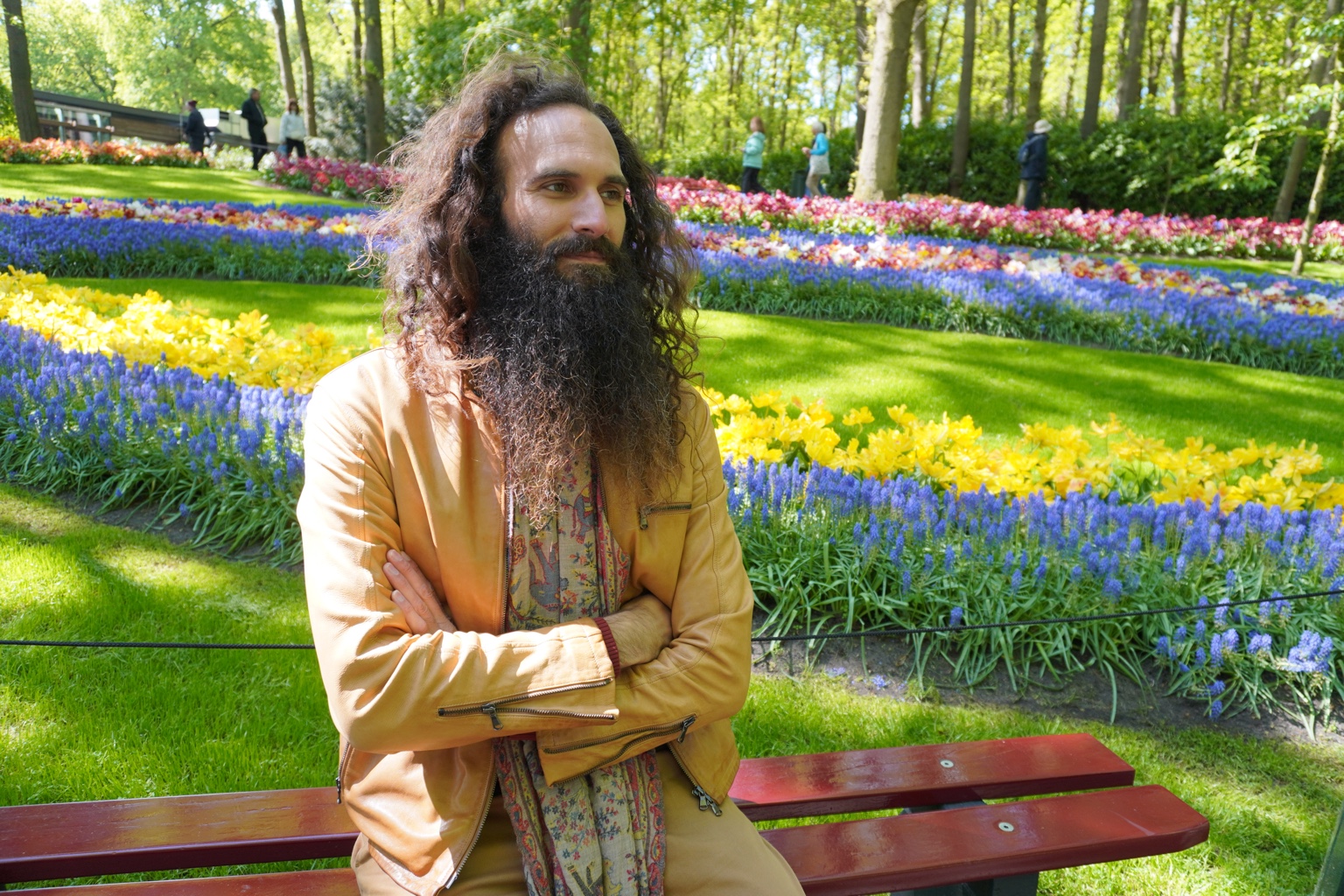
Today we’d like to introduce you to Yoni.
Hi Yoni, we’d love for you to start by introducing yourself.
My path into this work was not linear, but it was consistent in one respect: I kept being drawn toward people whose suffering did not fit neatly inside a standard model. Before founding Earth’s Edge Wellness, I worked across outpatient clinics, schools, community settings, and residential eating-disorder treatment. I met people with trauma, eating disorders, anxiety, OCD, and other complex or treatment-resistant presentations who were intelligent, insightful, and deeply committed to change. Many understood their patterns extremely well, yet their lives were still governed by them.
That gap—between insight and the actual capacity for change—became a central question for me. I saw that care was often fragmented: a therapist focused on psychology, a dietitian on food, a physician on biology, and a family member on the relationship system, often without one shared map. I had also spent years studying somatic, meditative, breath-based, and sound practices, integrating them carefully with my clinical training and research into nervous-system science.
I founded Earth’s Edge Wellness in 2020 to build the kind of environment I believed complex cases required: coordinated, precise, high-touch, and willing to look beyond symptom management. Rather than asking only how to reduce a symptom, we ask what function it serves and what underlying system makes it necessary.
Today, I serve as the founder and clinical architect of Earth’s Edge Wellness. I work with a select caseload, supervise clinicians, and continue developing our systems-based clinical model. Our work can integrate psychotherapy, nutrition, nervous-system regulation and streghtening, somatic and breath-based interventions, family systems, nutrigenomics, GI mapping, and applied practice in real situations. The guiding idea is simple: insight alone does not create capacity for change. When the system is supported in the right sequence, patterns that once felt permanent can begin to lose their function.
Can you talk to us a bit about the challenges and lessons you’ve learned along the way. Looking back would you say it’s been easy or smooth in retrospect?
It has not been a smooth road. One of the central challenges has been building work that sits between established categories. Most mental-health systems are organized around a diagnosis, a weekly session, and one provider. Earth’s Edge Wellness was built for cases in which biology, nervous-system capacity, psychology, relationships, and identity are interacting at the same time. Creating a team that can work from one coherent map across those domains requires unusually strong communication, documentation, and clinical discipline.
Another challenge has been explaining the model without reducing it to a slogan. People familiar with conventional therapy can assume that somatic, spiritual, or breath-based practices mean less clinical rigor. People drawn to holistic work can make the opposite mistake and underestimate the importance of structure, evidence, and professional boundaries. My work has been to hold both: depth and precision, consciousness and clinical responsibility.
There is also a real business challenge in translating intensive clinical work into a sustainable practice. High-frequency, multidisciplinary care requires careful pricing, strong systems, and restraint about how many clients we accept. Coherence or quality are areas that we cannot bargain with.
The most important lesson has been that complexity does not require chaos; it requires a clear architecture. I have learned to coordinate deliberately, assess before intervening, and stay willing to revise the model when the outcomes tell us to. The goal is not to defend a method. It is to understand what is actually preventing change and respond as precisely as possible.
As you know, we’re big fans of Earth’s Edge Wellness. For our readers who might not be as familiar what can you tell them about the brand?
Earth’s Edge Wellness is a clinical ecosystem serving clients virtually across Las Vegas, Nevada; New York; and Laguna Beach, California for people whose needs have outgrown standard therapy and psychiatry. We specialize in complex and treatment-resistant anxiety, trauma and PTSD, eating disorders, OCD and rumination, nervous-system dysregulation, attachment and family-system dynamics, and cases in which psychological and physiological symptoms overlap.
What sets us apart is not one technique, but the architecture of care. Conventional treatment often moves from symptom to diagnosis to modality to coping. We begin with system mapping: what is happening biologically, in the nervous system, psychologically, relationally, and within identity. We then assess where capacity is insufficient and sequence the intervention accordingly.
The framework I have been developing is not another modality. It is an architecture within which modalities are used. The premise is that many symptoms remain necessary because the person’s underlying system does not yet have the capacity to respond differently. When capacity increases and the relevant systems reorganize, the symptom can begin to lose its function or fuel rather than simply being suppressed.
Depending on the case, a client may work with a coordinated team that includes psychotherapy, nutrition, somatic and movement work, breath-based nervous-system interventions, family-systems work, and biological tools such as nutrigenomics or GI mapping. Multiple touchpoints and applied practice help close the gaps where progress often unravels between weekly sessions.
I am most proud that we have built a model that treats people as coherent systems rather than collections of symptoms. We can be direct and structured without being pathologizing, and we can acknowledge physiology and consciousness without abandoning clinical rigor. The central message I want readers to understand is this: insight matters, but insight alone does not create capacity for change. We do not fight symptoms; we treat systems.
In terms of your work and the industry, what are some of the changes you are expecting to see over the next five to ten years?
Over the next five to ten years, I believe mental health care will become less centered on the weekly conversation as the default unit of treatment and more centered on coordinated systems of care.
People already have access to enormous amounts of psychological information through books, podcasts, apps, and AI. Information, reflection, and basic psychoeducation will become increasingly inexpensive and available. What will remain difficult—and valuable—is accurate assessment, clinical judgment, live relational presence, embodied training, and knowing which intervention to use, in what sequence, for a particular person.
AI will likely absorb much of the administrative work, pattern organization, education, and lower-acuity support. Used responsibly, that can give clinicians more time for complex reasoning and direct human care. The risk is confusing access to insight with the capacity to change. A person may understand a pattern perfectly and still be unable to respond differently when their nervous system, biology, relationships, or identity structure overrides that knowledge.
I also expect a deeper convergence between psychology and physiology. Sleep, nutrition, the gut-brain axis, endocrine function, genetics, movement, and autonomic regulation will be considered alongside thoughts and emotions. That shift has enormous potential, but it also needs rigor; personalized care should not become endless testing, supplement churn, or wellness language without accountability.
Finally, I think complex cases will increasingly be treated by coherent teams rather than disconnected providers. Clients will expect clearer outcomes, better coordination, more transparency, and support that extends into real life. The strongest practices will be those that can integrate technology, biology, nervous-system work, psychotherapy, and human relationship without pretending that any one of them is the complete answer.
Contact Info:
- Website: https://earthsedgewellness.com
- Instagram: https://www.instagram.com/earthsedgewellness/
- LinkedIn: https://www.linkedin.com/company/earth-s-edge-wellness/about/
- Youtube: https://www.youtube.com/channel/UCLj6R9DfDyUU64VvyKH5JQA