





Today we’d like to introduce you to Tricia Keightley.
Tricia, we appreciate you taking the time to share your story with us today. Where does your story begin?
I started my career in web development and technology, earning my degree in Web Development in 2011 and immediately building Web Worx. I had two little girls at home and I wanted to be able to walk them to school and have the freedom of an entrepreneur. What began as creating websites grew into helping businesses think differently about technology, automation, marketing, and the way they connect with the people they serve. I’ve always been fascinated by the question, “How can we make this work better?” and that curiosity has taken me far beyond traditional web development.
At the same time, I was going through my own personal evolution. I became deeply interested in personal development, subconscious programming, neuroscience, spirituality, and understanding why we can consciously want one thing while continuing to repeat patterns that create something completely different. That curiosity led me to become certified in NLP, neuropsychology, and inner child healing. I began teaching courses and sharing what I was learning with others, and that path has continued to evolve. I’ve also continued writing, most recently publishing my second book, *Where the Sunflowers Bloom*. Today, I’m pursuing my doctorate in Theocentric Psychology as I move more intentionally into the role of a spiritual teacher, bringing together psychology, neuroscience, spirituality, and the deeper work of understanding who we are beneath our conditioning.
Those two worlds, technology and human transformation, seemed completely separate for a long time. Eventually, I realized they were actually meant to come together.
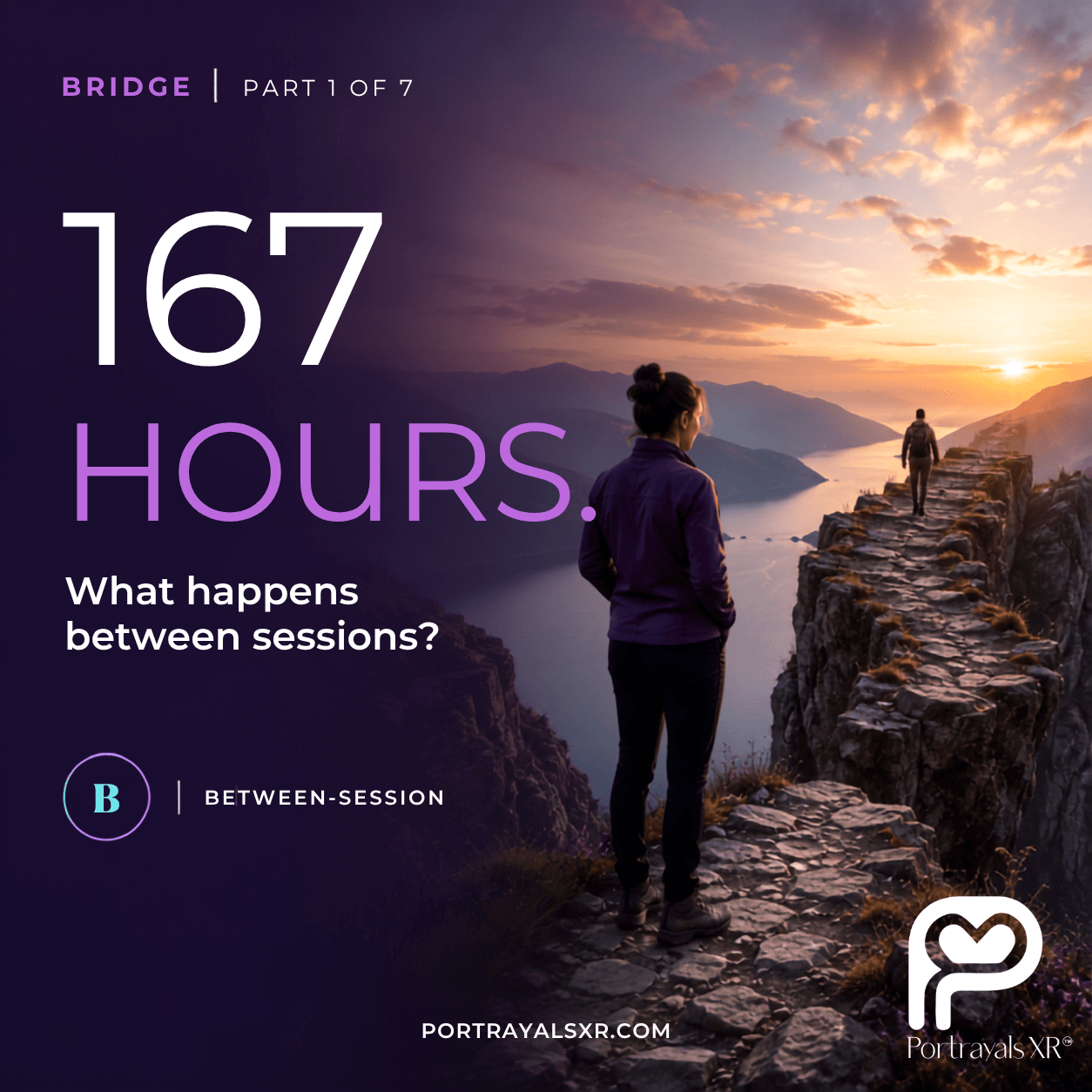
That realization led me to create Portrayals XR, a technology platform focused on bridging the gap between the moments when people receive support and the rest of their lives. I kept seeing the same problem: someone might have an incredible therapy, coaching, or personal-development session, but then they go back into the other 167 hours of their week where their old patterns, environments, and automatic responses are still waiting for them. I wanted to build technology that could support that space in between.
Interestingly, Portrayals also changed the direction of Web Worx. Building it showed me what was possible when we stopped thinking of technology as simply websites and started using AI and software to solve real human and organizational problems. Today, Web Worx builds AI-powered platforms, portals, automations, and custom software for businesses and organizations, while Portrayals continues to grow as the deeper expression of my work in human transformation.
I’ve gone from building websites to building technology that I hope can genuinely change how people work, grow, heal, and understand themselves. I’m also speaking more about the intersection of AI, neuroscience, subconscious reprogramming, spirituality, and business because I believe our future isn’t about choosing between humanity and technology. It’s about becoming much more intentional about how we bring the two together.
And I’m still building. I don’t really think I’ve “arrived” anywhere. Each chapter has just given me a clearer understanding of what I’m here to create next.
Can you talk to us a bit about the challenges and lessons you’ve learned along the way. Looking back would you say it’s been easy or smooth in retrospect?
Definitely not, and I think that’s true for most people who build something of their own.
One of the biggest challenges has actually been marketing my own businesses. I always say that trying to market yourself is like trying to read the label from inside the bottle. You’re too close to it. You know every detail, every feature, every reason it matters, and sometimes that makes it harder to explain it simply in a way that connects with someone who is seeing it for the first time.
That has been especially true as my work has evolved. I’ve had to learn how to communicate ideas that sit at the intersection of technology, AI, personal development, neuroscience, and spirituality without overwhelming people or trying to explain everything at once. Sometimes the hardest part isn’t creating the thing. It’s helping people understand why they need it.
There have also been plenty of moments where I’ve had to pivot, rethink an idea, let go of something I thought would work, or admit that I was trying to force the wrong direction. Entrepreneurship has taught me that being willing to change your mind is not failure. Sometimes it’s the smartest thing you can do.
I’ve also learned that growth has a way of constantly asking you to become a different version of yourself. The skill set that gets you started isn’t always the skill set that gets you to the next level. I’ve had to become more comfortable with uncertainty, trust my instincts, ask for outside perspective, and stop expecting myself to have every answer just because I’m the one leading the vision.
The road has definitely had some sharp turns, but those challenges have also shaped how I build, lead, and make decisions today. I’ve learned to stay curious, stay flexible, and remember that sometimes being too close to something is exactly why you need someone outside the bottle to help you read the label.
Great, so let’s talk business. Can you tell our readers more about what you do and what you think sets you apart from others?
I really have two businesses that are deeply connected to each other: Web Worx and Portrayals XR.
Web Worx started as a web development company, but it has evolved into something much bigger. Today, we specialize in building AI-powered platforms, custom software, client portals, automations, CRM systems, and digital experiences that solve real business problems. Along with my background in web development, I’m also certified in AI, which has allowed me to combine technology with what I understand about business, marketing, psychology, and human behavior.
We are not interested in adding AI or technology simply because it is trendy. We look at where a business is losing time, money, leads, or opportunities and ask how technology can make that process smarter, simpler, and more human.
What sets Web Worx apart is that we approach technology from both a business and human perspective. A beautiful platform means very little if nobody understands it, wants to use it, or if it creates more work than it saves. We start with the actual problem and then determine what technology should solve it, rather than forcing a business into a system that was never designed for the way they actually operate.
Portrayals XR grew out of that same philosophy, but it is much more personal to me. Portrayals is focused on bridging the gap between therapy, coaching, personal development, and everyday life. Someone may spend one hour a week working with a therapist, coach, or practitioner, but there are another 167 hours where real life happens. That is where old patterns show up, emotions get triggered, decisions have to be made, and people often need support the most.
At the center of Portrayals is Clara AI, my digital twin. Clara is almost like having a life coach, business coach, and spiritual coach available in one place. She has been built around the frameworks, philosophies, questions, and approaches I use in my own work, so people can talk through what they are experiencing, look at situations from a different perspective, identify patterns, work through decisions, and go deeper into what may actually be happening beneath the surface.
But Clara is only one part of the platform. Portrayals also includes tools for journaling, emotional awareness, breathwork and meditation, subconscious and self-identity work, inner child exploration, intention setting, and other resources designed to help people better understand themselves and create lasting change. There are also tools being built specifically for practitioners so they can extend the work they are already doing with clients beyond the session itself.
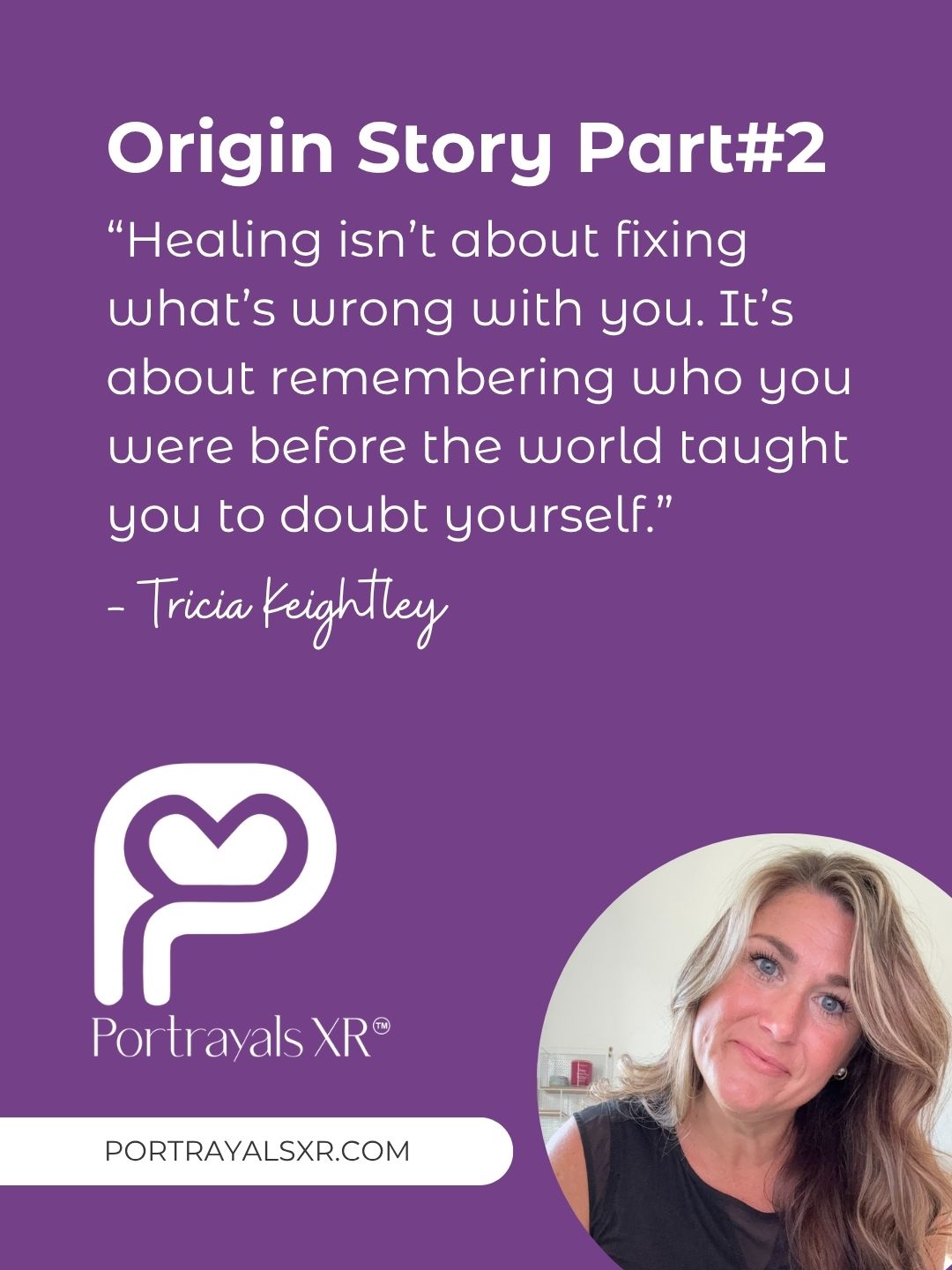
One of the things I am most proud of is that Portrayals isn’t designed to tell people who they are. It is designed to help them remember who they are underneath all of the conditioning, experiences, beliefs, and patterns they have collected along the way. AI can be incredibly powerful, but I believe it needs to be built with intention, boundaries, and a strong moral foundation.
Portrayals also completely changed the direction of Web Worx. Building it showed me what was possible when we stopped thinking about technology as simply websites and started asking what AI and custom software could actually do for an organization. We began taking what we learned through Portrayals and applying that thinking to businesses, nonprofits, churches, associations, and other organizations that were still managing important processes manually or trying to piece together multiple systems that did not communicate with each other.
I think what I am most proud of brand-wise is that neither company was created simply to sell technology. They were created around solving problems I could actually see.
What I want people to understand about both brands is that we are not trying to replace people with AI. I believe the most exciting use of AI is actually the opposite. Technology should remove repetitive work, connect information, create greater access, and give people more time and space for the things technology cannot replace: creativity, intuition, relationships, empathy, and genuine human connection.
That intersection between technology and humanity has really become the thread connecting everything I do. Whether I am building software for an organization or creating tools within Portrayals for personal transformation, the question is essentially the same: How can we use technology to make the human experience better?
Risk taking is a topic that people have widely differing views on – we’d love to hear your thoughts.
I think becoming an entrepreneur is a risk in itself. There is no guaranteed paycheck, no perfectly mapped-out path, and no one telling you what the right next move is.
One of the biggest risks I took was leaving a full-time job where I was making really good money. I remember making a promise to myself that if I was going to leave, I would figure out how to pay myself at least the same amount from my own business. There was something powerful about making that decision because suddenly there was no safety net to fall back on. I had to trust myself enough to believe I could create the opportunities I needed.
For me, risk-taking isn’t about being reckless. It’s about being willing to bet on yourself when there isn’t a guarantee that it will work out. I think there is a big difference between taking an impulsive risk and taking a risk because you know staying where you are would mean ignoring what you’re capable of creating.
Entrepreneurship has required me to take those kinds of risks over and over again. I’ve invested money into ideas before knowing whether they would work. I’ve built things that required me to learn completely new industries. I’ve changed directions when something wasn’t working, even after putting significant time and energy into it. And I’ve continued building Portrayals and moving Web Worx into AI and custom software at a time when technology is changing incredibly fast.
I’ve learned that you can spend forever trying to eliminate risk, but eventually you have to make a decision with the information you have and trust yourself enough to handle what happens next.
I don’t think courage means believing everything is going to work perfectly. I think it’s knowing that even if it doesn’t, you trust yourself to figure out the next move. That mindset has probably been one of the biggest reasons I’ve been willing to keep evolving, building, and taking chances on ideas that didn’t come with a roadmap.
Pricing:
- $29/month for Clara AI
- $2,000 to build a digital twin with Portrayals XR
- Starting at $1,200 to build a website with automation
- $99/month for Web Worx 3.0 CRM
Contact Info:
- Website: https://tricialea.com | https://portrayalsxr.com | https://webworxllc.com
- Instagram: https://instagram.com/trishkeightley
- Facebook: https://www.facebook.com/tricialeakeightley
- LinkedIn: https://www.linkedin.com/in/tricia-keightley/
- Youtube: https://www.youtube.com/@triciakeightley