






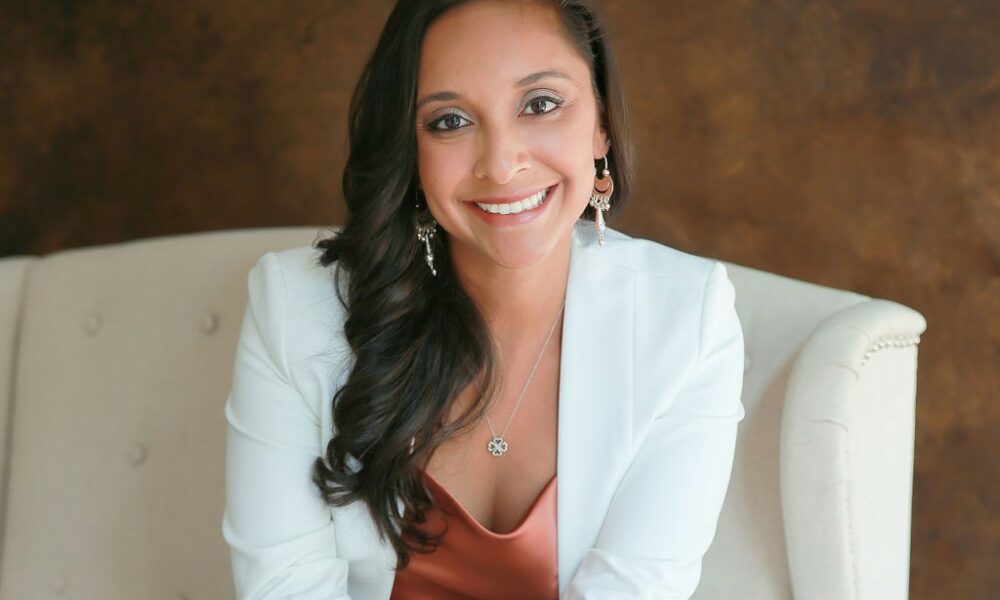
Today we’d like to introduce you to Diana Hughes.
Hi Diana, we appreciate you taking the time to share your story with us today. Where does your story begin?
Before becoming a therapist, I was a middle school and high school Spanish teacher. I loved working with kids and teaching them my native language and culture. After my third year of teaching, I married an active duty service member and had to rethink my career as my life would be filled with constant change and moving. I went back to grad school and got a degree in mental health counseling in hopes of helping the Spanish-speaking population and military families. During our final duty station in Columbia, Missouri, I began working at a group practice where I had amazing opportunities to train in therapy approaches that help people that often struggle to meet their goals in therapy. I spent my years there strengthening my skills as a therapist while working for full licensure through constant training and pushing myself outside my comfort zone. However, throughout my counseling experience, I noticed how the field and treatment are whitewashed, often invalidating specifically the Latino community. Therapy materials and training are hard to find in Spanish; when they do exist, they aren’t always changed to be relevant to our experiences.
In some cases, I’ve seen the tools modified with the assumption that the client doesn’t know how to read or has a significantly lower reading level since they don’t know English. This was when I decided to work towards reaching out to the Latino population to show them that therapy can be for us too.
Once my husband transitioned out of the army, we could return to Kansas City, where I grew up. Less than a year later, with the help of several family members, coworkers, and the support of my husband, I was able to open up my practice in Blue Springs while still offering telehealth therapy to anyone in Missouri. I was invited to speak about mental health at a parenting summit and was able to start the first Spanish DBT skills training group in the state in several years. I didn’t get to where I am today alone. I like to think that I got where I am today the good old Mexican way- with the help of my tribe or community. I take much pleasure and pride in saying that I didn’t get here alone and that I am surrounded by loving and caring family, friends, and coworkers who saw my potential and helped me explore and work toward my goals.
Can you talk to us about the challenges and lessons you’ve learned? Looking back, has it been easy or smooth in retrospect?
The road to completing my degree and the requirements for licensure was not easy. First, I was limited to about three schools to choose from for grad school as the program is usually 3.5-4 years long, and I knew I couldn’t finish the coursework in the span of one duty station. So I had to look for online options, with only 3 being accredited then. Once I began school, I had constant interruptions such as PCSing (moving to a new duty station) in the middle of a semester, a 9-month deployment, and my husband’s command time which often left me to parent alone and manage household responsibilities, plus school work with no help (and usually just a couple of hours of sleep). Throughout my program and internship, I struggled with depression that few people knew about. More days than not, it took every ounce of self-love and energy to gather to get up and do what needed to be done that day. Finally, after graduating from school, I began my work towards licensure in Colorado, only to move to Missouri about 6 months later. Once we moved, it took me a year to find a counseling job, and then I learned I would have to start my time and hours again. Now let me be clear, the military offers many benefits and help, and I do not regret our time in the army. However, most spouses wanting their career will tell you that each move (usually with a promotion for the service member) comes with losing ground on what we had worked hard to gain. This was very true in my career journey.
As you know, we’re big fans of Diana Hughes Counseling LLC. What can you tell our readers who might need to be more familiar with the brand?
I am a mental health therapist that works with adolescents and adults and offers therapy in Spanish. I specialize in DBT and CPT therapy, which focus on borderline personality disorder and PTSD, respectively. Most clients struggle with self-harm behaviors, suicide ideation, mood disorders, and trauma. I also took on my first speaking gig this past year at a parenting summit where I spoke about parenting with mental health in mind. I write monthly blogs that can be found on my website, as I enjoy sharing tips and information with everyone- not just those that make it to my office.
I have also been working hard towards reaching the Latino population. We have so much to process and often feel like we can’t talk about our unique struggles, as talking about mental health is still taboo in our culture. We are people with a history of oppression in this country that is often overlooked, and we continue to struggle to figure out our place in the American and Hispanic cultures, often being made to feel like we aren’t American enough or Latino enough. Like we say in Spanish, “No somos ni di aqui, ni da alla,” or “We aren’t from here nor there.” Our Spanish isn’t good enough for our families still in our home of origin, and Americans see us “con el nopal en la frente” with the cactus on our foreheads. It can feel very lonely, The mental health field continues to be whitewashed, and I want people that look like me and share my history to feel like they also have a right to be heard. I also have spent the last 10 years of my life in the military community and have experienced the anxiety, depression, stress, and loneliness that can come with the military lifestyle. I want to reach out and sit with military spouses and children who are called dependants but must be independent. Military spouses and children are diagnosed with anxiety and depression much more often than civilians with a family member who travels or moves around a lot.
How do you define success?
Success is staying true to yourself, your values, goals, and morals. It is building and strengthening your self-esteem, self-confidence, self-worth, and overall sense of self without being tied to money, fame, rank, and social status. A janitor can experience the same success as a CEO, a private and a 4-star general, and a mechanic as a heart surgeon. Can you wake up, look at yourself in the mirror, and feel proud? If so, you have experienced success. It isn’t all or none. Some people experience success in some regions of their lives and are still working towards it in others. Our goals and values can change throughout our lives; therefore, what we define as success also varies.
Pricing:
- 30 minute consultation is free
- 50 minute therapy sessions $110
- DBT skills group $45
Contact Info:
- Website: www.dianahughescounselingmo.com
- Instagram: @dianahughescounseling


Image Credits
Expressions Photography, LLC