





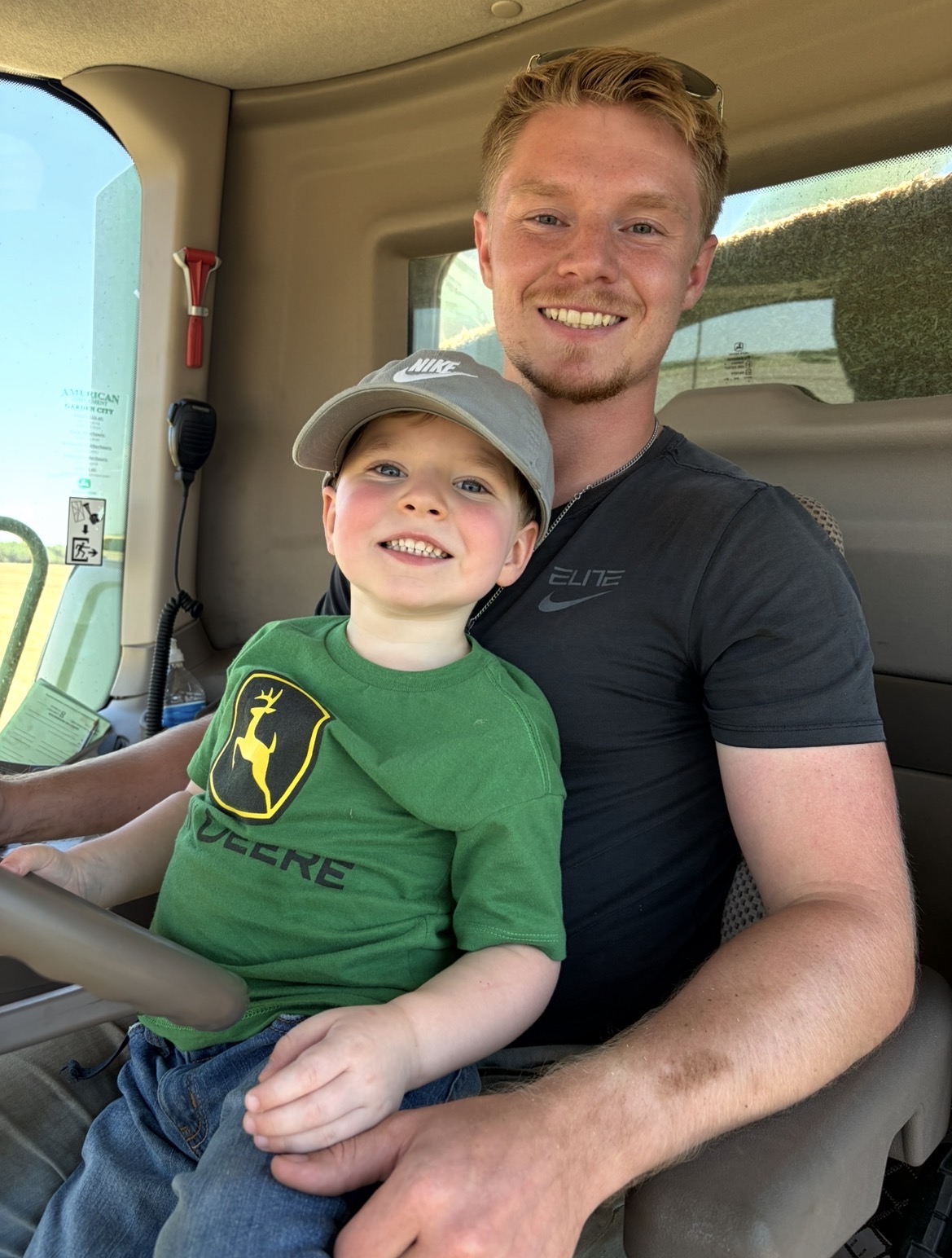
Today we’d like to introduce you to Adam Blanchat.
Hi Adam, so excited to have you with us today. What can you tell us about your story?
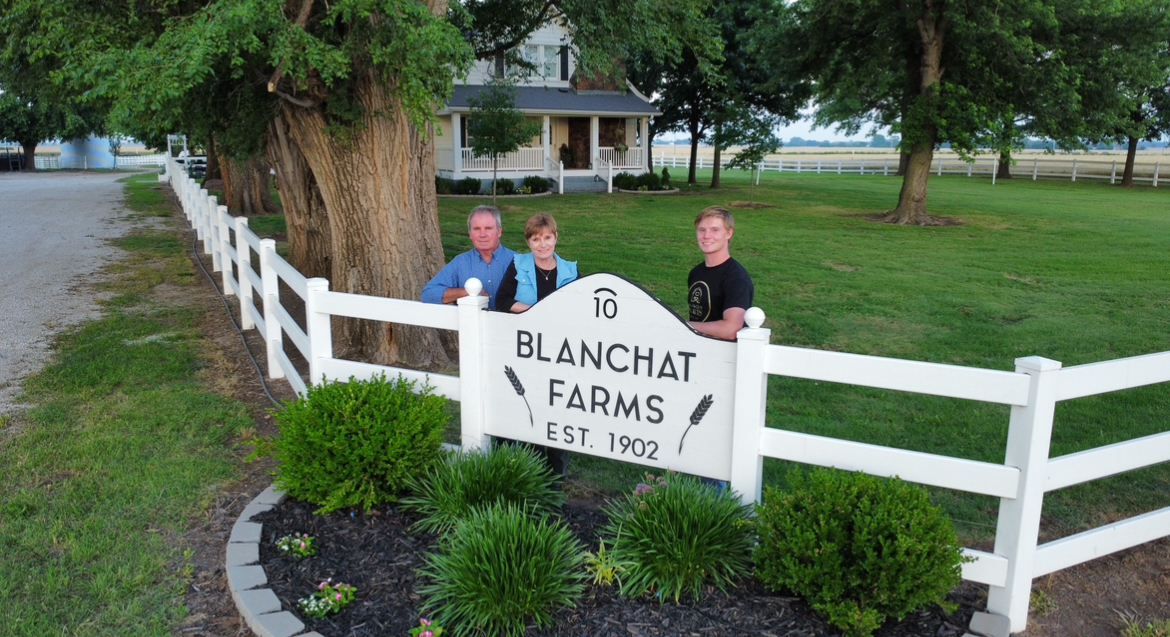
My story starts long before I was born. Our family farm near Danville, Kansas, traces its roots to 1883, with the Blanchat family becoming part of that history in 1902. I am the fifth generation. From the outside, that kind of legacy can sound romantic. From the inside, it feels like a responsibility, because keeping a farm in the family is very different from keeping it healthy enough for another generation.
I grew up around agriculture, but I did not want to rely on our history as the plan for our future. I went to Kansas State University to study industrial engineering, where I learned to look at businesses as systems: identify inefficiencies, understand how decisions affect one another, and find better ways to use limited resources. Eventually, I realized that the most meaningful place to apply that mindset was back on the farm.
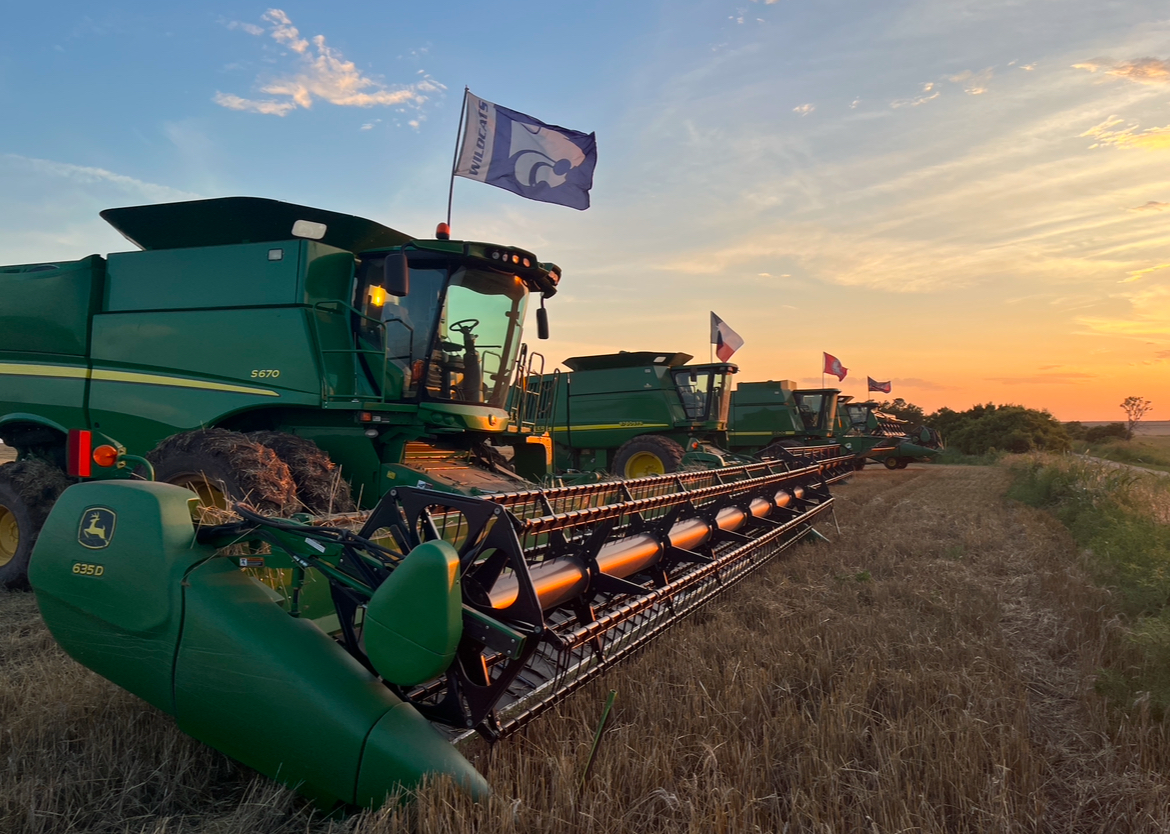
Today, at 23, I am helping carry our family operation into its next chapter. We raise cattle and produce both organic and conventional crops. Working across those different areas has shaped the way I see agriculture. I do not believe farming fits into the simple categories people often use when discussing food. Organic production can offer meaningful benefits and better economic opportunities, but it also involves additional costs, risks, labor, and market challenges. Conventional agriculture has its own strengths and realities. For us, the goal is to understand each system and make the decision that best fits the field, the market, and the long-term health of the operation.
That adaptability has become increasingly important. Farmers purchase fuel, fertilizer, machinery, seed, land, and other inputs at prices largely outside their control, then sell into markets they also do not control. Consumers can pay more at the grocery store while the farmer who produced the food is still struggling with thin margins. Weather can erase months of work overnight. In 2025, after extreme rainfall, I had to burn wheat that could no longer be harvested. It was one of the hardest things I have done, but it captured an important reality of this business: effort does not guarantee an outcome, and every season requires the ability to adjust and continue.
Those experiences have made me interested in more than simply raising another crop. I want to understand how a family farm can capture more value, manage risk, remain independent, and create a realistic opportunity for the next generation. That also means engaging with larger conversations about input costs, consolidation, land ownership, agricultural policy, MAHA, organic production, and the growing difficulty young people face when trying to own a farm, home, or business.
I began sharing more of that reality through Instagram at @blanchat_organic_farms and TikTok at @kansas_wheat_farmer. I want people to see agriculture as both a way of life and a serious business shaped by economics, politics, weather, family, and an enormous amount of uncertainty. Those conversations have led to local news coverage and, most recently, an appearance on SharkFarmer Radio.
I am still early in my journey, which is part of what makes it meaningful to me. I am not looking back at a completed success story. I am living through the decisions, risks, setbacks, and opportunities that will determine whether this farm’s legacy continues. My goal is to honor what the generations before me built while being willing to change what is necessary for the operation to remain relevant, resilient, and worth passing on.
We all face challenges, but looking back would you describe it as a relatively smooth road?
It has not been a smooth road, although farming has a way of teaching you not to expect one.
The most visible challenges come from weather. You can make the right decisions, invest months of work and a significant amount of money into a crop, and still lose it because of something completely outside your control. In 2025, our area received roughly 17 inches of rain, leaving part of our wheat crop damaged beyond recovery. I ultimately had to burn that wheat because it could no longer be harvested. Watching a crop disappear that way was difficult, not only because of the financial loss, but because I knew everything that had gone into producing it.
The less visible challenge is the economic structure of agriculture. Farmers are price takers on both sides of the business. We buy diesel, fertilizer, seed, equipment, land, insurance, and other inputs at prices we have little control over, then sell our crops and livestock into markets we also have little control over. A conflict overseas, a change in trade policy, or a disruption in energy markets can raise our costs almost immediately. At the same time, higher prices at the grocery store rarely mean that the farmer is receiving an equal benefit.
Being a young producer adds another layer. Agriculture requires an enormous amount of capital, yet young people generally have the least access to capital, land, equipment, and established markets. A family legacy provides knowledge and opportunity, but it does not eliminate the financial reality of keeping an operation viable. I have also had to learn how to respect the experience of previous generations while still being willing to question old assumptions and introduce new ideas.
Working with both organic and conventional production has brought its own challenges. Organic crops can offer stronger premiums and reduce dependence on certain purchased inputs, but they also require different management, more labor, specialized markets, and a greater tolerance for risk. The challenge is to evaluate each opportunity honestly instead of allowing a label or ideology to make the decision for us.
There is also the challenge of being taken seriously at a young age. I do not have decades of experience, and I am still learning every season. What I can bring is energy, a different way of looking at problems, and a willingness to ask why something is being done before accepting that it has always been done that way. My engineering background taught me to view setbacks as information: understand what failed, determine what can be controlled, and improve the system.
The road has been uncertain, expensive, and occasionally painful, but those difficulties have clarified what I want to build. Success to me is not simply surviving another season. It is creating an operation that is adaptable enough to withstand setbacks, profitable enough to support the people involved, and strong enough to offer a real opportunity to the generation that comes after me.
As you know, we’re big fans of Blanchat Farms. For our readers who might not be as familiar what can you tell them about the brand?
Blanchat Farms is a fifth-generation family farming and ranching operation near Danville, Kansas, with a primary specialization in organic grain production. Our farm’s history reaches back to 1883, but organic agriculture represents where we believe much of its future can be built.
Our organic program, particularly our organic Kansas wheat, is the main point of distinction for the farm. Organic production requires a fundamentally different approach. Instead of relying on standard synthetic fertilizer and chemical programs, it places greater emphasis on crop rotation, soil fertility, mechanical weed control, biological processes, and long-term planning. It requires more management, labor, recordkeeping, patience, and risk, but it can also produce meaningful benefits for the land, consumers, and the economic future of a family farm.
People often see the organic label without seeing everything required behind it. Organic grain does not begin on a grocery-store shelf. It begins years earlier with the decisions made in a field, including how fertility will be developed, weeds will be controlled, soil productivity will be maintained, and a viable market will be secured. One mistake can affect several future seasons, which makes organic production both challenging and rewarding.
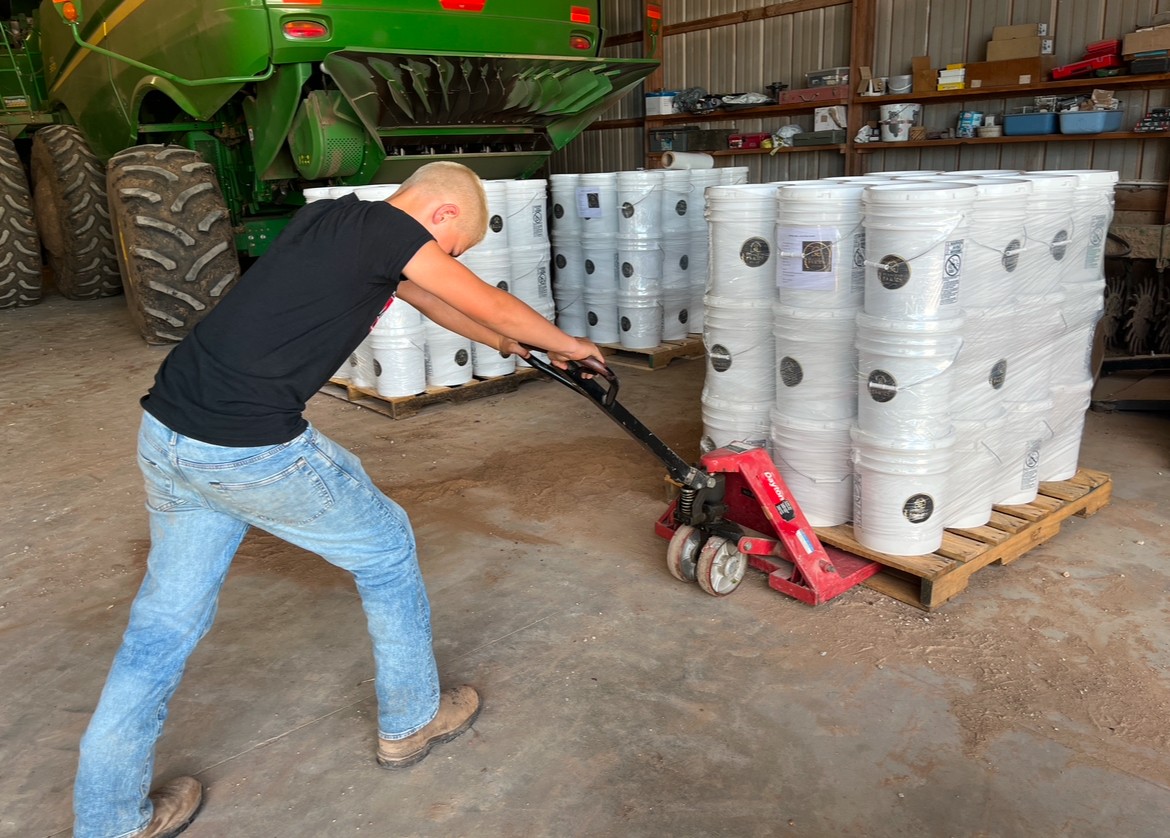
We currently sell our organic grain directly to organic flour mills across the country, from coast to coast. Building those direct relationships is important because it allows us to know where our grain is going and work more closely with the businesses transforming it into food. Instead of our crop simply disappearing into a commodity system, it becomes flour used by people and companies that specifically value how it was produced.
We are now building the next part of that model by developing relationships directly with bakeries and specialty food shops, including businesses in the Kansas City area. We want to create a clearer connection from our Kansas fields to the mill, the bakery, and ultimately the person eating the finished product. There is a powerful story in being able to trace a loaf of bread back to the family, land, and production decisions behind the wheat.
Organic agriculture is also an important economic strategy for us. Small and midsized family farms cannot always compete by simply purchasing more land, buying larger machinery, and producing more volume. Organic markets provide an opportunity to create more value from each acre and retain more of that value within the farm. The premium is not free money—it compensates for additional labor, risk, management, certification requirements, and potentially lower yields—but it can help create a business model capable of supporting another generation.
We also raise cattle and operate conventional ground, which gives us a practical view of the strengths and limitations of multiple agricultural systems. We do not approach organic farming as a reason to attack conventional producers. Instead, our experience allows us to explain honestly why different systems exist and why organic can be an especially valuable option when the land, market, and management align.
My background in industrial engineering at Kansas State University influences how we are building this model. I see the farm as an interconnected system in which production, soil, equipment, labor, marketing, transportation, and customer relationships all affect one another. Our goal is not only to grow an organic crop; it is to build an efficient and resilient supply chain around it.
What makes me most proud is that we are connecting a farm with more than 140 years of history to a growing public interest in organic food, transparency, and knowing where food comes from. Through Instagram at @blanchat_organic_farms and TikTok at @kansas_wheat_farmer, I share the work, benefits, setbacks, and real economics behind organic agriculture.
Ultimately, we want Blanchat Farms to be known for producing high-quality organic grain, building genuine relationships throughout the food system, and showing that a historic family farm can remain rooted in its legacy while creating an entirely new path forward.
What matters most to you? Why?
My Catholic faith matters most because it gives direction and meaning to everything else in my life. It reminds me that my time, abilities, relationships, and even the land I work are gifts entrusted to me. I am called to be a good steward of those gifts and to use them in service of something greater than myself.
My family is central to that responsibility. I want to honor the sacrifices made by the generations before me, provide for the family I have today and, God willing, build a strong life for a wife and children of my own someday. I want them to have security and opportunity, but I also want to give them something deeper: faith, character, a sense of responsibility, and an understanding that a meaningful life is built through service and sacrifice.
My friends and community matter greatly to me as well. Danville is a very small town, but it is home. Small communities only survive when people choose to invest their time, energy, and resources in them. I want the farm’s success to contribute to the health of the community around it. Whether that means supporting local organizations, helping a neighbor, creating new relationships between rural producers and nearby businesses, or simply being someone others can depend upon, I want Danville to be better because I lived and worked there.
I also value experiences, travel, and the opportunity to understand more of the world. Agriculture can connect a person deeply to one piece of land, while travel demonstrates how large and varied the world is. Meeting people from different places and seeing how they live challenges my assumptions and gives me a broader perspective on my own life. I hope to experience as much of God’s creation as possible while remaining firmly rooted in where I come from.
Ultimately, I want to become a man of God who does his part to make life better for other people. I may not be able to solve every large problem, but I am responsible for the corner of the world entrusted to me: my faith, family, farm, friendships, and community.
I also hope to acquire wisdom along the way. Knowledge can tell us what is possible, but wisdom helps us determine what is right, what is worthwhile, and when to act. If I can reach the end of my life having remained faithful, loved people well, served others, built something useful, and left my family, land, and community better than I found them, I will consider that a life well lived.
Contact Info:
- Instagram: https://www.instagram.com/blanchat_organic_farms
- Facebook: https://www.facebook.com/share/18WG5B6ZpR/
- Other: https://www.tiktok.com/@kansas_wheat_farmer