





Today we’d like to introduce you to Kortney Lee.
Hi Kortney, thanks for joining us today. We’d love for you to start by introducing yourself.
My story is really a collection of things I decided to build, learn, and figure out for myself.
I have spent more than 15 years in technology. I worked for 12 years with Cox Automotive and VinSolutions across software quality, automation, product, cloud systems, and engineering leadership. Over time, I moved into roles where I was not just doing the work, but leading people, solving larger problems, and helping teams perform at a higher level. At one point, I led and mentored a team of 24 engineers.
But I have never only been a technology person.
I have always had an entrepreneurial side. I launched Community Groceries and opened two grocery stores, including bringing Just Walk Out technology into the retail experience. That meant I was not simply opening stores. I was combining grocery retail, technology, operations, inventory, staffing, vendors, customer experience, and innovation in a real-world environment.
Community Groceries taught me what it really takes to turn an idea into a physical business. I had to think about everything from store operations and inventory to customer behavior, technology adoption, staffing, and the day-to-day decisions that determine whether a business works.
I also built Otaku, where I worked across hospitality, events, sales, customer experience, financial planning, staffing, and operations. That business gave me another perspective on entrepreneurship and taught me even more about revenue, customer experience, risk, and the importance of constantly evaluating what is working and what is not.
Along the way, I became an author as well. I wrote a book focused on health because health had become deeply personal for me.
At one point I weighed 305 pounds, and I had an experience where I passed out after walking only a few steps. That forced me to take a serious look at my health and at how difficult it can be for people to take all the information they are given and actually turn it into something they can live with every day.
I eventually lost about 100 pounds, but the bigger impact was how much that experience changed the way I thought about behavior, decision-making, food, health, and the gap between knowing what to do and actually being able to do it.
That experience influenced my writing, my businesses, and eventually the technology I would build next.
I founded WIHY AI as a way to bring together everything I had learned from technology, entrepreneurship, food, health, operations, and real-world problem solving.
Through WIHY AI, I have personally worked on and helped build products including EdenCora, CoraEden, WIHY Intelligence, uKonnect, and other software tools. I have been involved from the idea stage through product strategy, development, testing, launch, customer discovery, and ongoing improvement.
I have also spent a lot of time talking directly with people. More than 150 customer and stakeholder conversations have helped shape how I think about products and business. I have learned that some of the best ideas come from listening closely to what people are actually struggling with rather than assuming you already know the answer.
When I look back, there has never really been one straight path.
I have been an engineer, a technology leader, an entrepreneur, a retailer, an author, a product builder, and a founder. I have led teams, opened physical stores, introduced new technology into retail, built software, created customer experiences, managed operations, written a book, and built companies from ideas.
I have also made mistakes, changed direction, and had to learn things the hard way.
I think that is probably the biggest theme in my story. I have always been willing to step into something new, learn it, build around it, and see how far I can take it.
For me, everything connects. Technology taught me how to build. Entrepreneurship taught me how to execute. Community Groceries taught me how people actually shop and make everyday decisions. Otaku taught me more about experience, sales, and operations. My health journey taught me how difficult change can be. Writing taught me how to take complicated ideas and explain them clearly.
WIHY AI is really the result of all of those experiences coming together.
We all face challenges, but looking back would you describe it as a relatively smooth road?
One of the biggest lessons came from Community Groceries.
People said they wanted healthier food options, so that is what we tried to deliver. We built around that demand, opened stores, brought in technology, created access, and focused on providing better choices.
But the outcome taught me something I did not expect.
Giving people access to healthier food does not automatically create healthier outcomes.
That experience changed the way I thought about the problem. I realized that healthy is not something you can simply put on a shelf and expect people to take home. People are dealing with budgets, habits, time, family preferences, stress, culture, knowledge, and hundreds of small decisions that happen long before and after they walk into a grocery store.
My conclusion was simple: healthy is not in a store.
A store can provide access. It can provide ingredients. It can make better choices easier to find. But the real work happens in people’s everyday lives.
That realization became one of the biggest influences on what I built next. Instead of asking only, “How do we give people healthier options?” I started asking, “How do we help people actually make decisions they can live with?”
That shift changed the direction of my work and eventually became part of the foundation for WIHY AI, Eden, and Cora.
It was also a reminder that customers can accurately describe what they want without necessarily knowing what will solve the deeper problem. As an entrepreneur, my responsibility is not just to deliver what people ask for. It is to keep learning until I understand what they actually need.
As you know, we’re big fans of Wihy AI LLC. For our readers who might not be as familiar what can you tell them about the brand?
WIHY AI is a technology company focused on helping people and organizations turn information into action. What sets us apart is that we are not building AI just to answer questions. We are building systems that help people make decisions and actually follow through on them.
A lot of that comes from my own experience.
Through Community Groceries, I learned that simply giving people access to healthier food was not enough. People asked for healthy options, we delivered them, and the outcome still was not what I expected. That led me to a conclusion that has shaped a lot of what I build today: healthy is not in a store.
A grocery store can provide access, but people still have to make decisions around time, money, habits, family preferences, routines, stress, and everything else happening in their lives.
That is the type of problem WIHY AI is built around.
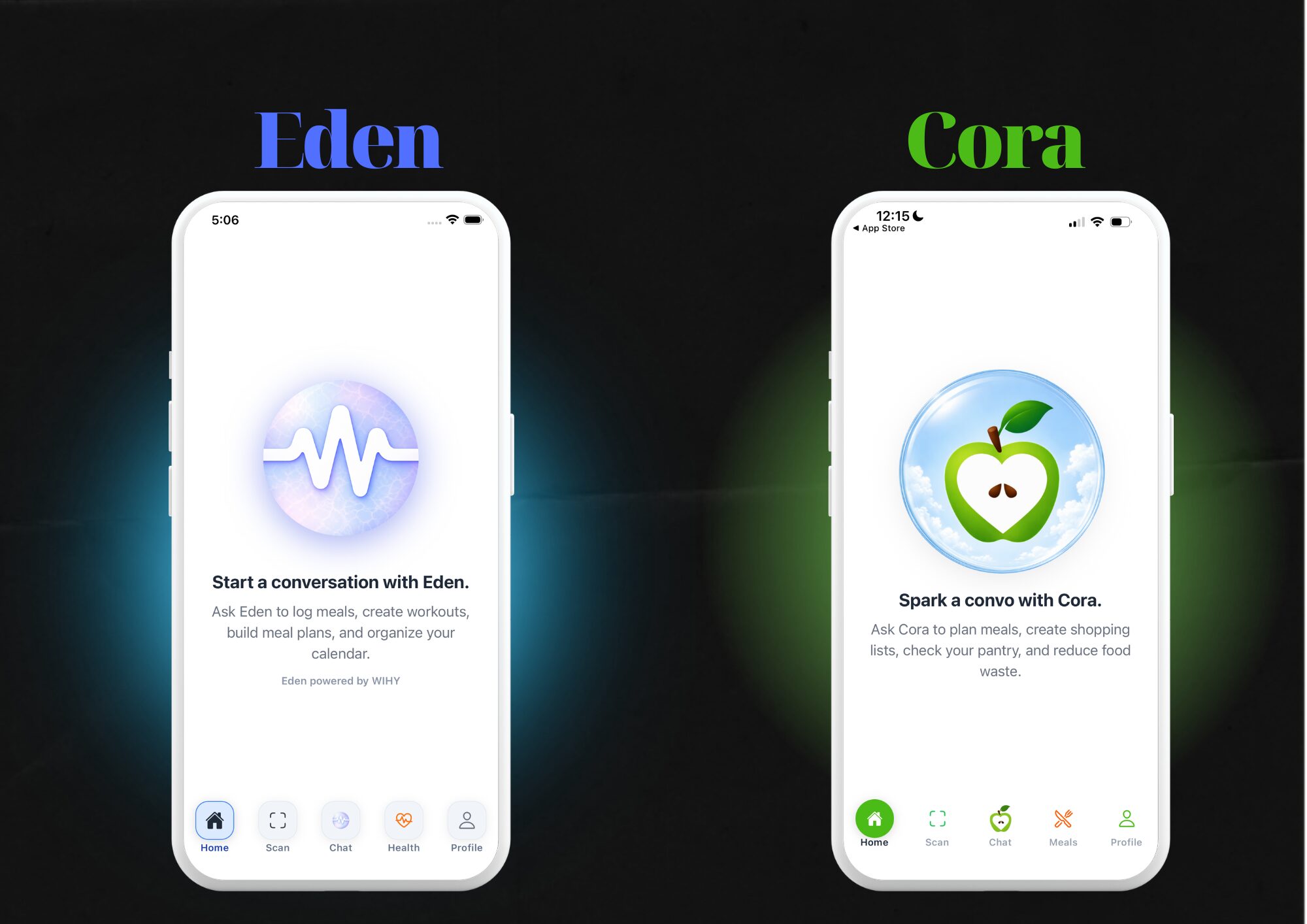
We have developed products including EdenCora and CoraEden. Eden focuses on helping people navigate health, routines, meals, movement, habits, and everyday wellness. Cora focuses more on meals, groceries, household planning, budgets, and helping people make better use of what they already have.
I am also proud that WIHY is broader than one consumer product. We build software, intelligent workflows, business automation, integrations, and custom technology solutions for organizations that need to turn an idea or process into something that actually works.
My background is in software, product, quality engineering, and business, so I care a lot about whether something works beyond the demo. I have spent more than 15 years in technology, led teams, built companies, opened stores, and personally worked on software from idea through production. That experience shapes how WIHY approaches every product.
What I am most proud of is that the company reflects everything I have learned across technology, entrepreneurship, retail, health, operations, and real customer behavior.
I want people to know that WIHY AI is not about replacing human decision-making. It is about making better decisions easier to act on.
That is what we are building.
In terms of your work and the industry, what are some of the changes you are expecting to see over the next five to ten years?
Over the next five to ten years, I think we are going to see AI move from being something people use to ask questions into something that actively helps them make decisions and complete work.
Right now, a lot of AI is still centered around conversation. You ask a question, it gives you an answer. That is useful, but I do not think that is where the industry stops.
The next phase is execution.
People will expect technology to understand context, help them decide what to do, and then help carry that decision forward. In business, that could mean moving from a recommendation to an actual workflow. In health and wellness, it could mean turning guidance into a plan someone can realistically follow. In the home, it could mean connecting meals, groceries, budgets, schedules, and household needs instead of treating each one as a separate problem.
I also think AI will become much more specialized. The future is not one giant tool that does everything equally well. We are going to see more systems built around specific industries, specific workflows, and specific human problems.
Trust will become a major differentiator too.
As AI becomes more involved in healthcare, finance, education, hiring, business operations, and everyday decision-making, people are going to care more about how decisions are made, what data is being used, whether the system is accurate, and where a human still needs to be involved.
I believe the companies that last will be the ones that build AI into real systems instead of treating it like a feature.
For WIHY AI, that is a big part of how I see the future. I am interested in the space between information and action. Giving someone an answer is one thing. Helping them turn that answer into something they can actually use in their life or business is where I think the real opportunity is.
Over the next decade, I think AI will become less visible in some ways. People may stop thinking of it as “using AI” and simply expect their software, businesses, homes, and services to understand more, respond faster, and help them make better decisions.
The technology will continue to change quickly, but I think the real question will stay the same: does it actually make life or work better?
That is where I think the industry is headed, and that is the part I am most interested in building.
Pricing:
- 9.99
- 12.99
- 19.99
Contact Info:
- Website: https://wihy.ai
- LinkedIn: https://www.linkedin.com/in/kortneylee/
- Other: https://edencora.com