





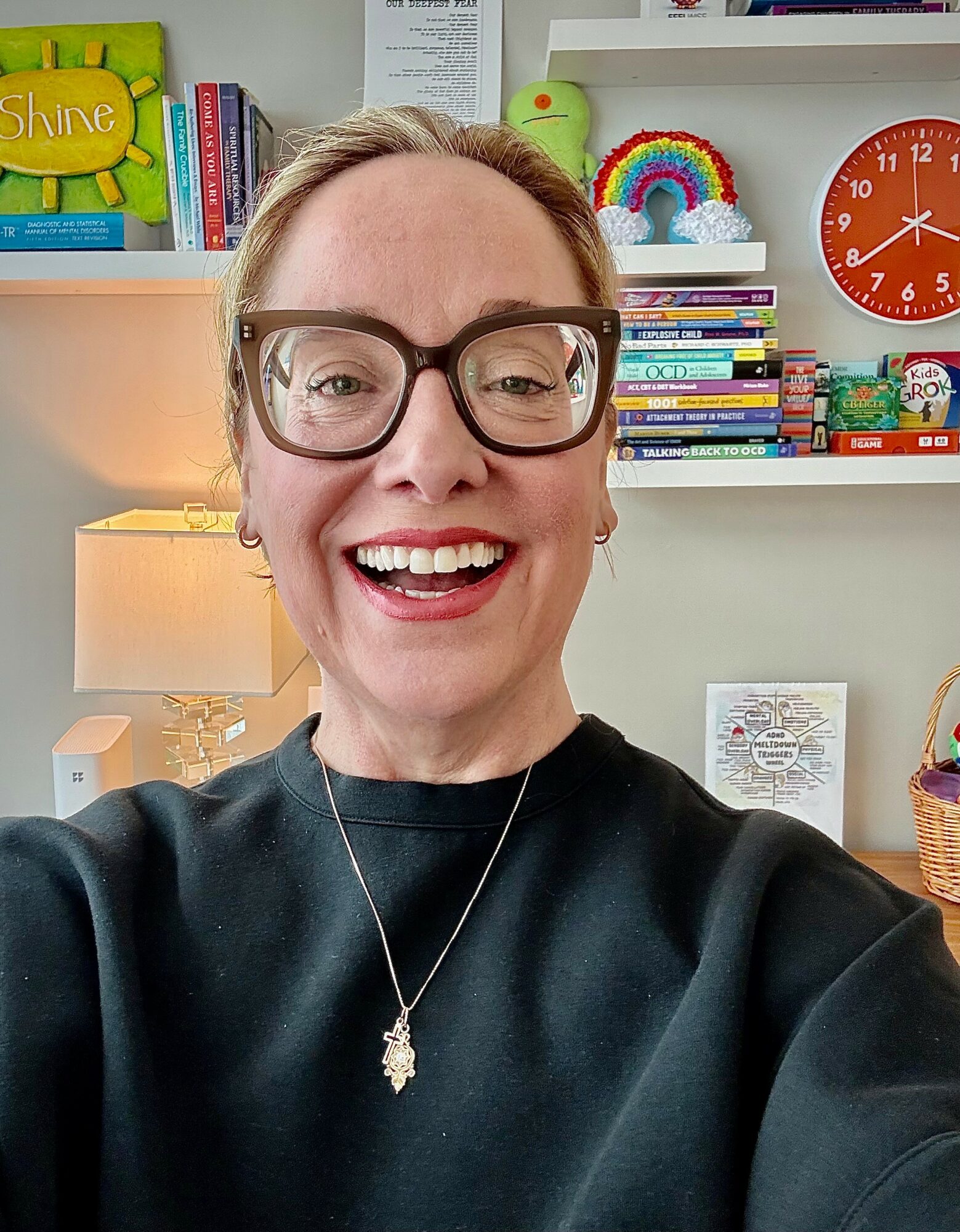
Today we’d like to introduce you to Kirsten Tretbar.
Hi Kirsten, so excited to have you with us today. What can you tell us about your story?
It’s my belief that almost everyone can benefit from some kind of therapy, for some period of time, at some point in their lives.
Therapy can be fun, fulfilling, scary, deep, weird, wonderful, profound, creative, relaxing, challenging and, sometimes, literally lifesaving. Therapy rocks!
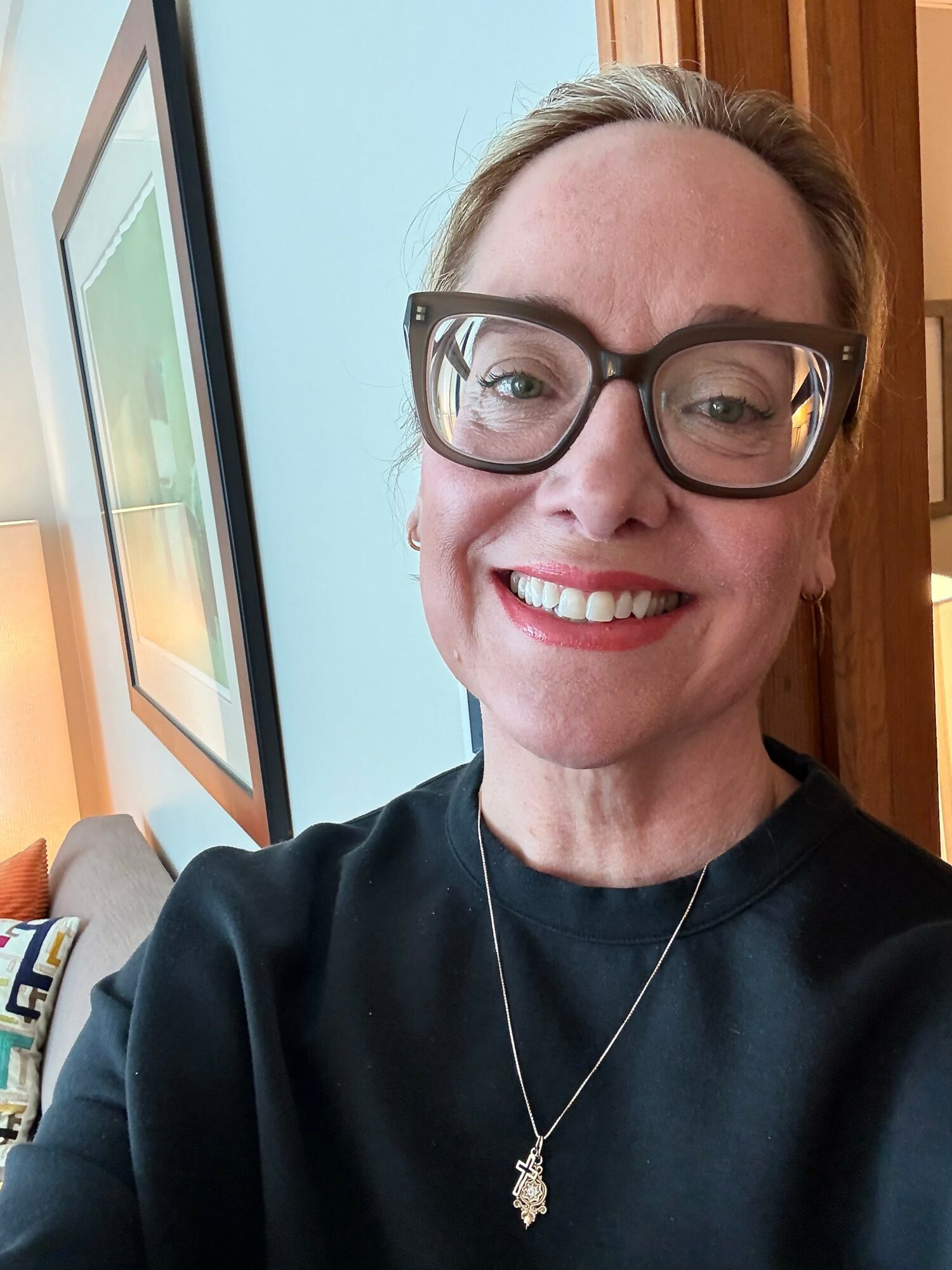
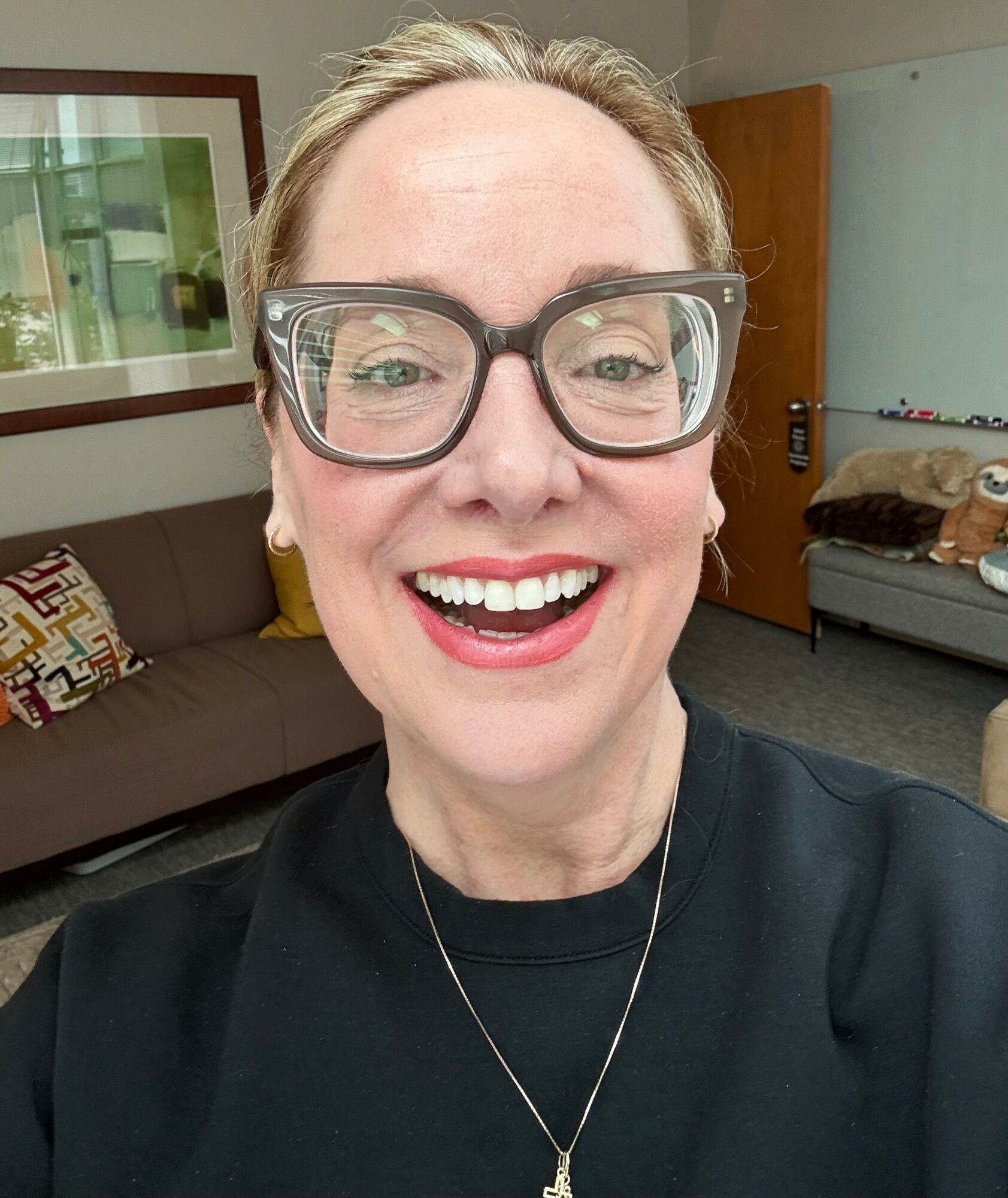
Hi everyone. I’m Kirsten Tretbar, and I’m so happy to be included in this publication. I hope my story might inspire someone else to follow a passion, no matter their age. I also hope we can help normalize the idea that therapy can be an ordinary, healthy part of life, and something many people actually enjoy.
Working in the healing arts and healthcare runs in my family. My grandfather was a small-town doctor in rural Kansas, and my father, Dr. Lawrence “Larry” Tretbar, was a surgeon here in Kansas City at what is now AdventHealth Shawnee Mission. I have uncles and cousins in medicine and healthcare, while others became teachers, engineers, ministers or artists. Apparently, in our family, you were going to heal, teach, build, create or explain something!
I wanted to be a doctor growing up too, but my interests in anthropology, theater and storytelling led me in very different directions throughout my 20s, 30s and 40s.
Now, at age 60, I feel incredibly fortunate to call myself a licensed marriage and family therapist and the owner of my private practice, Tretbar Therapy LLC, in Overland Park.
Marriage and Family Therapy was a natural fit because we are trained to look at people systemically. We don’t see anxiety, depression or behavior as something occurring in a vacuum. We’re interested in relationships, family patterns, attachment, culture, community, history and the larger systems surrounding a person.
That way of thinking made immediate sense to me. I grew up in a close nuclear and extended family, much of it rooted around Stafford, Kansas, where generations of my family farmed the same land. I had a wonderful, earthy Kansas childhood filled with family, friends, creativity and love. At the same time, I can look back now and know that my own family would have benefited enormously from family therapy.
But I was a child of the 1970s. Families simply didn’t routinely say, “Hey, everybody, let’s go to therapy and figure this out together!” So we didn’t.
I grew up in Kansas City and attended Shawnee Mission Northwest, where I was involved in theater, choir and student council. Eventually, my creative life took me far from Kansas. I spent much of the next 30 years working in television, independent film and acting, including many years in Los Angeles and England. I produced independent films, television programs and documentaries, acted, and taught everything from college film courses to improv and method acting.
Before the COVID years, I moved back to Kansas City with my husband, Ozzy, a fellow actor who is also a talented computer engineer, designer and coder.
Life during those years was sometimes very difficult. We went through multiple miscarriages, career changes, aging parents, serious illness and loss. I experienced panic attacks and physical health problems, and I went through what was probably the hardest period of my life.
Therapy helped save my life.
And then, in my 50s, I decided to become a therapist myself.
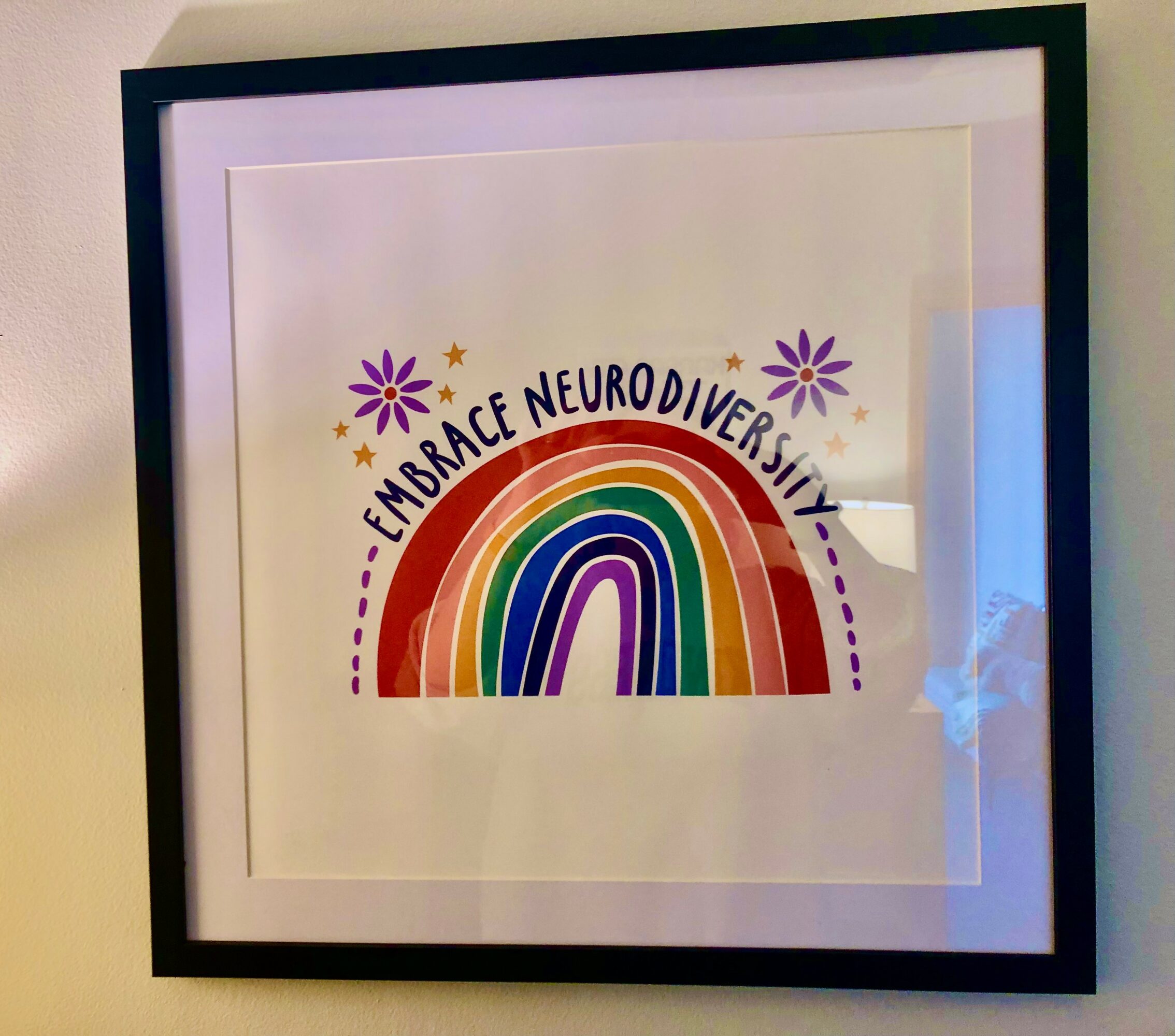
I already had a graduate degree in acting from USC, and suddenly I could see how the seemingly unrelated pieces of my life might fit together. I could work with families like mine, bright and gifted kids, people with ADHD and autism, and those experiencing the anxiety, depression and sense of “differentness” that can accompany neurodivergence. I could bring creativity, humor, storytelling, improvisation and decades of life experience into the therapy room.
I went back to graduate school and earned my second master’s degree, this time in Marriage and Family Therapy at Friends University here in the Kansas City area. Then I opened Tretbar Therapy.
And I have been busy ever since!
Oddly enough, my first career prepared me beautifully for my second.
Acting and therapy have more in common than you might imagine. In great scene work, there is a give-and-take between two people who are fully present. There is listening, vulnerability, truth and a spark that happens when two human beings genuinely connect.
Therapy can have that same spark.
Except in therapy, the lines aren’t part of a play. They’re real.
The exploration can lead to extraordinary awareness, and that awareness can spread into marriages, families, friendships, workplaces and communities. In that sense, therapy for one person can eventually become healing for many people around them.
My years as a documentary filmmaker influence me just as much. For years, I worked in England producing art and music documentaries for the BBC and ITV. I also made a feature documentary called “ZENITH” about my farming family in south-central Kansas and the local farmers who created an enormous outdoor Easter Passion Play. The film aired on NBC in 2003 and received awards and recognition of which I’m still very proud.
Documentary filmmaking taught me how to sit with people, listen, become curious about the details of their lives, and search for the deeper story underneath the obvious one.
Therapy asks me to do something remarkably similar.
A client brings in a lifetime of scenes, characters, relationships, losses, triumphs and contradictions. Together, we begin to find the through-line. We explore family and cultural legacies, make room for grief, find pride and celebration where those have been forgotten, and look at burdens that may have been carried for generations.
And sometimes we help a person write a different ending.
Helping children, families and couples dealing with depression, anxiety, grief, relationship struggles and major life transitions, along with overachievers, gifted kids, neurodivergent thinkers and wonderfully “out-of-the-box” people, has become one of the greatest joys of my life. I am deeply honored to be a therapist.
And if there’s one thing I would love someone to take from my story, it’s this:
It is never too late to change careers.
You may be older when you begin, but age can bring wisdom, perspective, clarity, humor and focus. Sometimes the strange collection of things you’ve done throughout your life turns out not to be strange at all.
It was preparation.
Ask yourself: What brings me joy? What are the gifts that are uniquely mine?
Figure that out.
And then, if you possibly can, go do that.
We all face challenges, but looking back would you describe it as a relatively smooth road?
Has it been a smooth road?
I’m not sure life has one!
Most spiritual and philosophical traditions teach us, in one form or another, that change is inevitable. Nothing stays the same for very long. Part of mental health, in my opinion, involves telling ourselves the truth about that. Life has ups and downs, and accepting that reality can make the down times easier to survive.
I work with a lot of bright, soulful middle school and high school students who are already being asked to think about careers, colleges and what they’re going to do with the rest of their lives.
I sometimes tell these anxious kids, with a twinkle in my eye, that they might go to more than one college. They might transfer. Take a break. Change majors. Have several careers.
They might even… not go to college at all!
How about that?
My own educational path certainly wasn’t a straight line. I attended Washington University in St. Louis, spent a semester at Johnson County Community College, returned to Wash U, took time off and went to England, transferred to Grinnell College, and later went to graduate school at USC. Decades after that, I went back to school again at Friends University to become a therapist.
So much for the five-year plan!
I tell teenagers, college students and stressed-out young adults that they don’t have to figure everything out right now. Letting go of the need to “get it all right” can open pathways we couldn’t see when we were gripping the plan too tightly.
I sometimes call this “dropping the rope.” Taoism might describe it as being like water or going with the flow.
Maybe we occasionally figure things out better when we stop trying quite so hard to figure everything out. We get quiet enough to hear the wind in the trees, the voice of a higher power, our own intuition, or simply that tiny persistent thought saying, “You love words,” or “You’re good with children,” or “You come alive when you make things.”
So no, my road wasn’t smooth.
I’m just pretty good at making it look that way!
And that’s okay. Some details of our difficult experiences belong to us. We can honor them without making every painful chapter public.
But when I think about difficult roads today, I think especially about our children.
I see young people who are genuinely frightened about the future. The world changes rapidly. Careers change. Technology changes. Families face economic uncertainty. Neurodivergent children may be navigating systems that weren’t designed with their brains in mind. Parents are worried too, often while trying to keep their own careers, marriages, homes and families afloat.
One of the greatest things we can give children, I believe, is adaptability.
We can tell them the truth about our own lives: the jobs we lost, classes we failed, plans that changed, relationships that didn’t work, unexpected opportunities, and all the times we had to regroup and begin again.
We can teach strong foundational skills, encourage creative and complex thinking, and model flexibility instead of perfection.
And if we can do all of that with a sense of humor, even better.
Flexibility, adaptation, presence, playfulness and connection are big themes in my practice. Some would call these things resilience.
Humor is part of that too. I learned a lighthearted approach from my wonderfully funny, mustachioed doctor dad, Larry; my hilarious and loving writer/teacher mother, Kathy; a few influential therapists and professors in my own life; and therapists such as Carl Whitaker, whose use of humor, paradox and humanity in family therapy has always resonated with me.
This is especially important in my work with children.
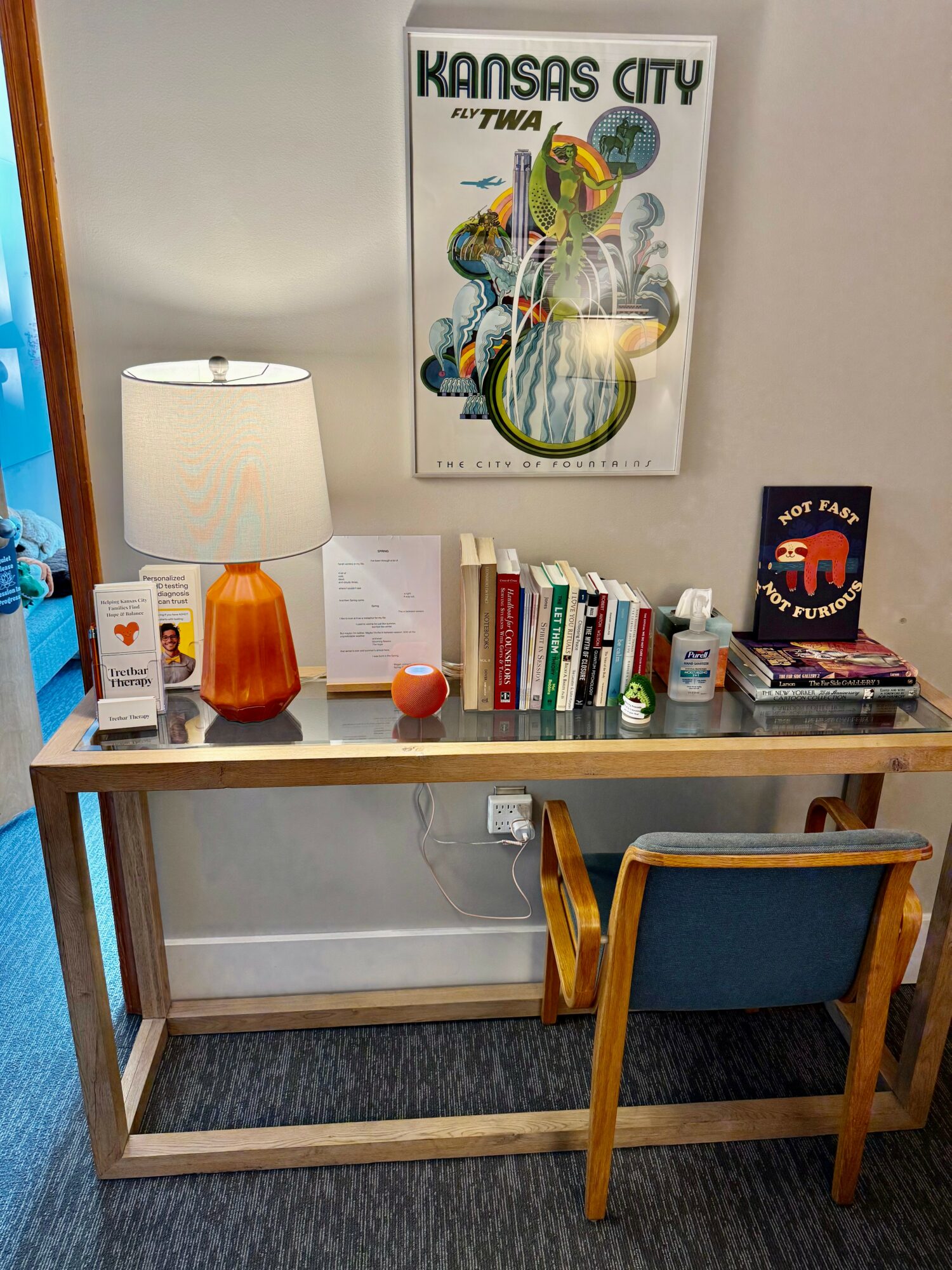
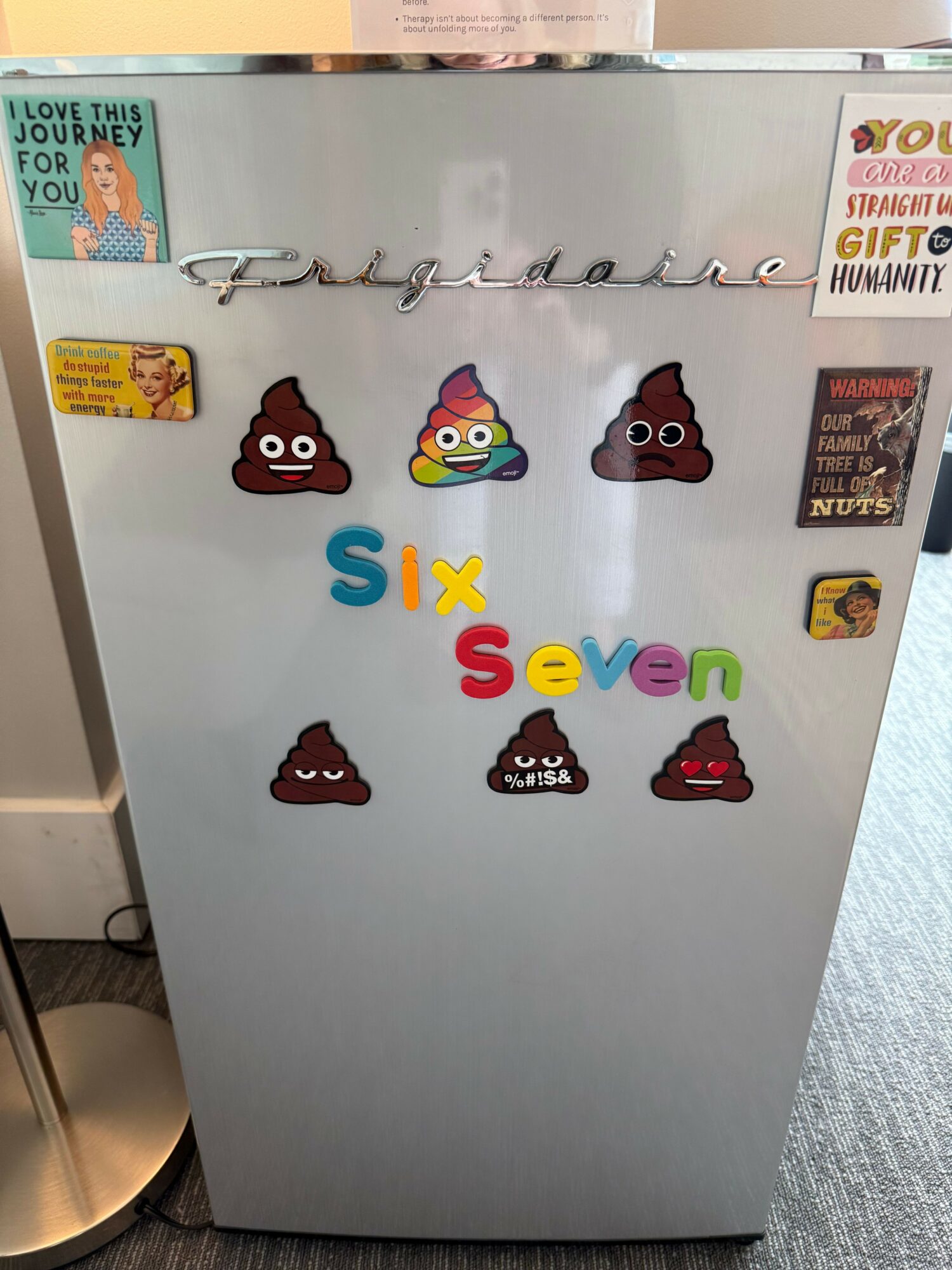
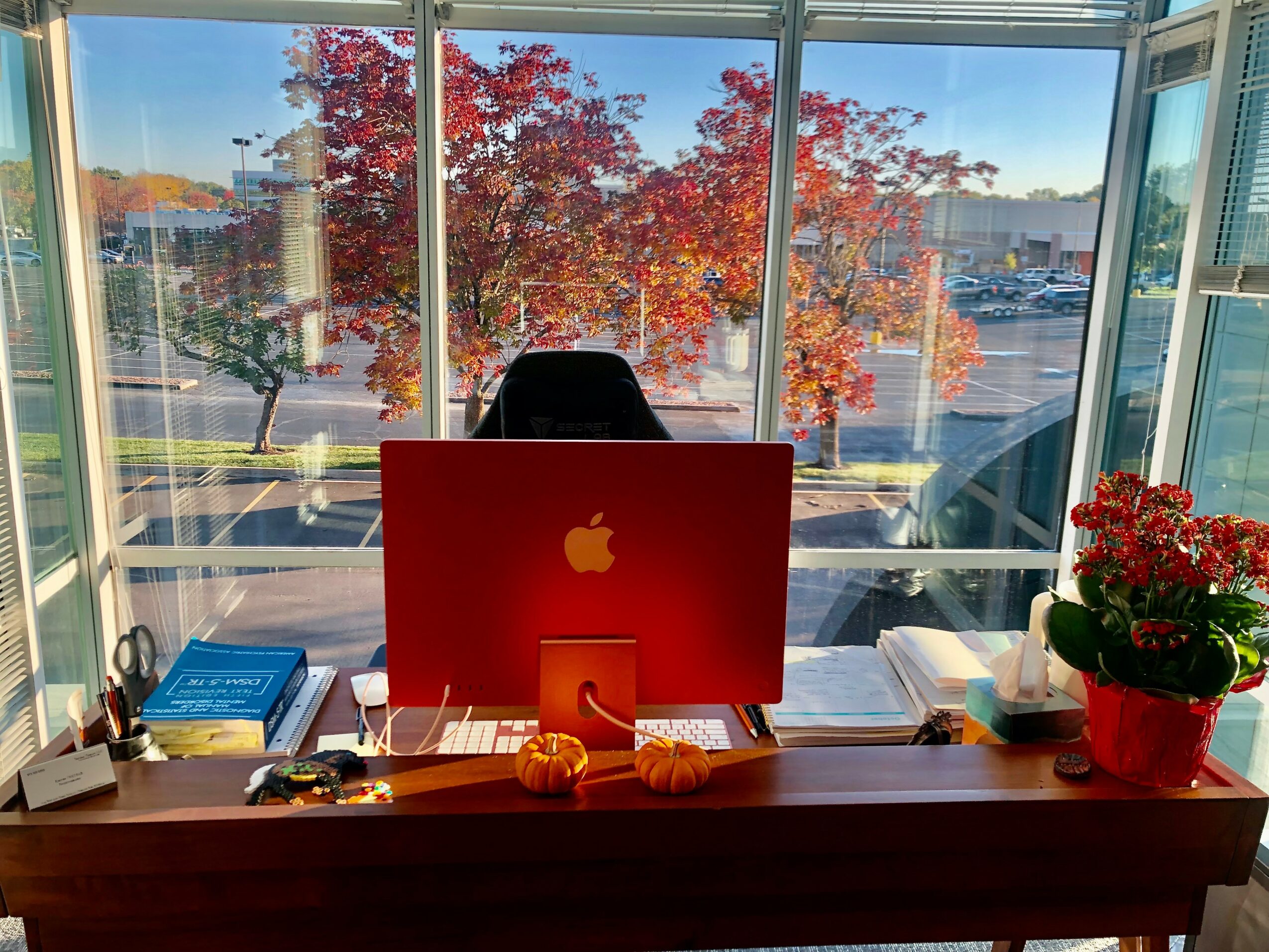
I want my office to be a place where kids are excited to come and can be completely themselves. They can laugh, play and be silly, and five minutes later tell me something profoundly honest about what scares them, hurts them or gives them hope.
One of my favorite things is hearing kids running up the stairs to my office, ready for “therapy!” They apparently missed the memo that therapy might be some kind of dreaded event.
Sometimes a child asks me for another business card because they’ve decided a friend at recess has anxiety and “really needs therapy.” Kids can be wonderfully matter-of-fact about the whole thing. Maybe we adults could learn something from them.
Why should having a therapist be treated like an embarrassing secret? We don’t whisper about having a great coach, teacher or family doctor. We don’t pretend not to recognize our favorite second-grade teacher when we run into her at Price Chopper.
So why are we still weird about therapists?
I would love to see us normalize therapy and the idea of families getting help — together. Let’s talk about emotional health as openly as physical health. Let’s let our children see adults asking for help, learning, changing and growing.
And maybe the world can stop acting as though needing another human being once in a while is some sort of character flaw.
As you know, we’re big fans of Tretbar Therapy LLC. For our readers who might not be as familiar what can you tell them about the brand?
Tretbar Therapy is a private mental health practice in Overland Park, Kansas, where individuals, couples and families can rediscover balance, connection, love and hope.
I’m a licensed Marriage and Family Therapist specializing in work with gifted and highly intelligent children and teens, neurodivergent clients, ADHD, autism, twice-exceptional children and adults; anxiety, depression, trauma, grief and major life transitions. I also work extensively with couples and families.
Therapy at Tretbar Therapy is highly personalized. I don’t believe therapy has to look like two people sitting solemnly across from each other for 50 minutes every week.
Sometimes it does.
But sometimes therapy looks like art. Sometimes it involves storytelling, family history, EMDR, parts work, role-playing, humor or play. Sometimes we’re exploring attachment patterns or generational burdens. Sometimes a child needs to move around the room while we talk. Sometimes a couple needs help finding the words underneath the argument they keep having.
With children, I incorporate play-based techniques, art, humor, emotional-awareness work and theatrical role-playing to help build confidence, emotional regulation and self-understanding.
My background in acting, directing, documentary filmmaking and teaching has given me an unusual toolbox as a therapist. I’m comfortable with creativity, big feelings and people whose minds move quickly or differently. And I’m very interested in the story underneath the story.
Because I’m systemically trained, I also believe strongly in collaborative care. When appropriate and with a client’s permission, I may work alongside teachers, occupational therapists, school IEP teams, physical therapists, physicians and other professionals involved in a client’s care.
But underneath all the techniques and training, I believe deeply in something very simple: the healing power of telling your story to a kind, thoughtful person who takes the time to really know and help you. Sometimes people need a safe place to put the whole story on the table and say, “Help me understand what happened here.”
That is a tremendous privilege.
My goal is for Tretbar Therapy to be a place where people can bring their whole selves. I respect clients across identities, cultures, faith traditions, political beliefs, family structures and ways of being. You do not have to think like me, live like me or believe what I believe to be treated with dignity, curiosity and care in my office.
Everyone is welcome.
Alright, so to wrap up, is there anything else you’d like to share with us?
I’d love for people to know that therapy does not have to mean something is terribly wrong.
You can come because you’re grieving, anxious or struggling. You can also come because your marriage is pretty good and you’d like it to be better. You can come because your child is gifted and overwhelmed. You can come because you’re 55 and suddenly wondering what you want the next 30 years to look like.
You can come because you’re stuck.
Or curious.
Or changing.
Or simply ready to understand yourself and the people you love a little better.
Therapy can be serious without always being solemn. There can be laughter in the room. There can be creativity. There can be relief.
There can be hope.
That’s the kind of therapy practice I wanted to create.
Contact us at:
Tretbar Therapy LLC
7133 W. 95th St., Suite 211
Overland Park, KS
66212
Pricing:
- Fees: $175 per 50-minute session
- ADHD assessments, ages 13 + are $500
- We see: children 6+, teens, adults, couples, and families.
- Tretbar Therapy is a private-pay practice and does not bill insurance directly. We accept major credit cards and HSA cards. Monthly super bills are available for clients seeking possible out-of-network reimbursement. Reimbursement depends on the individual insurance plan.
- Hours: Monday–Thursday, 12–8 p.m. In-office & Telehealth offered.
Contact Info:
- Website: http://www.tretbartherapy.com
- Instagram: https://www.instagram.com/tretbartherapy/
- Facebook: https://www.facebook.com/tretbartherapy
- LinkedIn: https://www.linkedin.com/in/kirstentretbar
- PsychologyToday: https://www.psychologytoday.com/us/therapists/kirsten-tretbar-overland-park-ks/1340674
- Phone: 913-393-9393