





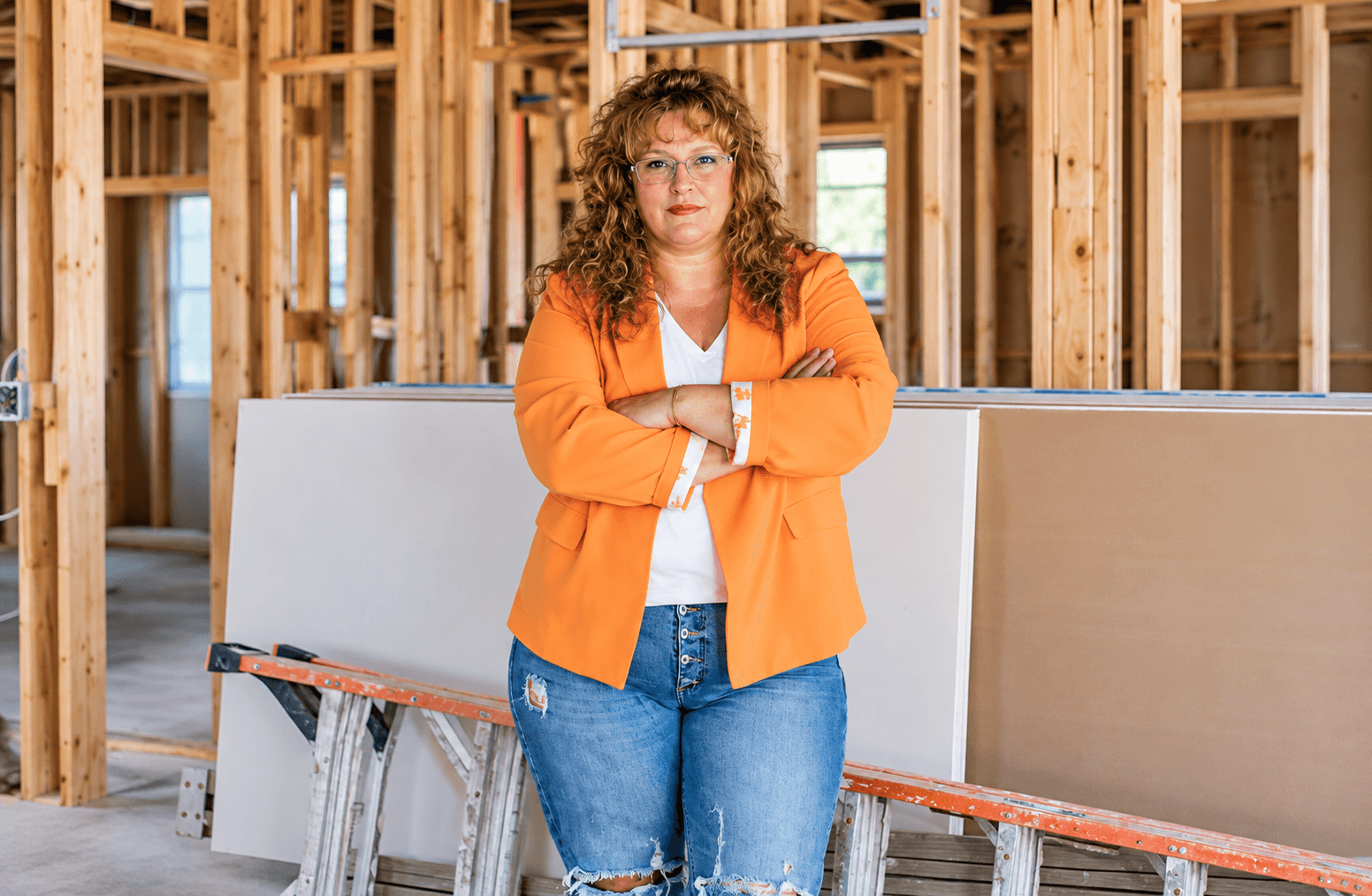
Today we’d like to introduce you to Janel Bowers.
Hi Janel, please kick things off for us with an introduction to yourself and your story.
I’ve learned over the years that some of the most important things we build aren’t necessarily buildings. They’re relationships, opportunities, and communities where everyone has a place to belong.
I’m the CEO of Friends of JCDS, a Johnson County nonprofit that has been creating affordable, accessible housing for individuals with intellectual and developmental disabilities since 1997. For nearly 30 years, our organization has worked to ensure that people with disabilities have something many of us take for granted: a safe, affordable place to call home.
Our work has traditionally focused on purchasing, renovating, and maintaining single-family homes for people who receive residential supports through Johnson County Developmental Supports. But as the needs of the people we serve have evolved, so has our vision of what housing can and should look like.
One of the things I’ve become particularly passionate about is what I call “poverty of access.” We tend to think of poverty in terms of dollars and cents, but poverty can also mean a lack of choices, opportunities, and connections. For individuals with disabilities, finding affordable housing is only part of the challenge. Finding housing that supports independence, dignity, and meaningful participation in the community is another.
That brings us to where we are today.
Friends of JCDS is developing Floyd Street Apartments, a 17-unit affordable housing community in downtown Overland Park. It’s a pretty ambitious undertaking for a small nonprofit, with a total development cost of approximately $8.79 million. But it’s also an opportunity to rethink what inclusive housing can look like.
In addition to affordable, accessible apartments for people with intellectual and developmental disabilities and people experiencing mental health challenges, the development will include community gathering space and a studio and retail space for the JCDS Emerging Artist Program.
We want people to have more than a place to live. We want them to have opportunities to create, contribute, connect, and truly be part of their community.
Getting here has taken years of building relationships, learning from the people we serve, working with community partners, and occasionally figuring things out as we go. Nonprofit leadership certainly keeps you humble!
And while I’m proud of the homes we’ve created over the years, I’m particularly excited about what Floyd Street represents. It’s the next chapter in our organization’s story, and I believe it can help change the conversation about affordable housing and inclusion in Johnson County.
I’m sure it wasn’t obstacle-free, but would you say the journey has been fairly smooth so far?
Has it been a smooth road? Absolutely not! And if anyone tells you that developing affordable housing is easy, I’d love to meet them and learn their secrets!
One of the biggest challenges we’ve faced is that the need for affordable housing continues to grow, while the resources available to create it become increasingly difficult to secure. Construction costs, land prices, insurance, maintenance, and operating expenses have all increased. Yet the people we’re building housing for often live on extremely limited incomes. We can’t simply raise rents to cover rising costs because affordability is the entire point.
For individuals with intellectual and developmental disabilities, the challenges go even deeper. Many rely on disability benefits or work limited hours, making traditional housing nearly impossible to afford. Even when someone has a housing voucher, they may encounter landlords who won’t accept it or rental requirements they cannot meet. And there are still misconceptions about what people with disabilities can do and how they can participate in their communities.
That’s what I mean when I talk about poverty of access. It’s not always that someone lacks the ability or desire to live independently. Sometimes, the opportunities simply aren’t there.
Our Floyd Street Apartments project has brought these challenges into sharp focus. We’re developing a 17-unit apartment building in downtown Overland Park, with a total project cost of approximately $8.79 million. Bringing together the funding, design, construction requirements, accessibility features, and long-term affordability commitments has been an enormous undertaking.
And because we’re a small nonprofit, we don’t have the luxury of a large development department. We rely on partnerships, creative problem-solving, a dedicated Board of Directors, and a community that believes this work matters.
One of our greatest opportunities is also one of our biggest challenges. The Mabee Foundation awarded Friends of JCDS a $1.112 million Challenge Grant for Floyd Street. To receive those funds, we must raise nearly $2 million in additional qualifying private contributions by July 14, 2027. It’s an extraordinary opportunity, but it means our work is far from finished.
There have certainly been moments when I’ve wondered how we were going to get over the next hurdle. But then I think about the people who need this housing and the opportunities it will create.
The easy thing would be to build what we’ve always built, in the way we’ve always built it. But the needs of our community are changing, and I believe we have a responsibility to change with them.
So no, it hasn’t been a smooth road. But the destination is absolutely worth the journey.
Thanks for sharing that. So, maybe next you can tell us a bit more about your business?
Friends of JCDS is a nonprofit organization with a goal that sounds simple but is actually pretty complicated: creating affordable, accessible, and thoughtfully designed housing for individuals with intellectual and developmental disabilities.
We’ve been doing this since 1997, and over those years, we’ve learned that creating a home is about much more than purchasing property and putting a roof over someone’s head.
We specialize in developing, renovating, and maintaining housing that allows people with disabilities to live with dignity, stability, and as much independence as possible. Today, our housing portfolio includes 25 properties serving approximately 97 individuals throughout Johnson County.
One thing that sets us apart is that we are a housing provider, not a residential service provider. We work closely with Johnson County Developmental Supports and other community partners, but our focus is on the housing itself. We believe a person’s home should be their home, regardless of who provides their support services.
We also take a long-term approach. We don’t simply build or renovate a property and move on to the next project. We maintain our homes, reinvest in them, and think carefully about how they will serve residents for decades. We understand that affordability means very little if the housing isn’t safe, accessible, or sustainable.
But perhaps what I’m most proud of is our willingness to evolve.
For nearly 30 years, we’ve primarily created housing for people who need significant residential supports. Now we’re expanding our approach to include individuals who want and are able to live more independently but face tremendous barriers in the traditional housing market.
Our Floyd Street Apartments project in downtown Overland Park represents that evolution.
This $8.79 million development will provide 17 affordable, accessible apartments for individuals with intellectual and developmental disabilities and people experiencing mental health challenges. Residents will have individual leases, reinforcing something we believe strongly: housing should belong to the person who lives there, not the organization providing services.
And we’re taking the concept of inclusion even further. Floyd Street will also feature community gathering space and a studio and retail storefront for the JCDS Emerging Artist Program, creating opportunities for artists with disabilities to develop their talents, share their work, and engage with the community.
It’s a development designed not just around affordability, but around access—to transportation, neighborhood amenities, creative opportunities, independence, and community life.
We often talk about affordable housing as though the only problem we’re solving is the cost of rent. But for the people we serve, there’s another challenge: poverty of access. Too often, people with disabilities have limited choices about where they live and how they participate in their communities. We want to change that.
Of course, creating housing like this takes tremendous community investment. We’re currently working to meet a $1.112 million Challenge Grant awarded by the Mabee Foundation. To secure that funding, we must raise nearly $2 million in additional eligible private contributions by July 14, 2027.
What I most want readers to know about Friends of JCDS is that we’re not simply building houses or apartments. We’re building the foundation for people to live lives of their own choosing.
Housing is the foundation. Belonging is the goal.
And with the community’s help, Floyd Street will demonstrate what that philosophy can look like in action.
Are there any books, apps, podcasts or blogs that help you do your best?
I’m a big fan of The Moth. I love listening to people tell their stories, especially the ones that remind us how much we have in common despite our very different experiences.
I’ll read just about anything Seth Godin writes. I appreciate his ability to challenge conventional thinking and make you reconsider how we approach problems. Daniel Kahneman’s Thinking, Fast and Slow is another favorite because I’m fascinated by how people make decisions, often without realizing why.
I just purchased Escaping the Housing Trap by Charles Marohn and Daniel Herriges, which probably tells you something about how much affordable housing occupies my brain, even when I’m technically not working!
And in the interest of full disclosure, I also read some truly terrible fiction. The kind of books that will never win a literary award, require absolutely no critical thinking, and are occasionally so bad they’re wonderful.
I figure if I spend my days thinking about housing policy, construction budgets, and how to raise millions of dollars, I’ve earned a little questionable reading material at night!
Contact Info:
- Website: https://www.friendsofjcds.org
- Facebook: https://www.facebook.com/friendsofjcds