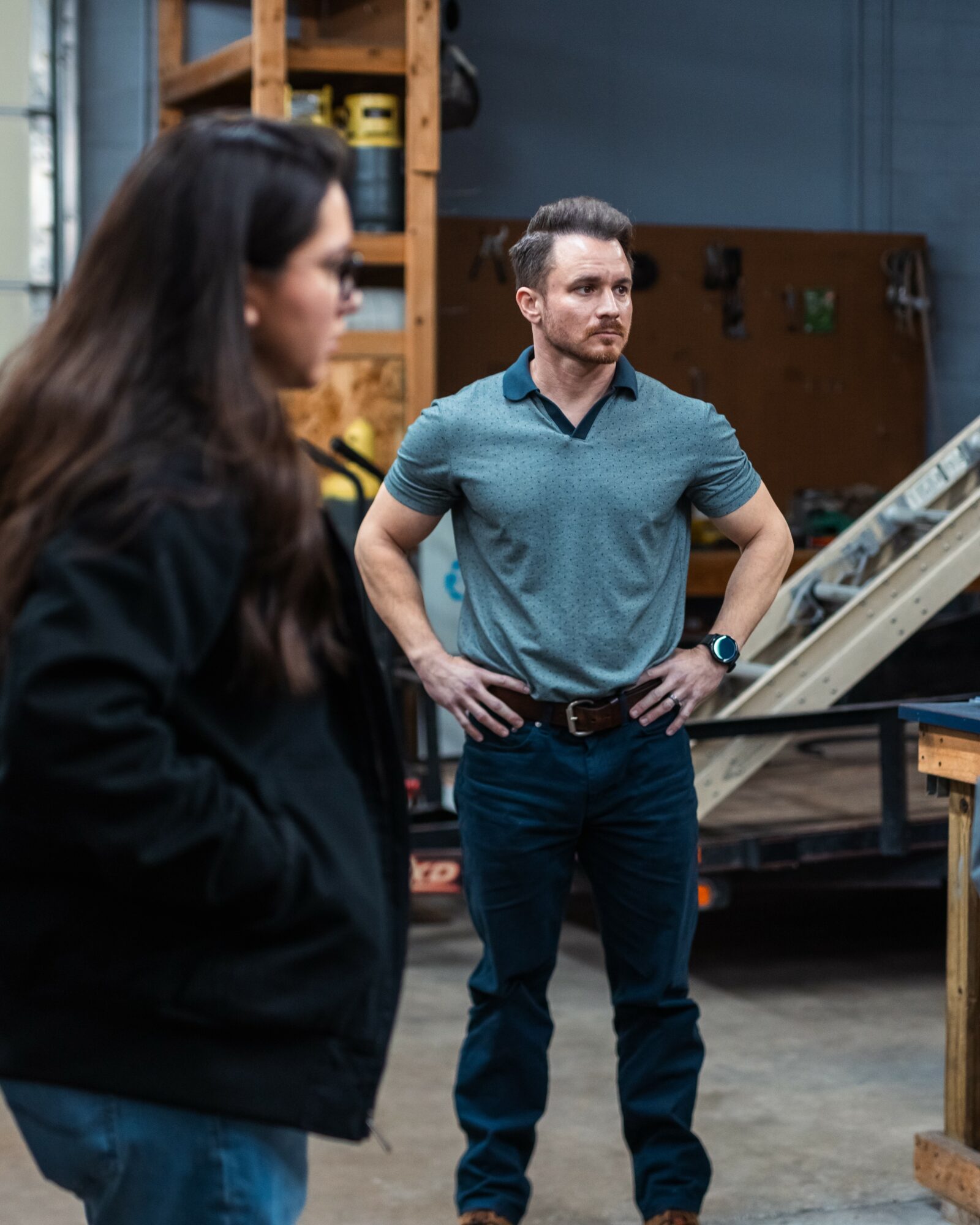






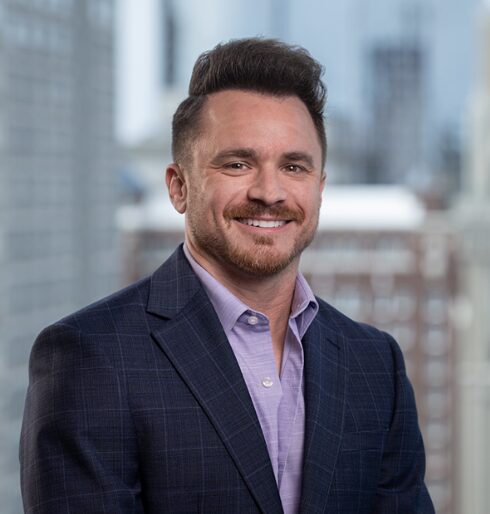
Today we’d like to introduce you to Geoff Kudlacz.
Hi Geoff, can you start by introducing yourself? We’d love to learn more about how you got to where you are today?
From 2010 to 2015, I served five years on active duty as a commissioned officer and nuclear missile operator, leading high-accountability teams in one of the military’s most sensitive mission sets. I was awarded the Air Force Commendation Medal for leadership and performance. That experience shaped my approach to risk management, operational rigor, and steady decision-making under pressure.
When I left the military in 2015, I did what a lot of veterans do. I took the safe road. I landed a corporate job, wore the badge, sat in the meetings, and checked the boxes. And I was miserable. It did not take long to realize that working inside someone else’s system was not where I was built to be.
So I made a decision that most people in my life thought was either bold or reckless, depending on who you asked. I cashed out my IRA, put my life savings on the line, and bought my first house to flip. I was down to less than $1000 to my name. No track record. No safety net. Just a belief that I could execute and figure it out. That first deal worked. Then the next one did. And I never looked back.
Over the next decade I completed more than 400 residential renovations throughout the Kansas City area, giving once dilapidated homes new life for families to live in. That work required consistent execution, construction oversight, and careful risk management across changing market cycles. It also taught me how to build systems, manage teams, and make decisions with incomplete information under real financial pressure.
As that business grew, so did my appetite for larger opportunities. In 2016 I syndicated a commercial apartment building in downtown Kansas City, raising capital from family members who trusted me with their money before I had the track record to make it an easy ask. Raising money from people who know you personally sharpens your sense of accountability in a way that institutional capital never quite does. You feel the weight of every decision differently when the people counting on you are sitting across from you at Thanksgiving dinner.
That experience opened a door I had not anticipated. In 2018, I joined Pacific Sands Funds as Managing Partner and Midwest Asset Manager, stepping into a real estate private equity platform focused on value-add multifamily acquisitions across emerging U.S. markets. What started as a local syndication in downtown Kansas City became the credential that put me in rooms with institutional-grade operators and capital. I co-led the acquisition of approximately $35 million in commercial multifamily real estate across the Midwest, overseeing underwriting, due diligence, construction oversight, and asset operations.
The work centered on one thing: buying assets below their potential, improving operations, and delivering measurable returns to investors. Sixteen properties exited with an average investor IRR in the mid-thirties. That track record did not happen by accident. It happened because the discipline I learned in the military, and sharpened through 400 house flips and a downtown syndication, translated directly into how I underwrote deals, managed risk, and made calls when the market got uncomfortable.
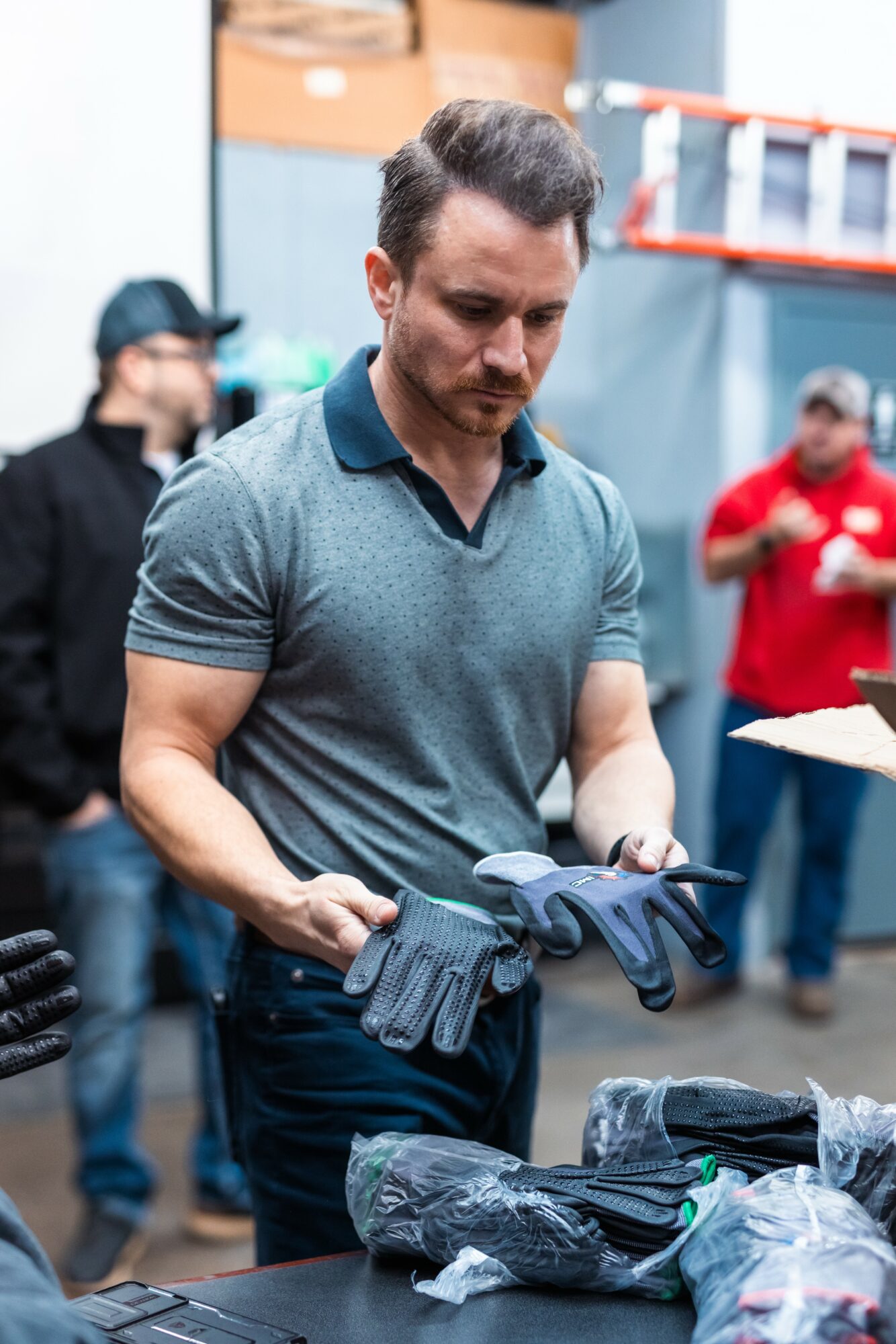
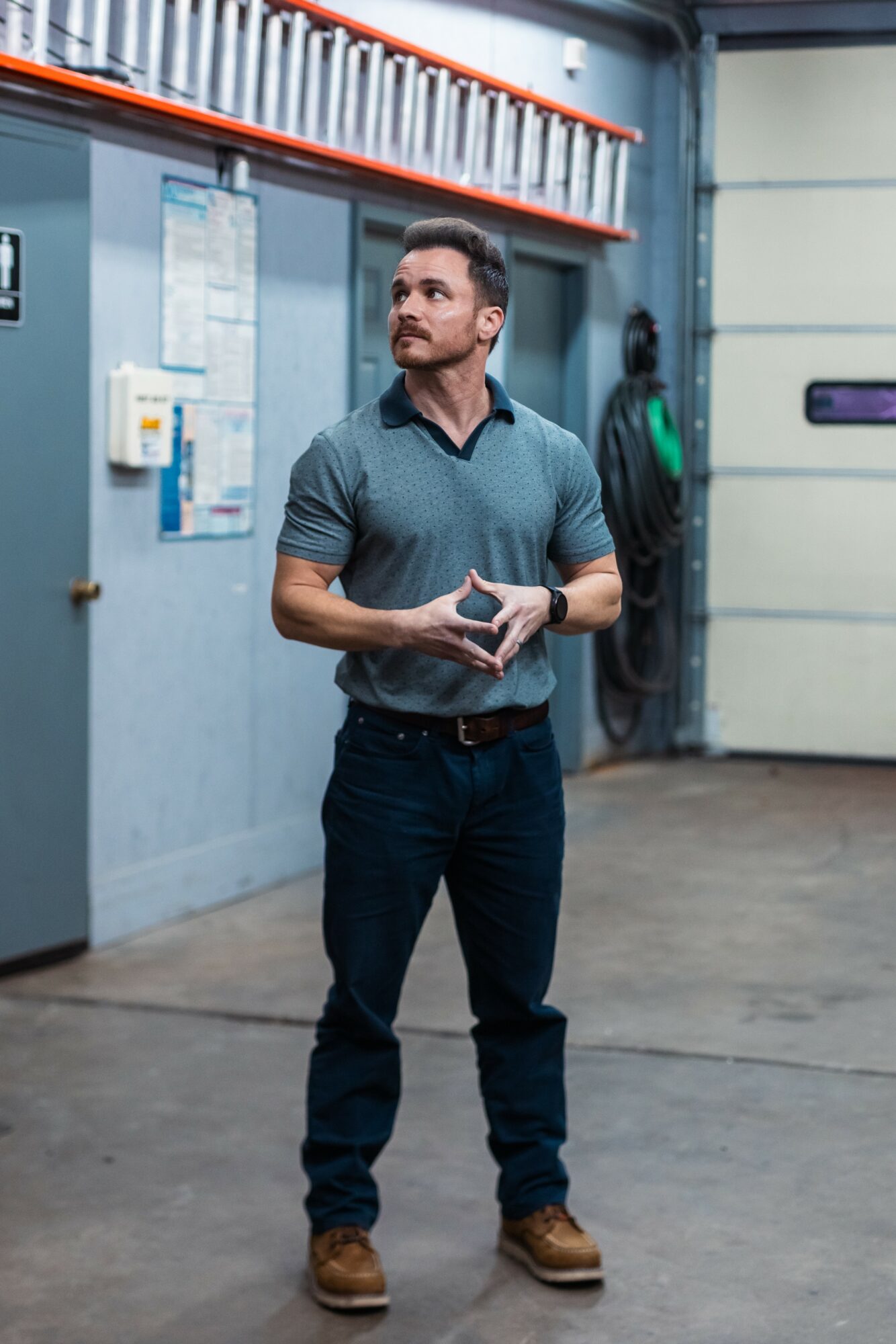
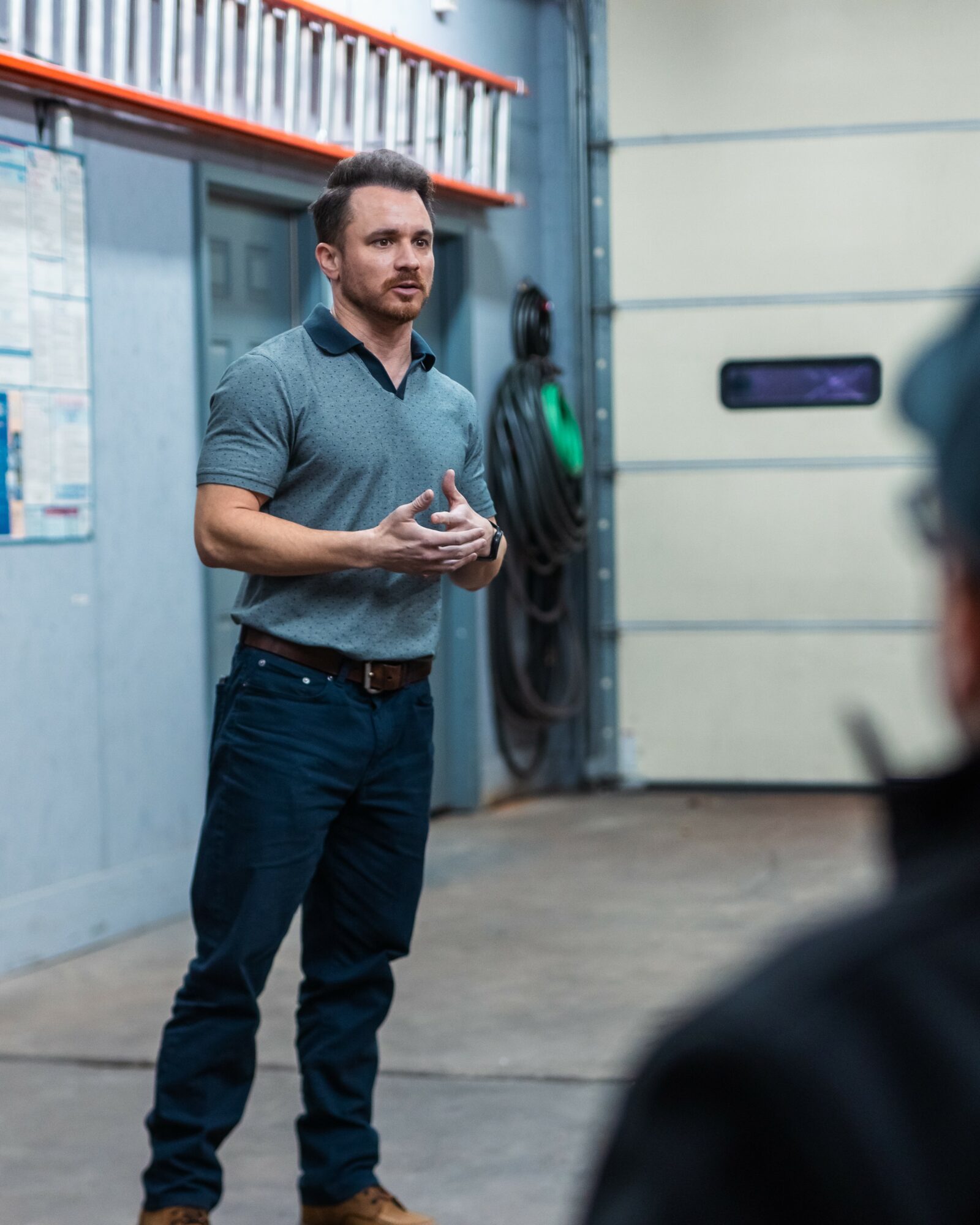
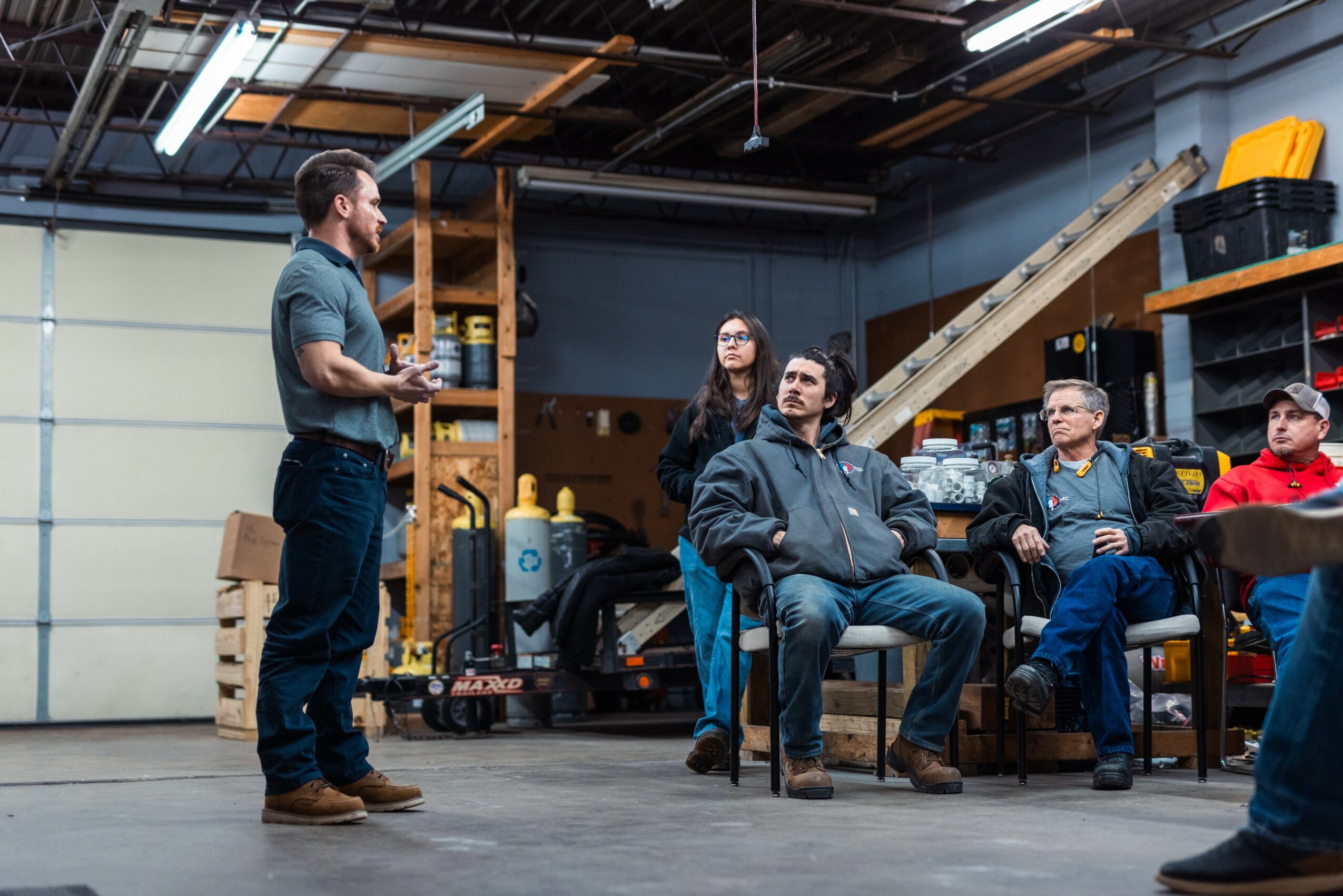
Today, I also serve as CEO and President of Innovative Mechanical Concepts, a commercial HVAC, refrigeration, plumbing, and data center maintenance company serving mission-critical facilities across the Kansas City metro. I co-led the acquisition of IMC with a clear strategy to expand recurring revenue, strengthen operational systems, and scale responsibly. In our first full year under new ownership, IMC achieved 56% revenue growth. My goal is to build IMC into one of the most respected mechanical contractors in Kansas City, recognized for operational excellence, integrity, and a genuine commitment to developing skilled trades professionals.
I am a 2026 Ingram’s 40 Under 40 Award winner and a proud advocate for skilled trades as a path to economic mobility. I believe the trades are undervalued, undersold to young people, and one of the most reliable roads to a good life and financial independence in this country.
Personally, I am grounded in faith, family, and service. I am happily married to my wife Nicole and together we are raising our two boys, Mason and Dillon. I believe leadership begins at home and extends into the workplace and community. I invest in mentoring team members and building organizations that create lasting opportunity in Kansas City.
Can you talk to us a bit about the challenges and lessons you’ve learned along the way. Looking back would you say it’s been easy or smooth in retrospect?
Not even close.
The honest answer is that almost every chapter had a moment where I was not sure it was going to work out. That is probably true for most entrepreneurs, but I think people underestimate how long those moments last and how isolating they can be.
When I left the military I genuinely thought the corporate world would be a natural next step. I had discipline, I had leadership experience, I had a clearance. What I did not have was any tolerance for politics, bureaucracy, and doing things the slow way when there was a clearly better path. I lasted long enough to know it was not for me and short enough that I did not let it become a trap.
Cashing out my IRA and betting everything on a house flip sounds bold in hindsight. At the time it felt terrifying. I did not have a mentor in real estate. I did not have a network of investors or contractors I could call. I was learning the business while running the business, which means I made expensive mistakes on deals that should have been straightforward. There were projects that ate profits I could not afford to lose. There were contractors who did not show up, timelines that fell apart, and market shifts that caught me flat-footed. You learn fast when the consequences are real.
I remember nights sitting in that house unable to sleep, running the numbers in my head for the hundredth time. I had less than a thousand dollars to my name. The IRA was gone. The savings were gone. Everything I had was tied up in four walls that needed more work than I had budgeted for, because they always do. There was no backup plan and no one to call. Just me, the silence, and the very real possibility that I had made the biggest mistake of my life.
You do not let yourself think too far ahead in those moments. If you do, the weight of it will stop you cold. You just fix the next thing and make the next decision.
That house sold. Not by a lot. But enough. And something shifted in me the day it closed that I cannot fully explain. It was not just the money. It was the proof that the bet I made on myself was not crazy. That feeling became the foundation for everything that came after it.
Scaling to 400 flips sounds like a success story and it is, but it took years of grinding through a business that was almost entirely dependent on me. If I stopped moving, the machine stopped. Building systems, finding people I could trust, and learning to delegate without losing control of quality were all harder than I expected and took longer than I wanted.
The syndication in 2016 was its own test. Raising money from family before you have an institutional track record is not a comfortable position to be in. Every month that deal had a problem, and every deal has problems, I was aware that it was not just my money on the line. That weight never fully goes away.
Joining Pacific Sands and operating at a larger scale introduced a different set of challenges. Bigger deals, more complexity, more stakeholders, tighter underwriting requirements. The learning curve was steep and I had to earn credibility in rooms where people had been doing this for decades.
Acquiring IMC in 2025 was a different kind of hard than anything I had faced before.
Buying a business is not like buying a house. You are not walking into something empty that you get to rebuild from scratch. You are walking into an existing culture, existing habits, existing relationships, and existing problems that nobody fully disclosed in the due diligence process because half of them did not even know they existed. The previous owner was the business. Every customer relationship, every operational decision, every piece of institutional knowledge lived in one person. The day I took the keys, that person walked out the door.
The first few months were humbling. I am a fast mover by nature. I like to identify the problem, make the call, and execute. But you cannot lead people that way when they do not know you yet and do not trust you yet. I had to slow down in ways that felt unnatural and earn credibility with a team that had no reason to hand it to me just because my name was on the paperwork now.
There were personnel decisions that needed to be made that I put off longer than I should have because I wanted to give people a fair shot. There were operational gaps that were bigger than they looked from the outside. There were customers I had to re-earn and vendors I had to re-negotiate with from a position of someone new who had not yet proven himself.
And I was doing all of this while simultaneously trying to grow the business, build new systems, and push into new markets like data centers that we had no established footprint in yet.
Year one we grew 56%. I am proud of that number. But I will tell you honestly that there were stretches inside that year where I was not sure we were going to get there. The gap between where the business was and where I needed it to be felt wider some days than others. You just keep closing it one decision at a time.
The thread through all of it is pretty simple. Every hard stretch taught me something I could not have learned any other way. I do not think I would trade the difficult parts even if I could. They are the reason I trust my own judgment now in a way I did not when I started.
Appreciate you sharing that. What should we know about Innovative Mechanical Concepts?
Innovative Mechanical Concepts is a commercial HVAC, refrigeration, plumbing, and data center maintenance company serving the Kansas City metro. We work in the environments where failure is not an option. Hospitals, grocery chains, cold storage facilities, data centers, mission critical infrastructure. The kind of places where a system going down at 2am on a Friday is not an inconvenience. It is a crisis.
We specialize in preventive maintenance, service, and repair across commercial mechanical systems. But what we are really known for, and what I am most proud of, is how we show up. We commit to a two hour response time on urgent calls. We have Liebert factory-certified technicians on staff, which matters enormously in data center environments where precision cooling equipment is not something a generalist should be diagnosing in the middle of the night. We build custom maintenance programs around each customer’s actual load profile and operational requirements rather than handing them a generic OEM schedule written for someone else’s facility.
What sets us apart is the combination of union-trained craft and owner-level accountability. Our technicians come up through Local 533 and Local 8, which means they are trained to a standard that most of our competitors cannot match. And because I am the owner and I am in the business every day, our customers get a level of responsiveness and personal accountability that you simply do not get from a large regional contractor where you are account number 4,000.
But honestly, what separates us most is the experience we deliver. There is no shortage of mechanical contractors in Kansas City. Customers have plenty of options. What keeps them coming back to us, and what we hear consistently, is how we make them feel throughout the entire process. From the first call to the final invoice, we operate with a white glove standard that most contractors in this industry simply do not prioritize. We communicate proactively. We show up when we say we will. We treat every facility like it is the most important job on our board that day, because to that customer it is. We do not disappear after the work is done. We follow up, we check in, and we hold ourselves accountable to the outcome not just the task.
In a commodity industry where most contractors compete on price, we compete on experience. And the proof is in the customers who choose us again and again not because we are the cheapest option but because working with us is simply better. That is the standard we hold ourselves to every single day and it is the reputation we are building IMC on for the long term.
We launched our Data Center Division in 2025 to formally serve the growing mission critical market in Kansas City. That was a deliberate move. The KC data center market is expanding and most of the mechanical contractors in this space are either too large to care about a mid-sized facility or too small to handle the complexity. We built IMC to live right in that gap.
One thing I will say that I think is genuinely underappreciated as a competitive advantage: I did not come from this industry. I did not grow up in the trades, I did not work my way up through a mechanical contractor, and I did not inherit a playbook from someone who had been doing it the same way for thirty years. I came from the military, from real estate and from building businesses in completely different industries. And that outside perspective has been one of the most valuable things I have brought to IMC.
In the trades, there is a tendency to do things a certain way because that is the way they have always been done. I do not have that conditioning. When I see a process that does not make sense, I question it. When I see a customer experience that falls short of what I would expect in any other industry, I fix it. When I see a market opportunity that the incumbents are ignoring because it does not fit their traditional model, I go after it. The data center division is a direct result of that mindset. Most mechanical contractors in this market have not formally pursued that space. We did, intentionally and aggressively, because the opportunity was obvious to someone willing to look at it without assumptions.
I think differently than the typical contractor. I approach problems differently. And I believe that difference is showing up in our results.
In our first full year under new ownership, our revenue grew 56%. That growth did not come from luck. It came from building the right systems, putting the right people in the right seats, and going after the right customers with a very clear value proposition.
What I want readers to know about IMC is simple. We are not the cheapest option and we do not try to be. We are the contractor you call when you cannot afford for something to go wrong. When your system goes down and you need someone who knows what they are doing to be there fast, that is where we live. That is what we are built for.
We are also deeply committed to the trades as a profession and a career path. Every hire we make is an investment in someone’s livelihood and their family’s future. I take that seriously. The skilled trades are one of the most reliable paths to a good life and financial independence in this country and they are chronically undersold to the next generation. Part of what I want IMC to stand for, beyond the work we do for our customers, is proof that a trades company can be a place where people are proud to work and proud to grow.
Do you have any advice for those looking to network or find a mentor?
The best advice I can give on finding a mentor is to stop looking for a mentor and start looking for people who are doing what you want to do and figure out how to get close to them.
Most people approach it backwards. They send a cold message asking someone to be their mentor and wonder why it does not work. Nobody wants to sign up for an undefined commitment to a stranger. What works is showing up in the rooms where those people are, adding value before you ask for anything, and letting the relationship build naturally. The mentorship follows the relationship. It rarely works the other way around.
And I cannot stress this enough. You have to bring something to the table first. Not eventually. Upfront. Before you ask for anything. You cannot walk up to someone you admire and ask them to invest in you when you have given them no reason to believe the investment is worth making. Why would they stop what they’re doing, in their business, to give you their valuable time? Value has to flow first. The people who complain they cannot find a mentor are usually the same people who have never stopped to ask what they have actually offered the people they want access to. Flip that question and everything changes.
For networking in general, genuine curiosity has worked better for me than any strategy. I am actually interested in what people are building and how they think. When that is real, people feel it. When it is transactional, they feel that too.
I joined a professional coaching group to learn from other executives. Joining structured groups like Vistage has been one of the highest leverage investments I have made. You are in a room with other CEOs solving real problems, and the relationships that come out of those environments are substantive because they are built on honesty and shared challenges, not business card exchanges.
The clearest path to the people you want to know runs through the people you already know. A warm introduction is worth ten cold outreaches. Invest in your existing relationships and they will open doors you did not even know existed.
And give back early. You do not have to be at the top of your field to add value to someone earlier in their journey. That generosity comes back in ways you cannot predict or manufacture.
Contact Info:
- Website: https://innovative-mech.com
- Instagram: https://instagram.com/geoffrey_dollars
- Facebook: https://facebook.com/geoffreydollars
- LinkedIn: https://www.linkedin.com/in/geoff-kudlacz-463277154/
- Youtube: https://youtube.com/@geoffrey_dollars