





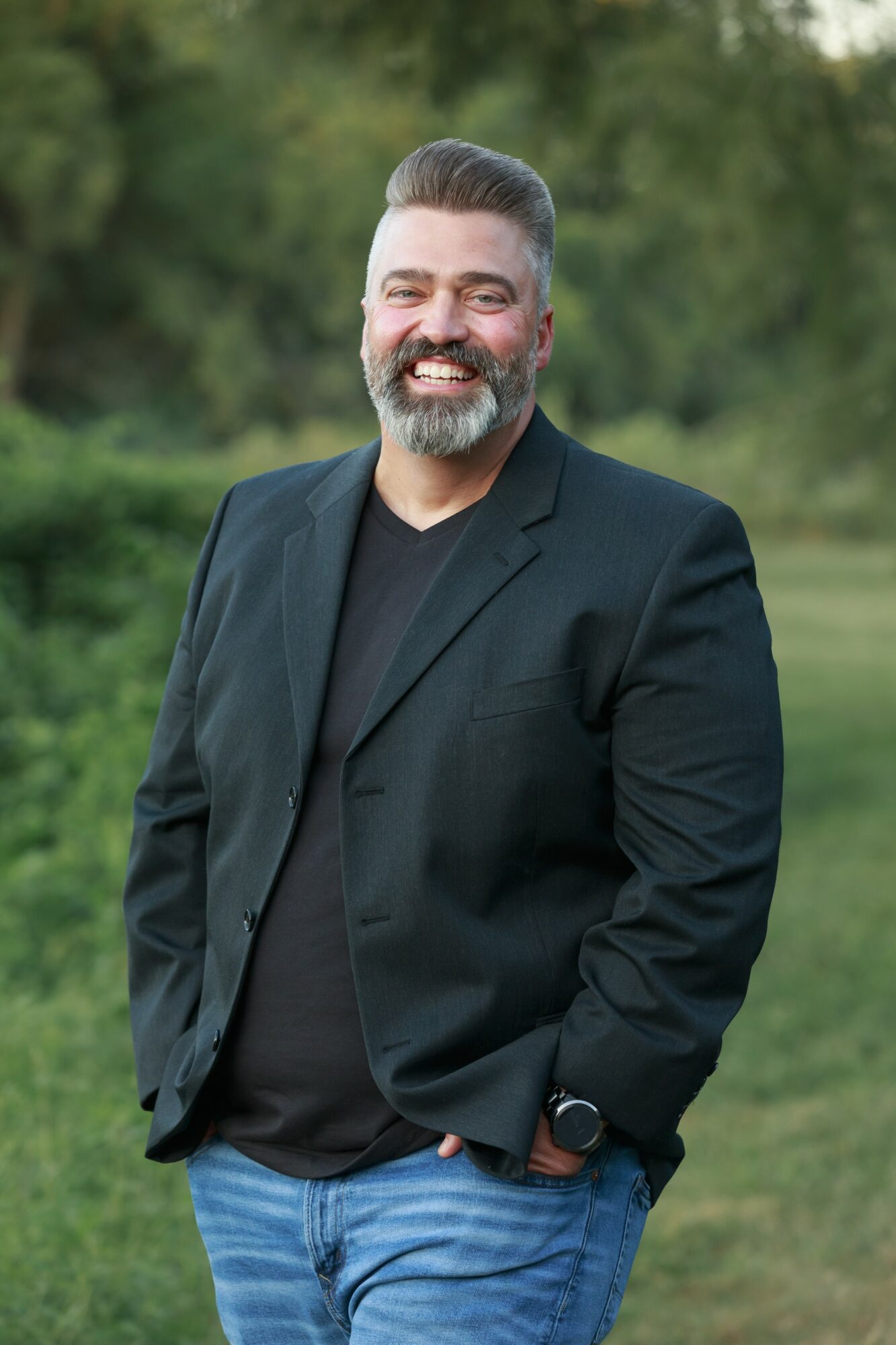
Today we’d like to introduce you to Michael Scott.
Hi Michael, thanks for joining us today. We’d love for you to start by introducing yourself.
I grew up in Independence, the oldest of five in a home where money was scarce and uncertainty was familiar. We experienced homelessness twice before I graduated high school. Those years were hard—marked by both violence and kindness—and they shaped me in ways I’m grateful for today. Living through poverty taught me to notice small blessings, to work for what I didn’t have, and to never take safety or stability for granted.
Along the way, people stepped in and changed my life. My grandmother was the first. She believed in me before I knew how to believe in myself. From her I learned that kindness is not weakness—it’s a deliberate choice to serve others, especially when it’s costly.
When I was thirteen, I met a woman I now call my adopted mom, Lori. I told her about a fight outside our apartment complex—how someone pulled a gun and fired, and how the bullets came through our house. Lori didn’t just offer sympathy; she found us a safe place to live and bought my family a home. That act of courage and generosity gave me more than shelter. It gave me the chance to imagine a different future.
I’m a product of the safety net—SNAP, Section 8, and Medicaid helped meet our basic needs so I could take the next steps toward independence. As more mentors invested in me, I learned to work with my hands and to manage projects. Lori and her company taught me the rhythms of construction—how to build things that last, how to lead crews, and how to solve problems no one sees coming. Eventually I joined DH Pace, where I had the chance to help manage a major sports stadium project—an opportunity that felt like a dream come true for a kid who once worried more about tomorrow’s meal than tomorrow’s career.
During that season my wife and I started our family—four beautiful children, three girls and one boy—and something in me began to shift. The success I was grateful for didn’t feel complete unless I could give back in a deeper way. I was active in our local church, and in 2014 an opportunity arose to help launch and pastor a church in Raytown, Missouri. Saying yes meant leaving construction, going back to school and seminary, and stepping into full-time ministry.
That decision opened new doors to serve the broader community. I became involved with Rotary, our Chamber of Commerce, and the Economic Development Council. Today, I spend my time leading a church and working alongside nonprofits across Eastern Jackson County. My focus is simple: to be for others what so many people were for me—a mentor, an advocate, and a stabilizing presence when life feels unstable.
If there’s a thread that runs through my story, it’s this: I am here because people chose generosity over judgement, and community over indifference. I learned that resilience grows when someone lends you their strength, and that faith looks like love in motion. My hope now is to build ladders for the next family standing where mine once stood—so that one day they’ll tell their story, and it will be a story of possibility, too.
Alright, so let’s dig a little deeper into the story – has it been an easy path overall and if not, what were the challenges you’ve had to overcome?
Growing up poor wired me for scarcity. Even now, I still hear that old voice: There won’t be enough. Enough money. Enough time. Enough opportunity. It’s a stubborn soundtrack that can grow louder in stressful seasons, and it has taken real work to recognize it, name it, and keep it from driving my decisions.
The pandemic amplified that voice. As the world shut down, so did plans, paychecks, and possibilities. Friends lost businesses they had poured their lives into. Organizations I cared about struggled to keep the lights on. Like most people, I was navigating uncharted territory while trying to lead, provide, and stay steady for my family and community. The ripple effects didn’t disappear when the headlines moved on—we’re still living with the aftershocks in finances, mental health, and the way people connect with one another. I had to learn how to make peace with uncertainty without surrendering to it.
Another challenge has been spiritual and cultural. I was raised in the religious right, and over time my understanding of faith shifted. That change has been hard for some family and friends to accept. Criticism—sometimes daily—comes with the territory when you step outside familiar lines. But my faith compels me to love everyone, without exception—regardless of sexual orientation, race, creed, or ethnicity. I understand that makes some people uncomfortable, and I’ve had to develop the resilience to hold steady in the tension: to stay soft toward people while staying firm in conviction.
What I’ve learned is that comfort is often the antithesis of progress. Growth asks something of us. It asks us to risk misunderstanding, to confront our own fears, and to live with the discomfort of change. For me, that has meant choosing generosity when scarcity whispers “hold back,” choosing listening over labeling when I disagree, and choosing to keep serving even when outcomes aren’t guaranteed.
These struggles haven’t vanished; they’ve become teachers. Scarcity reminds me to practice gratitude and to measure success by faithfulness, not just by metrics. The pandemic years taught me to build margin, to check in on people before projects, and to lead with honesty when I don’t have all the answers. The criticism taught me to separate identity from approval, to welcome accountability without giving shame a seat at the table, and to let love—not fear—have the final word.
I don’t pretend to have mastered any of this. But I’m not where I started. When the old voice says, There won’t be enough, I answer with what experience has shown me: there will be enough grace for the day, enough wisdom for the next step, and enough courage to keep moving forward. If my story proves anything, it’s that progress rarely feels comfortable—but it’s always worth the stretch.
Can you tell our readers more about what you do and what you think sets you apart from others?
My professional life has taken me down paths I never could have imagined as a kid growing up with food insecurity. The most meaningful work I’ve been part of has come through the nonprofit sector, where I’ve had the privilege of helping build programs that address the very challenges I once faced.
One of the programs I’m most proud of is our summer lunch initiative in the Blue Springs community. Every summer, our team makes and delivers more than 10,000 meals to families who are food insecure. But it’s never been just about food—it’s about dignity, consistency, and showing up. Week after week, we get to meet families where they are and remind them that their community cares.
Alongside that, our “backsnack” program helps bridge the weekend gap for students who rely on school meals. Every Friday during the school year, we deliver 4,000 to 5,000 meals to children across the Blue Springs School District so that no child has to wonder where their next meal will come from. The logistics are challenging, but the impact is unmistakable. These meals don’t just fill stomachs—they create a foundation of stability that allows kids to learn, grow, and dream.
Beyond food distribution, our work has expanded into year‑round support. We collect and distribute coats, shoes, socks, school supplies, books, toiletry kits, and countless other essentials. Every item that’s given away is really an invitation—an opportunity to build connection and walk alongside families who face the same insecurities I once lived with. Those relationships are the heart of the work.
One story that stays with me is of a young man we met through our summer lunch program. He started coming regularly to pick up meals—not just for himself, but for every child in his neighborhood. He made sure younger kids and families with babies who couldn’t make the walk still had what they needed. And then there were the children who were too embarrassed to be seen receiving a sack lunch—he brought food to them quietly, without hesitation or judgment. Watching him serve others so naturally reminded me why these programs matter. They’re not only about meeting needs—they’re about planting seeds.
Our goal isn’t just to feed people; it’s to affirm their value, build trust, and create opportunities. When kids grow up knowing they matter, they’re more likely to thrive, and one day, to give back themselves. That’s what drives me: helping create cycles of hope instead of cycles of scarcity.
This work has shaped my professional identity more than any title or role ever could. It has connected my past to my purpose and allowed me to invest in the same kind of community support that once carried me. My career, at its core, is about service—meeting needs, building relationships, and helping others find their footing so they can build a better future.
What’s next?
As I look ahead, my focus is on continuing the work that has shaped so much of my life—serving my community and standing alongside the people who often feel unseen. Over the years, I’ve learned that meaningful change requires both compassion and commitment, and I’m convinced that some of the challenges we face today need solutions that go beyond day‑to‑day service work. That belief led me to take the step of running for State Representative in District 35.
For me, this decision isn’t about politics—it’s about responsibility. I’ve always believed in loving my neighbor and caring for the people around me, and I see areas where our systems could better reflect those values. My hope is simply to be part of the solution, to bring a voice shaped by real experiences with poverty, food insecurity, and community service to conversations that affect everyday families.
While pursuing this next step, I plan to continue my work in the nonprofit sector, leading programs and partnerships that support children, families, and underserved communities. That work is central to who I am, and it keeps me rooted in the realities and relationships that matter most. Whether I’m delivering meals, building partnerships, or listening to families share their challenges, these moments remind me why service is worth pursuing in every arena.
Ultimately, my future plans center on the same goal that has guided me for years: to help my neighbors, to advocate for the least of these, and to contribute to a community where everyone feels valued and supported.
Contact Info:
- Website: https://www.thetablebluesprings.com/
- Instagram: https://www.instagram.com/the_table_bluesprings/ and https://www.instagram.com/mike_scottj/
- Facebook: https://www.facebook.com/TheTableBlueSprings | https://www.facebook.com/michael.j.scott.146 | https://www.facebook.com/MichaelScottForMissouri
- Other: https://www.tiktok.com/@the.table09?lang=en