





Today we’d like to introduce you to Melissa Garrett.
Hi Melissa, thanks for joining us today. We’d love for you to start by introducing yourself.
My journey to founding The Hive: The Indigenous Collective began in an unexpected place: recovering from spinal surgery.
After my surgery, I started Carefree Creations, which became one of my first steps into entrepreneurship. It gave me an opportunity to explore my creativity and begin building something of my own while navigating a new chapter in my life.
Over time, I experienced the loss of several of my elders, including my father. Those losses had a profound impact on me and my family. I often think of our elders as living libraries. They carry generations of knowledge, stories, language, traditions, and experiences that cannot always be found in books or taught in classrooms.
When we watched these elders leave us, we weren’t just saying goodbye to the people we loved. We were also witnessing the loss of knowledge that, in some cases, would never be passed down.
When my father passed away, he asked us not to let our culture die. He asked me not to let our culture die. That request became one of the driving forces behind the work I do today.
Another important turning point came when my daughter experienced bullying in school. It made me think more deeply about the lack of Indigenous representation and education in our schools, particularly in urban communities.
Indigenous people are often among the least-discussed ethnic groups in our educational systems, even though we are the original peoples of this land. I believe our children deserve opportunities to learn about their history, culture, and identity in ways that are meaningful and respectful.
My journey eventually led me to the Heart of America Indian Center, where I began making pies. When I was asked if I could prepare traditional Indigenous foods, it opened a door to something much bigger.
That experience led me to start Wadulisi’s LLC, my Indigenous foods and culture business. As the work grew, I realized I wanted to create something beyond my own business—something that could support cultural education, food sovereignty, and opportunities for other Indigenous people.
That vision became The Hive: The Indigenous Collective.
The Hive is an Indigenous-led nonprofit dedicated to connecting people, knowledge, and opportunities through three interconnected areas of work: Culture & Knowledge, Food Sovereignty, and Indigenous Entrepreneurship.
Through Culture & Knowledge, we focus on cultural preservation, education, language, Indigenous history, and creating opportunities for knowledge to be shared across generations.
Through Food Sovereignty, we work to reconnect communities with Indigenous foodways, land-based learning, traditional growing practices, and the knowledge surrounding how we grow, prepare, and share food.
Through Indigenous Entrepreneurship, we work to support Indigenous chefs, artists, farmers, storytellers, Knowledge Keepers, and other cultural practitioners by creating opportunities for education, collaboration, and economic development.
Our work is connected through the concept of Sweetgrass, which represents the relationships between these three areas and the importance of keeping them connected.
The Hive is about creating spaces where Indigenous knowledge is respected, our traditions are valued, and our communities have opportunities to learn, grow, and build sustainable futures.
We want to create opportunities for people to reconnect with their culture, share knowledge, and develop the skills and resources they need to thrive.
For me, The Hive is a way to honor the elders who shaped my life, respond to my father’s request, and create something meaningful for my daughter and future generations.
What started with recovery, creativity, and a few pies has grown into a much larger vision.
The Hive is about honoring the libraries we’ve lost, protecting the knowledge we still carry, and creating new opportunities for that knowledge to live on.
Our goal is not simply to preserve the past. It is to help ensure that Indigenous culture, knowledge, foodways, and entrepreneurship continue to thrive for generations to come.
Alright, so let’s dig a little deeper into the story – has it been an easy path overall and if not, what were the challenges you’ve had to overcome?
What are some of the obstacles and challenges you’ve faced along the way?
One of the biggest challenges in building The Hive: The Indigenous Collective has been constantly having to explain why this work matters and why Indigenous communities deserve to be part of the foundation—not simply added after the fact.
Too often, Indigenous communities are invited into conversations only after the foundation has already been built. Instead of being included from the beginning, we find ourselves being asked to fit into systems that were never designed with us in mind.
We are constantly being squeezed into spaces rather than being recognized as part of the foundation.
I believe Indigenous people should have a voice in conversations about our own communities, our culture, our foodways, and our future from the very beginning. Our knowledge and leadership should be valued as essential, not supplemental.
Another significant challenge is access to funding and capital.
Many Indigenous people and emerging Indigenous-led organizations, especially those of us building something from the ground up, don’t have access to large amounts of startup capital or major financial backing. As a growing nonprofit, much of our work depends on grants, donations, and community support.
The difficult part is that we are often expected to prove ourselves before we are given the resources to do the work.
We have to demonstrate our impact, establish credibility, and build a track record before funding becomes accessible. But building that track record requires resources in the first place.
It can feel like we’re constantly being asked to prove that our work matters while simultaneously trying to find the means to make that work possible.
Another challenge is helping people understand the needs of Indigenous communities living outside tribal reservations and tribal lands.
Many funding opportunities prioritize tribal governments or tribal-led organizations. That funding is important, and tribal communities deserve those resources. However, we also have to ask ourselves: How are we reaching the Indigenous people who live outside those communities?
According to the U.S. Department of Health and Human Services’ summary of the 2020 Census, approximately 87% of people who identify as American Indian or Alaska Native, alone or in combination with another race, live outside tribal statistical areas.
That means a significant portion of our Indigenous population lives in urban and rural communities away from reservations and other tribal lands.
These communities still need access to cultural education, economic opportunities, food sovereignty initiatives, and spaces where they can connect with their identity.
This is one of the reasons The Hive is intentionally expanding its work into Kansas, particularly the Lawrence area.
Kansas is home to federally recognized tribal nations, including the Prairie Band Potawatomi Nation, the Kickapoo Tribe in Kansas, the Iowa Tribe of Kansas and Nebraska, and the Sac and Fox Nation of Missouri in Kansas and Nebraska.
These communities and the relationships we are building in the region create opportunities for us to strengthen Indigenous connections and expand our programming.
Lawrence is also part of the broader regional network we serve, making it a meaningful location for developing partnerships and reaching Indigenous people in urban and surrounding communities.
We want to build relationships that help bridge the gap between tribal communities and Indigenous people living away from tribal lands.
Another challenge is preserving knowledge that has already been lost.
I often think of our elders as living libraries. They carry generations of knowledge, stories, language, traditions, and experiences that cannot always be found in books or taught in classrooms.
When we watched our elders leave us, we weren’t just saying goodbye to the people we loved. We were also witnessing the loss of knowledge that, in some cases, would never be passed down.
That loss has had a profound impact on my family and is one of the reasons I feel so strongly about cultural preservation and education.
We cannot recover everything that has been lost, but we can work to honor, document, and pass on the knowledge that remains.
We also face the challenge of creating opportunities for Indigenous entrepreneurs and cultural practitioners while ensuring that their knowledge, intellectual property, and lived experiences are respected.
We want to build partnerships that empower our communities rather than treating Indigenous culture as an afterthought or something to be included only when it is convenient.
Personally, learning how to balance my responsibilities as a founder, nonprofit leader, entrepreneur, and mother has been a journey in itself.
Building something meaningful takes time, patience, and resilience. There are moments when the weight of that responsibility can feel overwhelming, but I continue to remind myself that meaningful change doesn’t happen overnight.
Despite these challenges, every obstacle has reinforced why The Hive is necessary.
We are still growing, developing partnerships, seeking resources, and establishing our foundation. But we are also creating something that I hope will outlast me.
Our goal is not simply to ask for a seat at the table. It is to help build a table where Indigenous communities—including those living in urban areas—are recognized as part of the foundation from the very beginning.
We want to create a future where Indigenous people have access to knowledge, opportunity, cultural connection, and the resources they need to thrive.
The work is not easy, but it matters. And for me, that is what keeps The Hive moving forward.
Appreciate you sharing that. What else should we know about what you do?
I’d describe my professional work as a combination of Indigenous culinary arts, cultural education, food sovereignty, entrepreneurship, and community development.
I am the founder and executive director of The Hive: The Indigenous Collective, an Indigenous-led nonprofit focused on three interconnected areas: Culture & Knowledge, Food Sovereignty, and Indigenous Entrepreneurship. I am also the founder and head chef of Wadulisi’s LLC, my Indigenous foods and culture business.
My work centers around reconnecting people with Indigenous foodways, preserving cultural knowledge, creating educational opportunities, and helping Indigenous entrepreneurs and cultural practitioners build sustainable futures.
I recently completed my Culinary Arts & Operations certification through Auguste Escoffier School of Culinary Arts and am continuing my education in entrepreneurship. Furthering my education has been incredibly important to me because I believe in combining the knowledge passed down through our elders with the skills, resources, and opportunities available today.
One of the things I am most proud of is how much my work has grown in such a short period of time.
Through The Hive, we have been developing educational programs, building partnerships, supporting Indigenous entrepreneurs, and creating opportunities for people to reconnect with Indigenous culture and foodways. We are working to bring Indigenous perspectives into conversations surrounding agriculture, education, entrepreneurship, and community development.
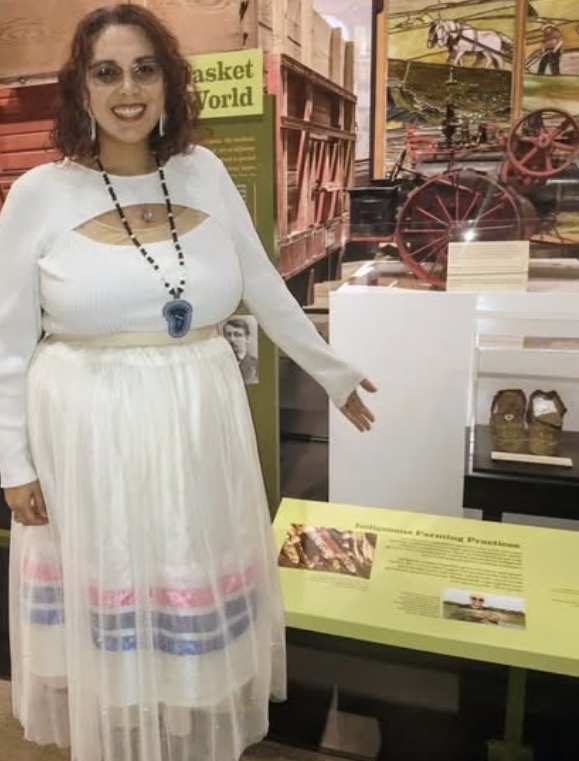
Our work has also begun making its way into broader educational and agricultural spaces. Our Three Sisters foodways and agricultural education work has received recognition, including having a Three Sisters dish featured at the Kansas Museum of History. We are continuing to develop opportunities to increase Indigenous representation in these spaces.
I am also proud of the recognition and support my work has received recently. I was awarded a professional development scholarship supported by the Patterson Family Foundation through K-State Extension. This opportunity is helping me continue to grow my knowledge and skills as a leader, entrepreneur, and advocate for Indigenous foodways.
I have also been nominated for recognition through LUXlife Magazine’s Fine Dining Awards, which was an incredible honor and a meaningful acknowledgment of my work in Indigenous culinary arts.
These accomplishments mean a great deal to me because they represent more than personal milestones. They demonstrate that the work we are doing has value and that there is a genuine need for Indigenous-led initiatives that connect culture, education, food, and economic opportunity.
What sets me apart is the way I bring all of these areas together.
I am not just a chef. I am a cultural educator, an entrepreneur, a nonprofit leader, and someone who is deeply invested in creating opportunities for my community. I understand the importance of honoring traditional knowledge while also recognizing the need for modern business practices, education, and sustainable development.
Through Wadulisi’s, I explore Indigenous foodways and culinary experiences. Through The Hive, I am working to create opportunities for other Indigenous people to share their knowledge, develop their skills, and build something of their own.
I believe that Indigenous knowledge, creativity, and entrepreneurship deserve to be valued and supported—not treated as an afterthought.
I am particularly proud of the work we are doing to build bridges between Indigenous communities, educational institutions, agricultural organizations, libraries, and other community partners. These relationships allow us to create opportunities that may not otherwise exist.
Ultimately, what I am most proud of is that I am building something that extends beyond myself.
The Hive is rooted in the knowledge and teachings of the elders who came before us, but it is also focused on creating opportunities for the generations who come after us.
I am still learning, growing, and developing as a leader, but I am proud of the progress we’ve made and excited about what lies ahead.
What sets me apart is my commitment to making sure that Indigenous culture is not only preserved but actively lived, taught, celebrated, and carried forward through food, education, entrepreneurship, and community.
That is the work I am passionate about, and that is the future I am working to help build.
Do you have any advice for those looking to network or find a mentor?
Over the years, I have been fortunate to have several people who have mentored me, encouraged me, and helped guide me through different stages of my personal and professional journey. Some of those individuals continue to mentor me today, and I am incredibly grateful for the knowledge, wisdom, and support they have shared with me.
One of the biggest lessons I have learned, and one that I continue to remind myself of, is that I am always the student.
There is a scene in The Forbidden Kingdom that has always resonated with me. Jackie Chan’s character uses the simple act of pouring tea into an already-full cup to demonstrate that when there is no room left, nothing new can be added.
That lesson has stayed with me. No matter how much I learn or how knowledgeable I become, I have to remain open to new perspectives, correction, and growth. If we are not open to being corrected, then we are not truly open to mentorship. Growth requires humility, and being teachable means understanding that even constructive criticism can help us become better people and better leaders.
As I continue building The Hive: The Indigenous Collective, I am also beginning to see a shift in generations. I have been mentored by others, and now I am finding myself in a position where I am mentoring people who are coming behind me.
That is a responsibility I do not take lightly. I hope that I can be the kind of mentor who provides helpful information, shares knowledge openly, encourages others, and helps people recognize their own potential. I do not believe mentorship is about having all the answers. It is about being willing to share what you know while remaining humble enough to continue learning yourself.
My advice to anyone looking for a mentor is to start by building genuine relationships. Do not approach networking with the mindset of simply asking what someone can do for you. Take the time to learn from people, understand their experiences, and build relationships based on mutual respect.
Some of the most meaningful connections can come from simply showing up, participating in community events, attending workshops, asking questions, and being open to learning. You never know who you might meet or what opportunities may come from a simple conversation.
I also believe mentorship can take many forms. Some people help us develop professionally, while others teach us about leadership, culture, resilience, or life itself. Our elders, in particular, have always been an important source of knowledge and guidance for me.
I have also learned that some mentors are only meant to be in our lives for a season. They may teach us something important, help us navigate a challenge, or prepare us for the next stage of our journey. Not every mentorship is meant to last forever, and that is okay.
As I continue my work with The Hive, I want to help create opportunities for knowledge to be shared across generations. The information and guidance we receive should not stop with us. We have a responsibility to pass it forward and help create pathways for others, especially those who may not have had access to the same resources or support.
My biggest piece of advice is to remain open, stay curious, and do not be afraid to introduce yourself or ask for guidance. You do not have to know everything to get started, and you do not have to build your future by yourself.
Be willing to learn, be willing to be corrected, and remember that you are always the student—even when you begin to become the teacher.
Contact Info:
- Website: https://thehivetheindigenouscollective.com/
- Instagram: https://www.instagram.com/thehivetheindigenouscollective/
- Facebook: https://www.facebook.com/share/14KXq7Xy4K1/
- Youtube: https://youtube.com/playlist?list=PLpRave0WSiMzrWYYKqvWlxlknjhd1UlNi