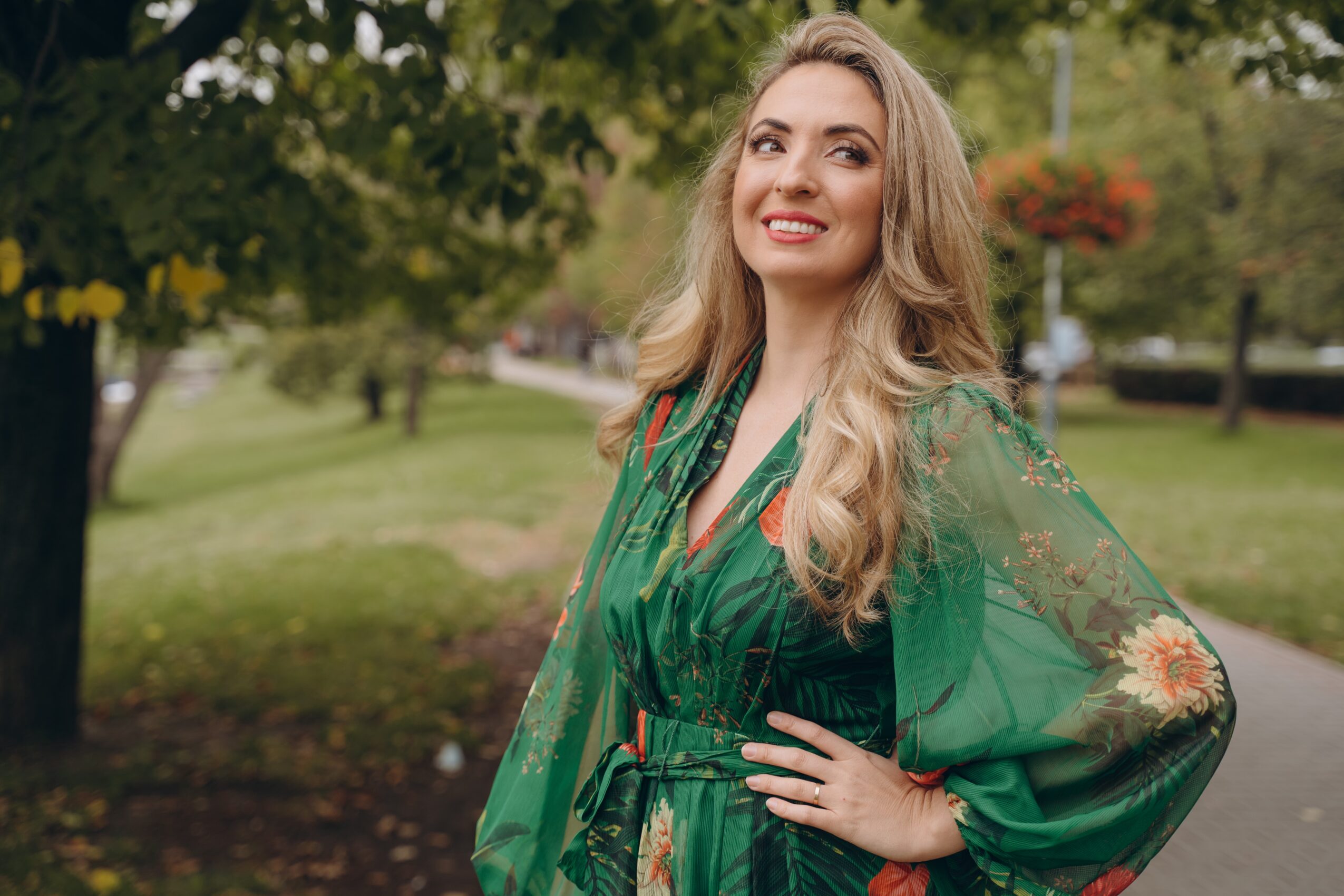





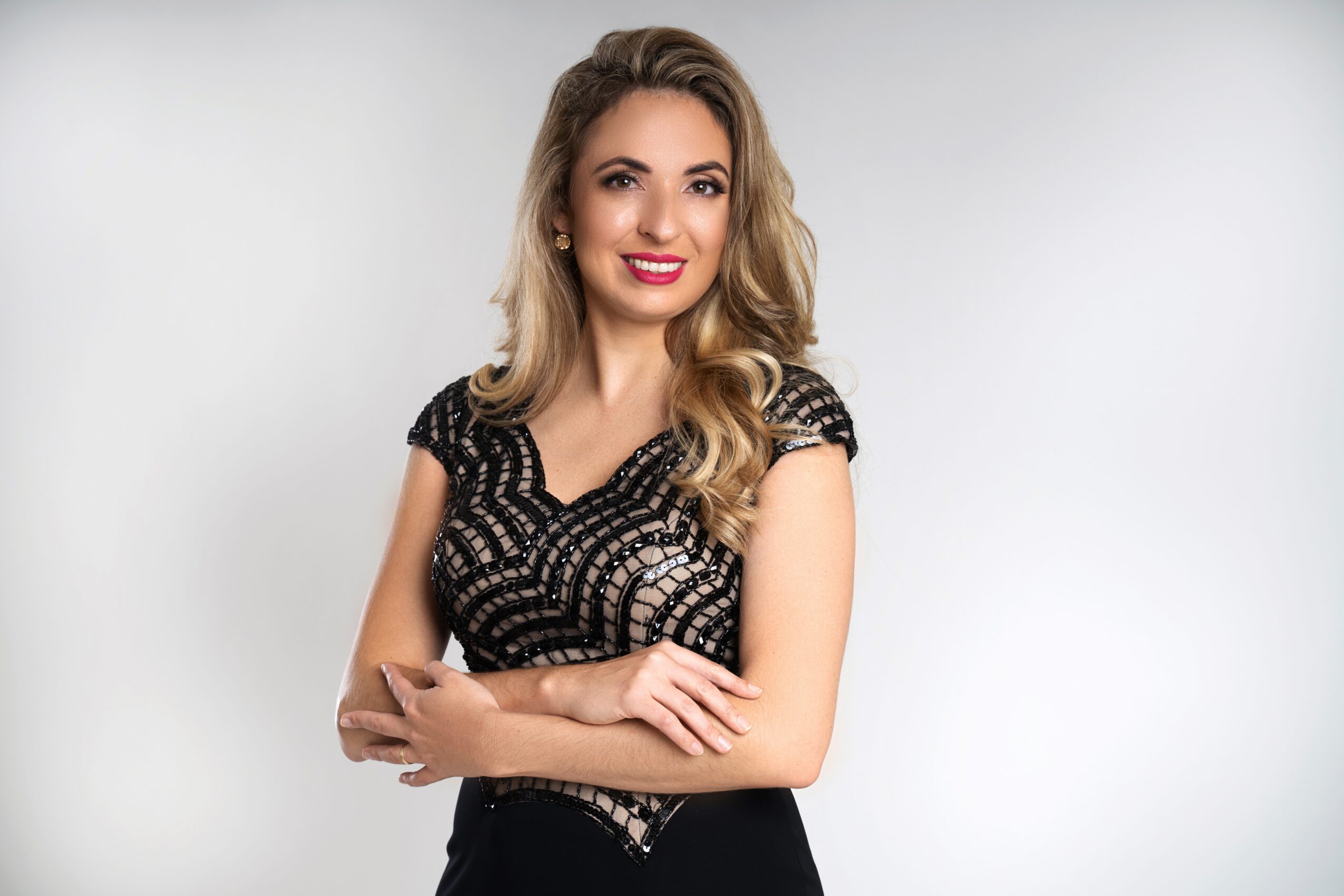
Today we’d like to introduce you to Julia Radosz.
Alright, so thank you so much for sharing your story and insight with our readers. To kick things off, can you tell us a bit about how you got started?
I’m an American-Canadian opera singer, voice teacher, and entrepreneur based in Bratislava, Slovakia, but one of the most important turning points in my life happened in Kansas.
My training took me to Westminster Choir College and the University of Texas at Austin, followed by a professional career performing with opera companies around the United States. Like many singers, I spent years studying, auditioning, traveling, and gradually finding my identity as an artist. In 2016, I came to Wichita Grand Opera to sing Musetta in Puccini’s La bohème. I knew it would be a wonderful professional opportunity, but I had no idea how much it would change my life.
The conductor was my now-husband, Martin Mázik. Martin is Slovak, with an extensive international conducting career, including many years with the Slovak National Theatre. He began working with Wichita Grand Opera in 2004, and his association with the company spanned roughly 17 years. Alongside his work in Europe, Wichita became a significant part of his musical life. It was there that our paths crossed.
We met through rehearsals, performances, and the shared experience of bringing an opera to life. There is something particularly meaningful about getting to know someone through music. You encounter their sensitivity, their instincts, their standards, and the way they work with others. Before we began building a life together, we had the experience of making music together, and that remains an important part of our relationship.
That La bohème also gave me the opportunity to perform alongside the legendary Samuel Ramey. We brought the production to Kansas City as well, where Kansas City Metropolis praised my “illustrious and flowing voice.” It was an important engagement artistically, but its greatest significance became clear afterward. Kansas was already part of Martin’s story, and suddenly it had become the place that connected our futures.
At the end of 2019, I moved to Bratislava. That meant building a marriage, making a home in another country, and finding my way within a different musical culture. Sharing my life with someone who understands the demands of an operatic career has meant a great deal to me. We both understand the preparation, travel, uncertainty, and commitment behind what an audience ultimately sees onstage. Music is our profession, but it is also part of our everyday conversation and the life we share.
My performing career has since taken me across Europe and the United States. Highlights include Marietta/Marie in Korngold’s Die tote Stadt at the National Moravian-Silesian Theatre in the Czech Republic, Amelia in Verdi’s Un ballo in maschera at the Croatian National Theatre in Split, La bohème performances throughout France and Spain, Mimì in La bohème with First Coast Opera in Florida, and Anna Sørensen in Silent Night with Opera Orlando. I have also appeared at the Slovak Philharmonic as part of the Bratislava Music Festival, performed Haydn’s Die Schöpfung with the Sofia Philharmonic, and given concerts at the National Czech & Slovak Museum & Library in Cedar Rapids, the University of New Mexico, the Slovak Institute in London, and the Bay Head Concert Series in New Jersey.
Alongside performing, I built Voice with Julia LLC, my international voice-training business. I help singers understand their instruments and work through technical challenges with greater clarity and independence. Through individual teaching, online courses, and an international community, I work with singers around the world. I find enormous satisfaction in helping someone understand something about their voice that previously felt confusing or out of reach.
I also co-founded the Lucca Bel Canto Institute in Italy with tenor Ferdinand von Bothmer. We bring singers together for intensive, individual work on vocal technique and repertoire, giving them the time and attention that meaningful development requires. My performing and teaching lives continually inform one another, and the institute allows me to bring those experiences together in a very personal way.
Our connection with Wichita has also given us lasting friendships with attorney Robert Gibson; Kathy Cressey, formerly treasurer of Wichita Grand Opera and later board president of Opera Orlando; Samuel Ramey; and bass-baritone Bill Powers, who performed in Wichita for many years. Those relationships keep Kansas close, even while we live abroad.
Looking back, I can trace so much of my life today to accepting that engagement in Wichita. Meeting Martin led to a marriage, a move across the Atlantic, and a new chapter in my career that eventually grew to include an international teaching business and an institute in Italy. We would both love to return to Kansas to perform, especially together. After everything we have experienced since that first La bohème, making music again in the place where we met would mean a great deal to us. Neither of us is from Kansas, but it is where our lives came together, and we hope our musical story there has more chapters ahead.
Can you talk to us a bit about the challenges and lessons you’ve learned along the way. Looking back would you say it’s been easy or smooth in retrospect?
One of the biggest challenges has been navigating the changes in the performing world since COVID. Companies have closed, management has changed, and relationships built over many years no longer necessarily lead to the same opportunities. As opera singers in 2026, we have to keep adapting, reinventing aspects of our careers, and finding ways to make our work relevant to audiences. Developing Voice with Julia and the Lucca Bel Canto Institute has been part of my response.
But I also believe opera offers something deeply valuable. It brings together the highest levels of music, theater, costume and set design, visual art, dance, and language in one live experience. It reveals beauty even in stories of heartbreak and allows us to explore profoundly human emotions together. In a world increasingly experienced through screens, that connection matters. The challenge is sustaining our careers while helping more people discover why opera deserves a place in their lives.
Appreciate you sharing that. What else should we know about what you do?
My work as both a performer and a teacher has been shaped by my own search for vocal technique. As a young singer, my voice began to change, and I needed to understand what was happening and how to work with an instrument that no longer fit the same expectations. That search became a lasting fascination with how the voice works.
Earlier in my career, I sang roles such as Gilda, Adina, Violetta, and various Mozart heroines. Today, my focus is the dramatic repertoire of Verdi, Puccini, Wagner, and Strauss. In opera, we use the term “Fach” to describe categories of voices based on qualities such as range, weight, color, and agility, which help determine suitable roles. Moving from one Fach to another requires more than learning new music. It means adapting your technique, reconsidering your artistic identity, and establishing yourself professionally in a different repertoire. Successfully making that transition is something I’m very proud of.
That experience is also at the heart of Voice with Julia, my international teaching business, and the Lucca Bel Canto Institute in Italy, which I co-founded with tenor Ferdinand von Bothmer. I genuinely love vocal technique: investigating a problem, understanding how different parts of the instrument interact, and finding a way to make something difficult become accessible.
What I bring to my teaching is the perspective of someone who has had to question, explore, and rebuild aspects of her own singing while maintaining a performing career. I know how unsettling it can be when your voice changes or familiar advice stops helping. Helping another singer find clarity, trust their instrument, and discover possibilities they didn’t know they had is one of the most rewarding parts of my work.
Let’s talk about our city – what do you love? What do you not love?
For me, Kansas is a mecca of cultural appreciation, down-to earth people, and great steaks (which I love!). I have always felt very at home in Kansas, and my husband, Martin, feels the same.
Contact Info:
- Website: www.juliaradosz.com ; www.voicewithjulia.com
- Instagram: @voicewithjulia
- Facebook: https://www.facebook.com/voicewithjulia
- Youtube: https://www.youtube.com/@VoiceWithJulia