




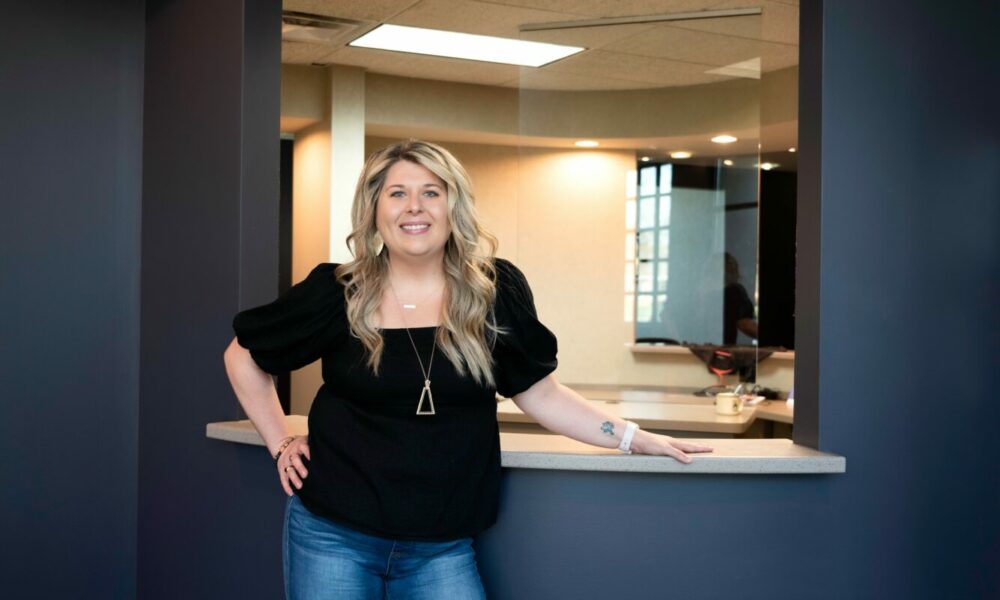
Today we’d like to introduce you to Amanda Morris.
Hi Amanda, we’d love for you to start by introducing yourself.
Hi! I am Amanda Morris, Family Nurse Practitioner in Overland Park, KS. I have worked in Primary Care for 15 years, which is my passion. I have been at the same insurance-based, corporate family medicine clinic for my whole nursing career, as an RN for the first 8 years and then as an NP for the past 7. In 2022, I started to step away from this model of medicine to pursue delivering health care in a different and better way after learning about the Direct Primary Care (DPC) model and how it is a solution not only for patients accessing more personalized and affordable health care but also for healthcare provider burnout. It was the next best step for me in my career.
This wasn’t just about me and my career, though. It is also for the betterment of the collective as a whole. When we heal a person, we can heal a family, which then moves into healing a community or a collective and trickles out into the world. Even in a conventional medicine model, I have always been on more of what I call the crunchy side, approaching medicine holistically. But over the past few years, and the pandemic certainly was a catalyst for this, I have started to see where the traditional health insurance-based system isn’t serving our community well. We could talk all day about this, or we could try and change it, so I have decided to do that!
What is direct primary care? In short, DPC is an innovative alternative payment model with a simple, flat rate, transparent, and affordable membership fee. No fee-for-service payments. No third-party billing. In this model, we cultivate an enduring and trusting relationship between patients and their healthcare providers without the middleman. Patients may use their health insurance for lab work, diagnostic imaging, emergencies, and high-cost surgeries. Still, we do not bill insurance for healthcare visits, send bills for correspondence, and support patients’ needs in-between visits. This means we deal very little with insurance companies and do not deal with healthcare administrators in large corporate healthcare systems. It is empowering and is truly getting medicine back to its grassroots! Also, in 2022, my best friend of 20+ years and I started an online community called Simple Crunchy Kitchen. We both saw a huge gap in how patients change their lifestyles, especially in the kitchen. A patient can be told they need to make changes in their nutrition during a visit with their primary care provider, but then get home and have this deer-in-the-headlights moment, followed by anxiety and not knowing where to start! We want to teach people to pay attention to the information their bodies constantly give them and be more connected with how food makes them feel. This all starts with feeling confident in the kitchen, and for some people, this does not come naturally and is a barrier to making lasting lifestyle changes.
We are looking to cancel diet culture and teach people how to choose and create meals full of whole foods that will fight inflammation, rather than the standard American diet that creates inflammation. Learning how to navigate the digital world has been fun, and so many people will benefit from this community!
Alright, so let’s dig a little deeper into the story – has it been an easy path overall, and if not, what were the challenges you’ve had to overcome?
In the last 4 years, I have already started incorporating functional and integrative medicine into my primary care practice. Still, the conventional medicine model doesn’t support this type of approach. After many years of dealing with my health struggles and following all of the treatment plans conventional medicine had to offer but still feeling miserable, I pursued functional medicine. It was amazing to finally have answers and feel the best I had in years! I decided to incorporate this into my patient care. I saw it as a solution to helping a large patient population who also didn’t fit into the conventional medicine box, but this came with its challenges. I will always need to understand why it is so taboo to practice root-cause medicine and seek answers when a traditional approach hasn’t worked. Or why it is taboo to try other treatments before prescription medication. Yes, I prescribe medications daily, but if there is another treatment with less risk and even more affordable, why not? It is still baffling how being an integrative health practitioner puts me in this box of being a rebel in the system, but here I am anyway!
Like any grassroots movement that goes against the current culture, it is sometimes difficult to explain DPC because it is so different from what we have been accustomed to in the health insurance model. When you talk with someone about their health and finances, many people just shut down because it can create anxiety. For someone already paying astronomical health insurance fees, to think about adding another monthly bill for a DPC membership in their budget (for something the insurance they already pay for should cover) is overwhelming. It is also frustrating!
Leaving the patients, I love and going into a model where the healthcare I provide is not always accessible for everyone has been probably one of the hardest things I have encountered. I believe good; holistic healthcare should be accessible to everyone! But at the end of the day, I have had to decide between staying in the insurance model and offering what I believe is sub-par care and no longer in line with my values or leaving that model and trying to find ways to make DPC functional medicine accessible to everyone who believes it is the best fit for them. A monthly DPC membership is often less than what most people spend on their phone or cable bill every month.
Financially it has been intimidating for me because I have always worked in a salaried position as a nurse and nurse practitioner. Now with this new model, I won’t receive a traditional “paycheck” nor all of the benefits large corporations offer. Being employed by a corporation for 15 years had some financial benefits, but those benefits made me feel like a slave to this system. I use the analogy of an abusive relationship. You are made to feel like you can’t survive outside of the system, and it is the only way, no matter how dysfunctional it is, and at the end of the day, even though you know there are other options out there, it is your comfort zone and all you know so you stay because it feels more secure.
Insurance vs. health sharing vs. DPC is the best for some people, and it will look different for each person regarding what is financially best for each family. Sometimes patients can save money in a DPC model, especially those underinsured who are left paying for a lot of their health care out of pocket anyway. For some, it may be more expensive each month. Still, suppose they value accessibility to their primary care provider, have more extended visits to intense dive into their health, and are not within the constraints of the conventional system. In that case, it is worth every additional penny! I like to use the example of car insurance to give a vision of how our medical system should function. With car insurance, you pay a low monthly premium for emergency coverage for accidents, emergencies, and things out of your control. Car insurance does not put gas in your car, or tires on it, or pay for oil changes. You get to choose how much you spend and decide what you will do to maintain your vehicle. Health insurance should be the same! We need insurance to help offset the cost of emergencies, surgeries, etc. Instead, patients are paying these very high monthly premiums that do not go towards their health but are going into insurance companies’ profits or paying for the care of others who are not prioritizing their health. The goal is to have low monthly premiums for catastrophic medical needs. We can put the rest of that money towards true health care and prevention like healthier nutrition, DPC membership, supplements, or gym memberships. We are taking control of our dollar and spending it where we put our values rather than in the insurance company’s pockets. In the conventional medicine model, so much of our autonomy is taken away. And there needs to be more accountability for patients regarding their health. It often feels as if patients are encouraged to have poor health because that makes money in the healthcare system, which is very sad.
Can you tell our readers more about what you do and what you think sets you apart from others?
I focus on the 7 pillars of health: Nutrition, Movement, Sleep, Stress, Sunlight/nature, Social, and Spirit. I approach family health with a couple of core values.
1. I have been raised with this outlook: what you do in your house may be different than what I do, and neither is more right or wrong. We’ve all been given the gift of sovereignty, and I believe our most sacred places must support that, including the relationship with your primary care provider. This goes with raising our children, but also with our health.
2. Know better, do better. Wherever we are on our journey, there can always be ways to learn and improve. We must give ourselves grace through this process as we learn and do better. We are all lifelong learners, and I love working with patients who are grateful for where they are right now and strive to grow. I learn new things from my patients every day! Medicine is a practice; it is an art. Of course, we know a handful of constants are 100% as truth. But otherwise, things are constantly changing, which leads to the next.
3. Science is cool! I love to stay up to date in all things science. But. A lot of science can be manipulated as well. Trying to sift through the most accurate and unbiased science can be challenging, which means at the end of the day, we all have to do the best with what we have right now and what we feel is best for ourselves and our families.
4. Food is medicine. Nature has given us everything we need. And our bodies can heal. Therefore, my job as a primary care provider is to help educate and support patients. You, the patient, are the driver of your health. We are a team! No one will save you. You have to fight for the health of yourself, your family, and the collective.
No matter what medical model I practice, I will always strive to protect the sacredness in all these things. I love working with families from all walks of life and believe everybody deserves holistic health care! But outside of growing my practice in an integrative clinic that supports medical freedom and shared decision-making for families. My biggest mission is to educate people about another way to receive affordable and accessible healthcare outside the insurance-based “sick care” system. I look forward to sharing what DPC is and how it differs from conventional medicine.
Are books, apps, podcasts, or blogs that help you do your best?
The Gillett Health podcast- lots of amazing deep dives into common questions in all things health-related. My DPC story podcast- has been the biggest motivator for me to continue through all the hoops and challenges of starting DPC. Some content creators and wellness influencers I love: GlucoseGoddess, BeWellByKelly, Dr. Mark Hyman, Book: Atomic Habits, and The Power of Habit. I love the Calm app for meditations! Also, I must admit I am a Peloton girl! I am very competitive and love the different movements you can choose from!
Pricing:
- A monthly DPC membership is cheaper than what most people pay for their cable, internet or cell phone
Contact Info:
- Website: gilletthealth.com and simplecrunchykitchen.podia.com
- Instagram: KindaCrunchyNP, GillettHealth and SimpleCrunchyKitchen


Image Credits:
3 clinic photos in black: Abrielle DeCavele with Social Managed, Outdoor photos Kara Shelley with Life Expressions Photography