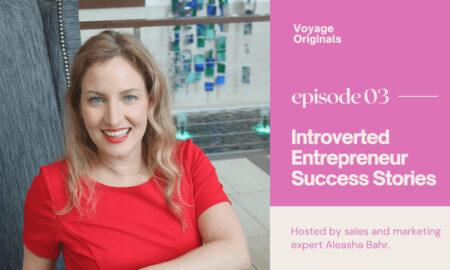




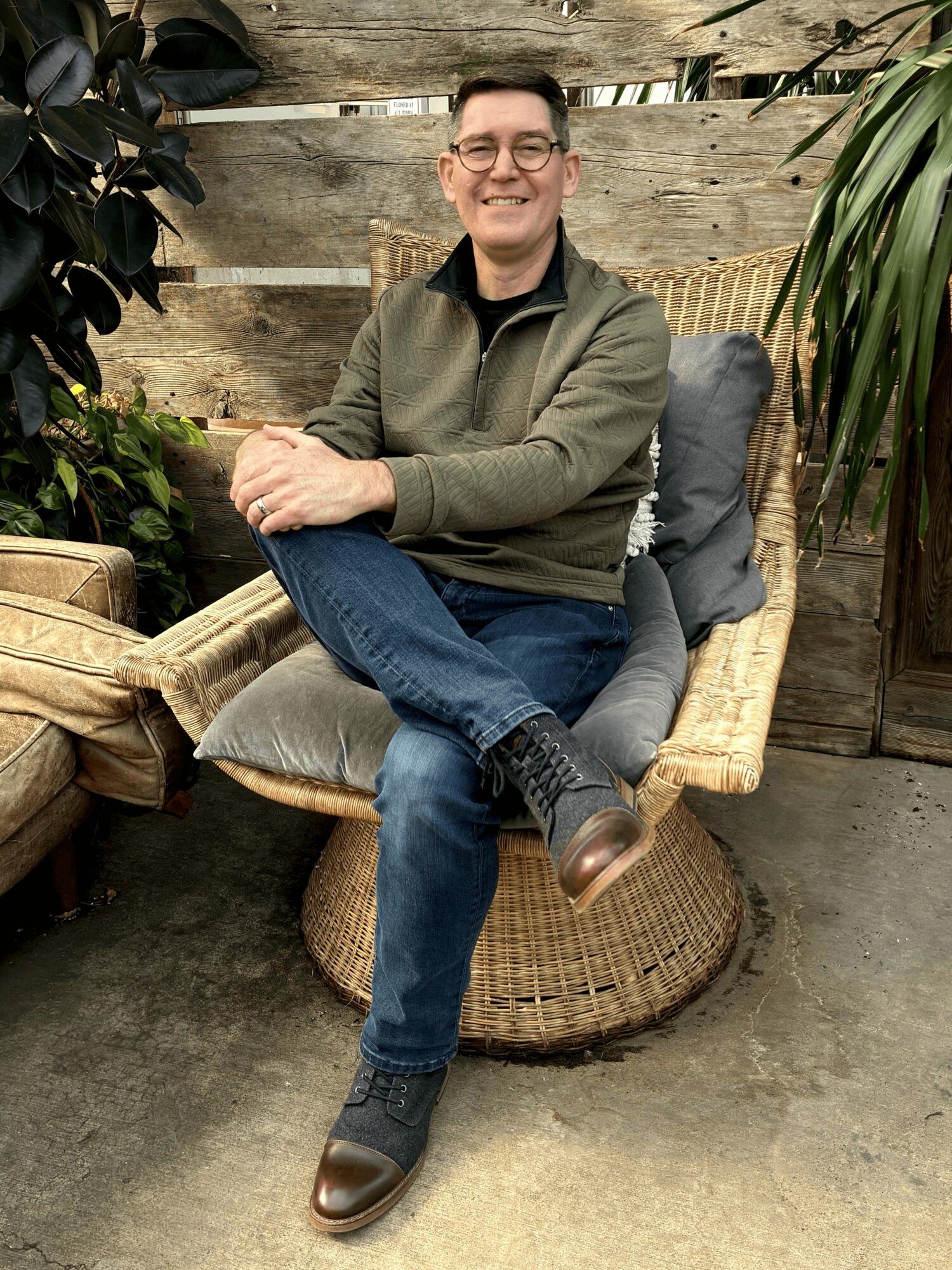
Today we’d like to introduce you to Darren Beck.
Hi Darren, we’re thrilled to have a chance to learn your story today. So, before we get into specifics, maybe you can briefly walk us through how you got to where you are today?
Simply put, I entered the world at a time of transformational change to help us navigate to a future where we live in harmony and balance.
Born in May 1969, I arrived just before humans landed on the moon. Since then, life on this planet has undergone extraordinary advances. I grew up in an analog world where fun came in the form of riding my bike, exploring nature, and playing ball with friends in the front yard. Yet, I also experienced the rise of the digital age—from using some of the first home computers and launching a web-based business during the dot-com boom to working for a major player in the mobile industry, being an early adopter of social media, and now using AI help launch my next business.
From a social perspective, the Civil Rights Act was signed into law a few years before I was born, and the Environmental Protection Agency was established just a year after. During my life, the U.S. has transitioned from a segregated past to one of greater representation and access to opportunity for all. There has also been an evolution from toxic-oriented business to conscious capitalism. Are both systems, racial and economic, still flawed? Most definitely. Are both being contested today? Yes. Even so, look at how far we’ve come.
My voyage in this life has been one of holding the frequency of love, acceptance, and belonging. That’s who I am as a professional, a parent, a spouse, and a member of the community. Along the way, I’ve shared visions of a brighter future for all and helped build bridges to get us there.
Can you talk to us a bit about the challenges and lessons you’ve learned along the way. Looking back would you say it’s been easy or smooth in retrospect?
I have a deep desire to create positive change in the world. The inherent challenge in that endeavor is two-fold. First, you have to find a position of leverage from which you can make that change. Second, you have to convince those who are perpetuating the current system that change is advantageous. Otherwise, you’ll have to work around them. Here are some examples.
I began my career in business development—advertising, marketing, and sales. For years, I put in my day at work then spent time in the evenings and weekends pursuing my passion projects. I pitched landfill reclamation ideas to the Mid-America Regional Council. I created an entrepreneurially focused workforce development plan for reStart, a local organization that serves people who are unhoused. I worked to advance acceptance of the queer community within the United Methodist Church. And, inspired by an author who experienced a modern-day dialogue with Source, I also led a Conversations with God Center here in Kansas City. I’ll circle back to that later.
By that time, I was also working for Sprint (now T-Mobile) putting in 60+ hours per week and raising a family of three with my wife. I was exhausted trying to earn my living on one track and fulfilling my passion on another track. It was only after meeting with a trusted mentor of mine at Sprint that I was able to bring those two worlds together. Because he provided a safe space for me, I was able to share my interest in retaining a corporate salary and benefits while being in secular ministry to the world. Based on his suggestion, I soon joined the corporate responsibility team within Sprint and my professional trajectory changed. I finally found a beneficial position of leverage from which I could make positive change.
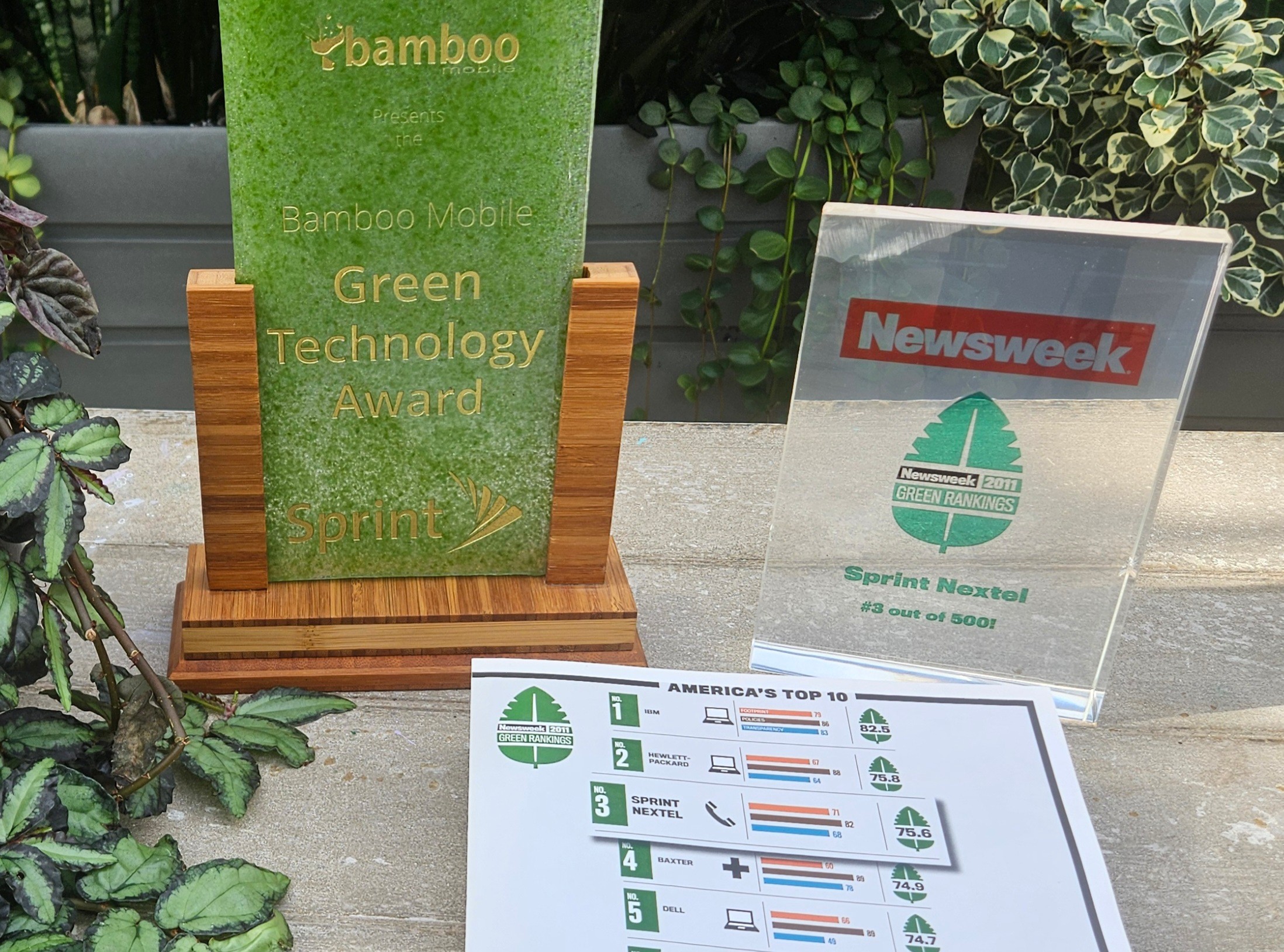
Working from that platform, I helped to build one of the country’s premier corporate sustainability programs from scratch. As Director of Environmental Initiatives at Sprint, and later leading social and environmental innovation for the business, I worked with our Chief Sustainability Officer, Amy Hargroves, our CEO, Dan Hesse, and many talented contributors to vault Sprint into an enviable position. For two years in a row, we were recognized by Newsweek magazine as the 3rd greenest company in the U.S.
Much of that success came from having the company’s top executive as our champion. When Dan came on board, Sprint was trailing in the industry on several fronts. He sought to amplify any lead that we had over the competition. From wireless reuse and recycling to a LEED-certified headquarters campus, we already had an edge environmentally. So, we built on it. Getting the full executive lead team and middle management on board with those efforts took some time, though.
Sustainability did not always seem relevant to their incentives for performance and compensation. The key was not just painting a picture of how resource conservation, carbon reduction, and product innovation could make Sprint a more responsible corporate citizen. To overcome internal resistance, it was essential to show how it could mitigate risk, enhance the company’s reputation, reduce operational costs, lift customer consideration, and drive new revenue for the business. Having achieved success at Sprint with this playbook, I parlayed these same principles into my next role at Sustainable Brands. As Vice President of Membership at this media and events firm, I led a peer-to-peer network that equipped global brands (including 3M, Procter & Gamble, Ford Motor Company, Walt Disney, and many more) to use social and environmental innovation to build new business value, increase brand affinity, and drive good growth.
We’ve been impressed with Ingenuity LLC, but for folks who might not be as familiar, what can you share with them about what you do and what sets you apart from others?
Through my work at Sprint and Sustainable Brands, I had built enviable experience and expertise in the field of sustainability along with a worldwide network of connections. However, I got tired of being a “fish out of water.” I was this Midwest guy who would regularly gather with professionals from the U.S. coasts, the European Union, and abroad. While I recruited a few local companies to join us (Hallmark and BarkleyOKRP among them), the Heartland of America was only lightly represented in sustainability circles. I was constantly being asked what was innovative or sustainable about Kansas City? I could point to many gems in our area, but they had a point. KC was lagging behind. It seemed time to pivot my time, talent, and focus to my hometown.
Prior to my pivot, I was advising the Foundation for Regeneration. This local nonprofit is focused on regenerative placemaking—essentially rejuvenating economic development, ecological health, and community empowerment in local areas (like the Blue River Valley) where it has diminished. I turned my focus to KC by starting a consultancy, Ingenuity LLC, and picking up the foundation as my initial client. Since that time, my work with the foundation and other clients has focused primarily on accelerating our local circular economy.
What is a circular economy? Let’s begin with what it is not. Today, we live in linear economy that is extractive and wasteful. We take virgin materials to create products that eventually get tossed and do this over and over and over again. The circular economy is the opposite approach. It’s about extracting fewer virgin resources to give nature the time to regenerate, keeping the refined materials that we already have in the marketplace circulating at their highest value, and throwing little if anything away.
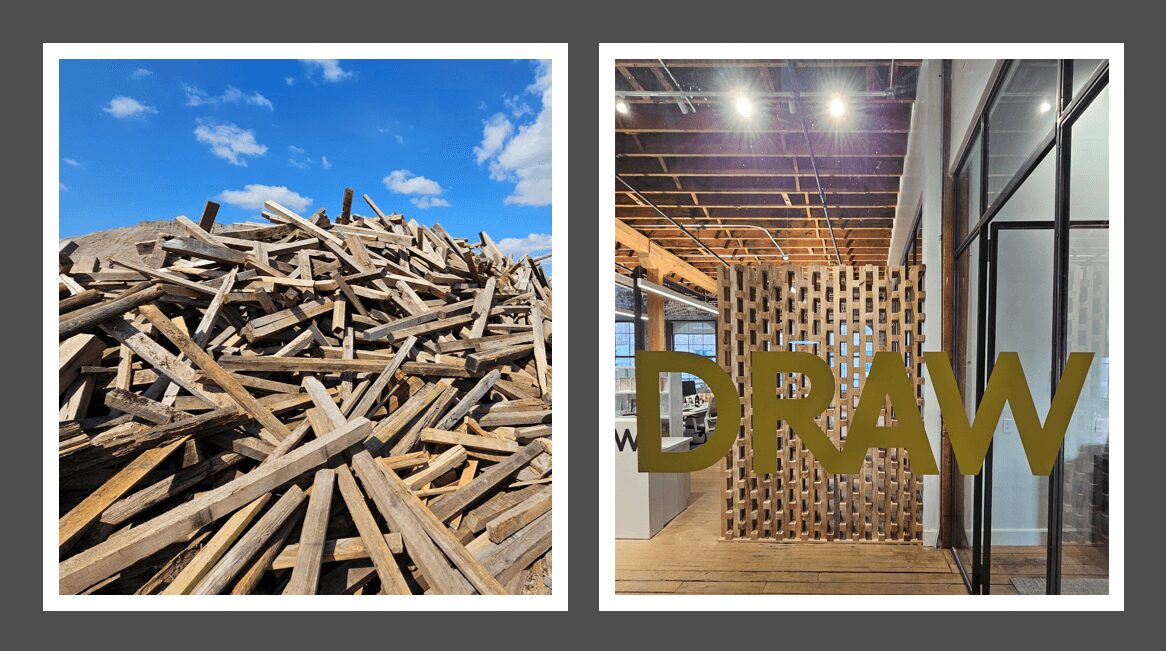
Working with the Foundation for Regeneration, Metabolic, the City of KCMO, Johnson County KS, and the Mid-America Regional Council, I helped to develop the business case for why we should even care about the circular economy. Last year, we published a report showing that if the KC metro area took the ~$250 million in materials that we landfill each year and funneled them into local circular ventures instead of throwing them away, we could create more than 5,000 new jobs and the area’s next billion-dollar industry cluster. Through Ingenuity, I’ve helped clients like Summit Transfer figure out how to keep thousands of tons of construction and demolition wood waste out of landfills. One specific outcome was turning waste wood from the Panasonic Energy building project in De Soto into new pallets and even an architectural feature in DRAW Architecture’s new office in the West Bottoms. I’ve also assisted the MARC Solid Waste Management District in building a long-term strategy for regional resource recovery and co-founded Circular KC, a new network of nearly 100 members that promotes, educates, and equitably grows the Kansas City region’s circular economy.
While I take pride in these professional achievements, one of the greatest endeavors that I have undertaken in my life is raising three amazing kids with Angie, my wife and the love of my life. Together, we embarked on an adventure that few had pursued at the time but is of growing interest today—unschooling. From a very young age, we built an educational experience for our kids outside of school that was customized around their individual passions, talents, and interests.
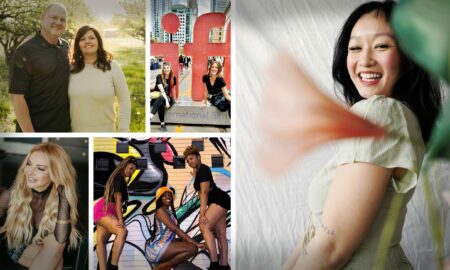
Josh, our oldest and now 30 years of age, is a renaissance man. While he has a range of interests, he was always mechanically inclined and loved anything with a motor and wheels. Today, he’s well-positioned with a local manufacturer, Shuttlewagon, ensuring customers have the vehicle parts they need. Rylie, aged 28 and our middle kiddo, was always interested in dance and design. After years a professional ballerina and performer with Quixotic Fusion, she is now a serial entrepreneur who designs identities, experiences, and spaces for clients. Elm, aged 25 and our youngest, was always drawn to art and justice. After a myriad of experiences that took them around the world, they landed more than a half million dollars in scholarships including two free rides for law school. Now they are a practicing attorney and have a successful creative sideline as a lino print artist.
As I experienced years ago, my personal and professional pursuits are about to converge once again. They are coming together in the form of a new business that will help people to nurture purpose and passion in their lives and livelihoods.
What are your plans for the future?
I’m excited to be launching a new venture, Business Ascending. At its center, you’ll find a podcast—one that explores how metaphysics, ancient wisdom, and heart-centered intelligence can elevate your life and livelihood in practical ways. Now, imagine a community of kindred spirits emerging from it where anyone who is eager to build on these ideas can come, find valuable resources, and collaborate with others to create a new paradigm, personally and professionally. That’s the opportunity for change that Business Ascending provides.
Over the years, I’ve helped thousands of companies to envision more conscientious ways of conducting business. Business Ascending goes further. It offers a quantum leap forward encouraging us to reassess the very foundation of business and economics and how the two align with what our souls are here to do. This exploration requires us to step out of our comfort zone and into the unknown. It’s an opportunity to widen the aperture of our current vision and consider aspects of ourselves that are both foreign and familiar.
Here’s an example. If you’ll recall, earlier in my career I led a Conversations with God Center in Kansas City. Until recently, that experience was not on my resume. At best it seemed awkward to tell a future employer or client that I believe an author is currently having extended conversations with the Great I Am and capturing it for the benefit of humanity. However, I have had so many spiritual experiences with friends, family, and my own ongoing awakening that I decided to make a change and step more fully into my authentic self. It was with that inspiration, that I began penning the first of a series of articles on LinkedIn last year starting with one entitled, “Enter the Woo.”
In that article, I shared that we are fractals of God—limitless beings who have chosen to experience ourselves more fully through limitation in this earthly life. Our souls exist in a state of non-judgment and unconditional love, even though it may feel like life is anything but that today here in physicality. Our opportunity, here and now is to make that reality manifest within ourselves and in our relationship with others—our very own heaven on earth.
With that in mind, the Business Ascending podcast will strive to support a range of listeners on their spiritual journeys:
• People who are opening up to their intrinsic gifts and life purpose and seeking to align their livelihoods with it. Podcast guests will share how they stopped trading hours for dollars and started trading alignment for impact.
• Business leaders who use life coaches, meditation, plant medicine, and more for their personal growth and wonder how a similar balm can benefit their business. Podcast guests will share how they brought that “medicine” to the boardroom to transform corporate culture from a site of burnout into a crucible of conscious innovation.
• Innovators who are curious to learn how the merging of science and spirituality can unlock new technology to help humanity further connect, advance, and flourish. Podcast guests will explore how the most powerful technologies of the next century won’t be found in a lab alone. They exist at the intersection of data and divinity.
• Systems thinkers and futurists who are open and curious about new holistic models that align with the universal principles of abundance and unity. Podcast guests will envision to how design new operating systems for life on Earth that leave the myths of scarcity and division behind to build lasting structures and societies that thrive.
Business Ascending will seek to reimagine the very underpinnings of business as we know it with leaders and luminaries around the world. Together, we’ll explore questions like: If we are here for our soul’s evolution, shouldn’t business, like any human endeavor, reflect that? If a company were loving, what would that look like? If the economy was based on collaboration rather than competition, what would that look like? If a business was based on unconditional exchange or the gifting economy, what would that look like?
The time feels right for a shift, and I’m excited to be pursuing it along with those who are interested!
Contact Info:
- Website: Ingenuity.llc and BusinessAscending.com
- Twitter: https://www.linkedin.com/in/darrendbeck
- Email: [email protected]