




Today we’d like to introduce you to “City Market Sue” Patterson.
Hi “City Market Sue”, please kick things off for us with an introduction to yourself and your story.
I’ve never had a straight-line career, and I’m grateful for that.
I started in television production, children’s programming and news as a writer, reporter, and producer, where I learned how to listen fast, ask better questions, and find the human story inside almost anything. That work led me into public relations, multimedia production, national brand storytelling, and even a few wonderfully odd freelance adventures with food and lifestyle television. Somewhere along the way, I realized the common thread wasn’t media itself — it was connection: connecting people to ideas, places, culture, and each other.
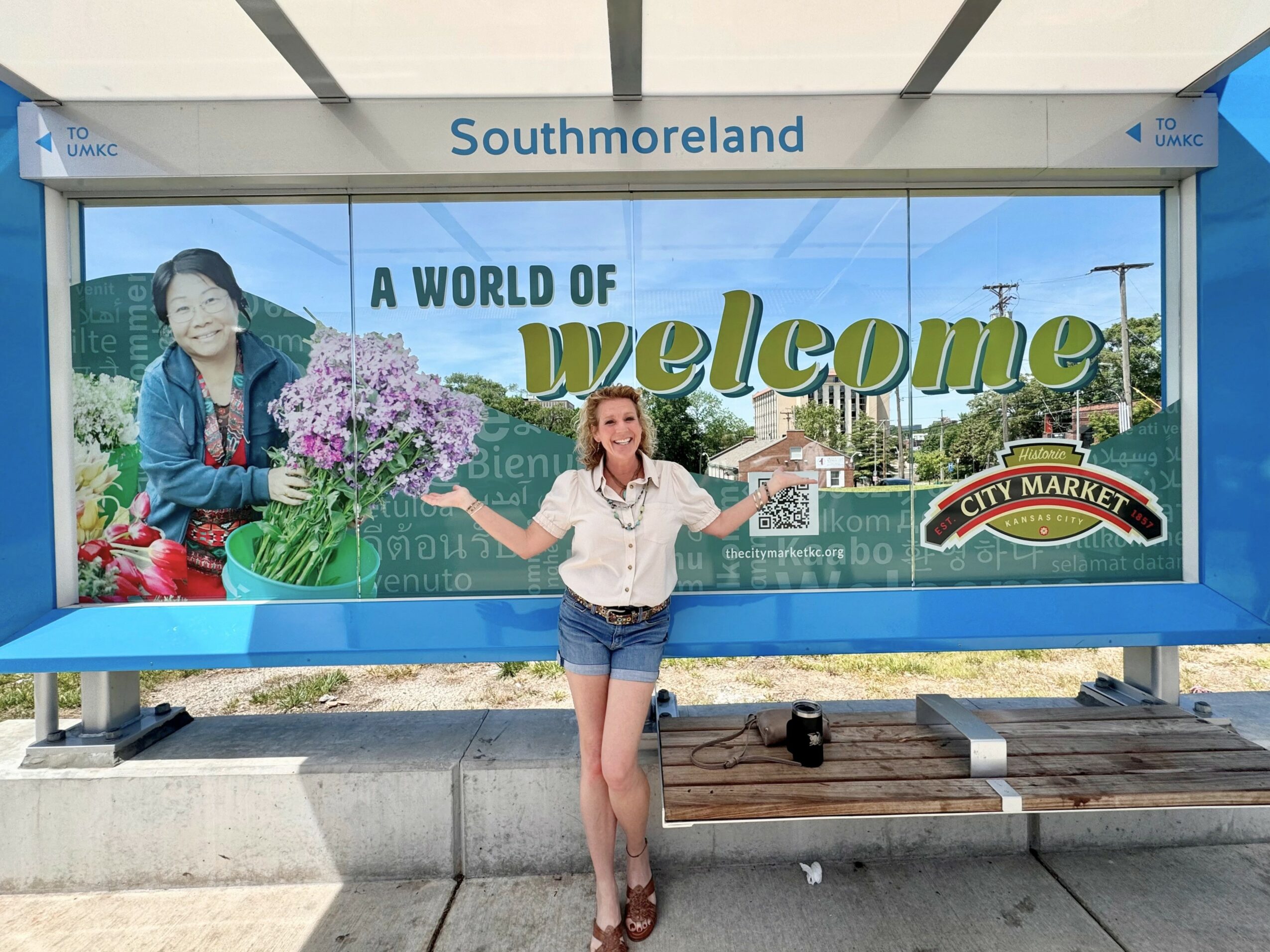
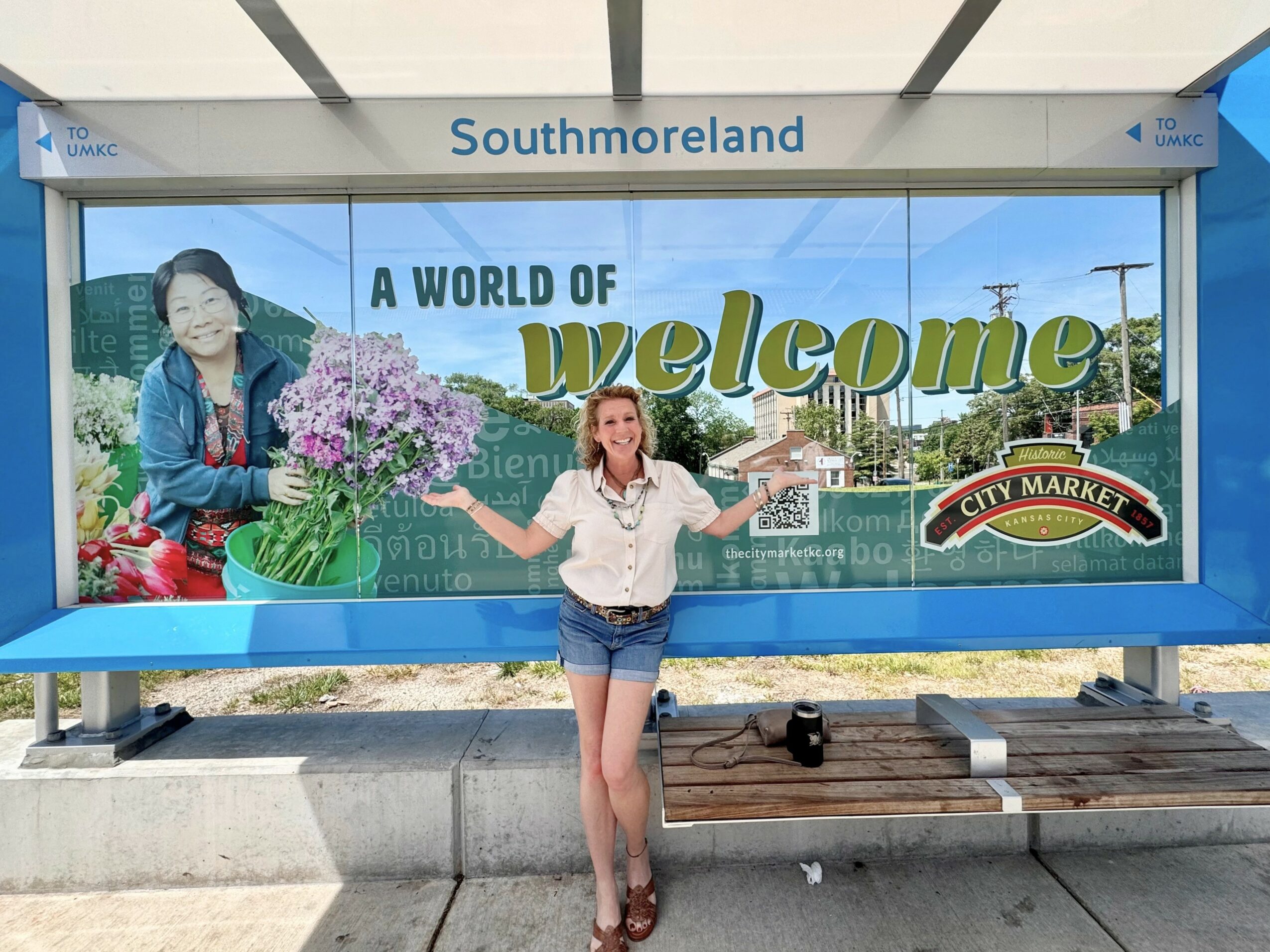
In 2014, after a detour in the telecom industry still writing and producing, I landed at Kansas City’s historic City Market, and it felt like all those threads finally tied together. City Market is a public market, a small-business ecosystem, a farmers market, a civic gathering place, a cultural crossroads, and sometimes a circus — in the best possible way. My work there has grown from marketing and communications into placemaking, public art, event production, merchant advocacy, sponsorship development, municipal navigation, and community engagement. I’ve had the privilege of helping tell the story of Kansas City’s original marketplace while also protecting what makes it useful, lively, messy, inclusive, and real.
Some of the most meaningful work has happened in moments when “marketing” became much bigger than promotion. During COVID, I helped advocate for City Market to be recognized as essential so our farmers and food businesses could keep operating. I’ve built partnerships that put City Market businesses in front of new audiences, including opportunities tied to KCI Airport. I’ve also worked on food access efforts that move fresh produce into the hands of people who need it most.
So the short version is: I started as a storyteller, became a connector, and somehow found myself helping steward a 167-year-old public place that still changes every single day. That mix of history, community, food, art, small business, and civic purpose is exactly where I’m supposed to be.
I’m sure it wasn’t obstacle-free, but would you say the journey has been fairly smooth so far?
No, it hasn’t been a smooth road — but the most meaningful roads rarely are, right?
Like a lot of women, my professional life has unfolded alongside my personal life which has required me to parent while single, relocate, reinvent, rebuild, recalibrate, and learn how to be both steady and scrappy at the same time. There were years when I was making it work because there simply wasn’t another option. That kind of experience changes you. It makes you practical and resourceful.
Professionally, one of the biggest challenges has been advocating for the value of a historic public place in a city that is growing quickly and often dazzled by what’s new. City Market has been part of Kansas City since 1857, but longevity doesn’t automatically guarantee attention, investment, or protection. We are constantly making the case that public markets matter — not just as tourist destinations, but as everyday places where local people shop, gather, start businesses, encounter art, access fresh food, and feel a sense of belonging.
Funding is always a challenge. So is keeping pace with growth. As Kansas City attracts more visitors, development, major events, and national attention, the question becomes: How do we welcome that energy without losing the soul of the place? How do we bring in new audiences while still honoring the people who have loved and relied on City Market for decades? How do we support small businesses and immigrant-owned businesses in the middle of rising costs, changing neighborhoods, and the pressure that comes with success? That balancing act is probably the central struggle for me. I believe in growth, but I don’t believe every form of growth is automatically good. Progress should be rooted in memory, access, and integrity. Otherwise, places become polished and hollow.
Food access has also taught me how quickly basic human needs can be politicized. Something as simple as making sure people can buy fresh produce with food assistance benefits or helping get healthy food into the hands of families who need it, can require persistence, diplomacy, and a willingness to keep showing up even when the systems are faltering.
So no, it hasn’t been smooth. But the rough edges have clarified my purpose. I’ve learned that my work is not just to promote a place. It is to protect its usefulness and relevance, widen its welcome, and keep insisting that local culture, small businesses, public space, and food access are not extras. They are at the heart of a healthy city.
As you know, we’re big fans of you and your work. For our readers who might not be as familiar what can you tell them about what you do?
My work is rooted in connection.
At City Market, I work with small businesses, farmers, artists, civic partners, sponsors, media, visitors, and community organizations in ways that create mutual value. I specialize in spotting opportunities — a cultural trend, a tourism shift, a public art partnership, a food access need, a sponsorship opening — and turning them into something tangible, useful, and aligned with City Market’s identity.
I’m known for building strategic relationships and helping people see how their goals can intersect. Sometimes that means creating new programming. Sometimes it means bringing visibility to merchants and farmers. Sometimes it means translating a civic or cultural moment into something that benefits the public, supports local businesses, and strengthens City Market’s role in Kansas City.
What I’m most proud of is helping keep a historic public place relevant without losing its soul. I don’t chase trends just because they’re shiny. I look for the ones that fit — the ones that can bring in new audiences, deepen community connection, and create real opportunities for the people and businesses that make City Market matter.
What was your favorite childhood memory?
My favorite childhood memories are tied to water. Interestingly, my zodiac sign is Cancer, the Crab.
I grew up in an apartment complex in Prairie Village, Kansas, and summer meant swimming all day and well into the evening. My dear friend Shelley came from Colorado every year to visit her grandmother, who lived in the same complex, and for those weeks we were inseparable. We moved through our little eras together — Barbies, glass animals, mahjongg, whatever captured our imagination — with the pool as the center of our universe. Those summers felt simple, happy, and endless.
Later, in high school and college, I was lucky enough to spend a few summers with my grandfather, who was very much a father to me, fishing off the coast of Naples, Florida. Naples was still a small Florida town then, not the world of billionaires it is today. We went out early in the mornings on the Gulf, fished for our dinner, and ate or shared everything we caught. While he cleaned the fish, I’d swim in the pool or walk the beach. It was my job to cook, and that is where I fell in love with all things culinary.
I don’t think I fully understood then how lucky I was — to have those long summer days, that freedom, and that kind of love.