





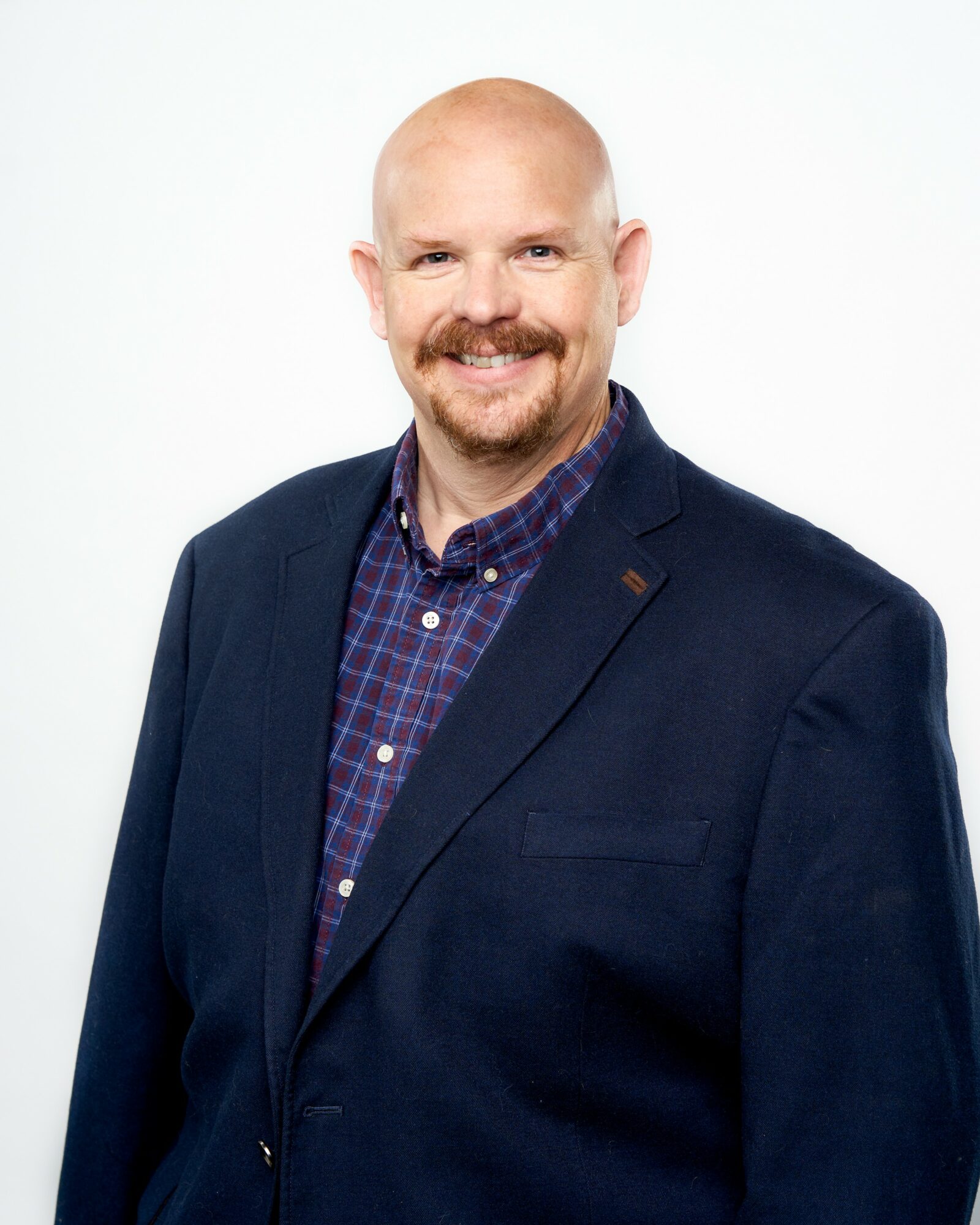
Today we’d like to introduce you to Carl Willis.
Hi Carl, so excited to have you on the platform. So before we get into questions about your work-life, maybe you can bring our readers up to speed on your story and how you got to where you are today?
I started my first online venture back in the days of dial-up. I actually had a CompuServe account using a very slow dial-up modem, but I knew there had to be a way to make money online.
My first ventures were an online staffing service and a drop-shipping business that sold decorative vases and costume jewelry, with fulfillment coming out of China.
Now, both of those ventures were unsuccessful. With the staffing service, I was great at finding job seekers, but I really struggled to make solid connections that would get those job seekers employed. At that time, simply building the right networks was difficult.
The drop-shipping business was equally difficult. The logistics of international shipping and tracking those shipments were challenging. Fulfillment was spotty, and vases would often arrive broken.
It seemed like we ended up refunding more money and dealing with more customer service issues than we ever did successfully fulfilling orders or making any real profit. But in both cases, they were great learning experiences and laid much of the foundation for the things we do today.
They definitely laid the groundwork for learning networks, understanding the importance of systems, learning how to work internationally and online, and recognizing the importance of SOPs, fulfillment, and many of the things that are very critical to our business today.
Fast forward, and I continued my entrepreneurial journey. I moved through multiple business ventures over the years, including little side hustles. I did PC backup and, as I learned new skills related to computers, I would turn those skills into little business enterprises.
Then I moved into affiliate marketing and network marketing, and that’s where I learned search engine optimization, social media, paid ads, and many of the things we do for clients today.
What really got us into the work we do today was being approached by an attorney in 2014 at a networking event. She asked if we would consider doing the marketing work for her law firm. Because that was something we were already doing day by day, we decided to give it a try and found that we really enjoyed doing it.
We actually loved it more than the affiliate marketing and network marketing work we were doing at the time. We found it more challenging and more fulfilling.
So we made the pivot into agency work. That’s what got us into doing business-to-business agency work for other clients and beginning to build our client base.
At that point, we were a generalist agency, meaning we would work with clients in any niche or vertical and take them on here in the Wichita area.
But we had to learn a new business and a new industry with each new client. A few years later, we decided to make the switch and niche down into distinct verticals.
At that point, we moved into the home remodeling industry and launched the Remodeling Marketing Team brand.
Then, a few months later, we had the opportunity to purchase an agency for which we were already doing white-label fulfillment. That agency serves insurance agents and agencies, and it is Agent Branding and Marketing.
Those are now the two forward-facing brands that we operate primarily under the umbrella of Simplicity Marketing.
We serve the home remodeling and residential construction vertical through Remodeling Marketing Team. We serve insurance agents through Agent Branding and Marketing, and both operate under the umbrella of Simplicity Marketing.
We all face challenges, but looking back would you describe it as a relatively smooth road?
It’s not been a smooth road. There are always new things to learn.
You are always finding places where your systems break and your processes break. And then, of course, because we’ve been at this for quite some time, you go through the economic ups and downs. You go through changes in technology. You go through changes in systems and platforms, and just a lot of things that make you adapt to the market, the environment, changes in business in general, and also changes within the verticals and niches that you serve.
Obviously, here in the last few years, AI has been extremely disruptive. That’s one of the areas where we’ve had to learn new technology. We’ve had to adapt to that new technology.
We’ve had to apply new systems to what we do and then deploy those systems on behalf of our clients. We’ve also had to help our clients learn those new systems and processes.
And then, of course, as we scaled, we started as really a solopreneur operation, using outsourced talent as we needed it from time to time. Now we have a full team, plus we’re using agents and AI agent technology, so the complexity of the business has grown as well.
When you look back at some of the mistakes we made along the way, some of those mistakes came from growing too fast without having proper SOPs in place or having proper systems, checks, and balances in place.
Other mistakes came from not having the right people in the right seats, doing the right tasks based on their personalities, capabilities, or overall skill sets.
Those are some of the lessons we’ve learned along the way, where we’ve had to learn, at times, to slow down to speed up.
We’ve also had to learn that some people were not meant to continue with us for the entire journey. They were meant to be with us for a season, but there came a point where we outgrew their capabilities.
We’ve learned the same thing with systems: we can’t fall in love with systems. Some systems are also meant for seasons.
Those are some of the lessons we’ve had to learn along the way from some of our failures.
Thanks for sharing that. So, maybe next you can tell us a bit more about your business?
We are a digital marketing company built around a simple but deeply held belief: thriving businesses can be used to fuel thriving communities.
Since the beginning, our vision has been bigger than simply helping companies generate leads or increase revenue. We saw an opportunity to blend entrepreneurial enterprise with global mission. Rather than relying solely on traditional donations to support ministry and community work, Simplicity Marketing was built around the idea that commercial enterprise could provide sustainable funding for these efforts.
That mission still shapes who we are today.
On the business side, we help companies build customer-focused online ecosystems designed to attract, engage, and convert the right prospects. Our work as a strategy driven, AI centric growth partner includes organic SEO, paid advertising, content marketing, brand positioning, lead generation, automation, AI-driven tools, and the systems and processes required to support sustainable growth.
Today, much of our work is delivered through two specialized brands. Remodeling Marketing Team serves home remodeling and residential construction companies, while Agent Branding and Marketing serves insurance agents and agencies. Both operate under the Simplicity Marketing umbrella.
One of the things that sets us apart is that we do not look at marketing as a collection of isolated tactics. We think in terms of complete systems. A website, SEO campaign, paid ad strategy, social media presence, automation platform, and sales process should not operate as independent silos. They should work together as part of a larger ecosystem that moves prospects from awareness to engagement to conversion.
We also understand that marketing growth creates operational pressure. Over the years, we have learned firsthand that generating more leads is only one part of growth. A company also needs the right systems, processes, people, follow-up, and infrastructure in place to handle that growth effectively.
That experience has shaped how we work with clients today.
We began as a generalist agency serving a variety of businesses and eventually made the decision to specialize in distinct verticals. That specialization has allowed us to develop a deeper understanding of the businesses we serve and build strategies around the actual challenges of those industries rather than applying the same generic marketing formula to everyone.
At the same time, our mission extends far beyond the companies we serve.
Revenue generated through our business helps support ministry, leadership development, education, clean water, healthcare initiatives, and community projects in places such as East Africa and India. A major part of our vision has always been helping indigenous leaders and entrepreneurs develop sustainable business models so their ministries and communities can grow without creating long-term dependency on outside support.
We believe empowerment creates greater and more lasting impact than dependence.
That philosophy influences the way we think about business as well. We want our clients to own strong systems, develop sustainable growth, and build organizations that are not dependent on a single platform, tactic, or person.
Brand-wise, that is probably what we are most proud of.
Simplicity Marketing has never been simply about building a marketing agency. It has been about building enterprises that create opportunity, fund meaningful work, and give us the ability to invest in people and communities.
We are also proud of our willingness to evolve.
Over the years, we have navigated changes in technology, platforms, economic conditions, marketing strategies, and client needs. More recently, artificial intelligence has created another major shift in how businesses operate. We have embraced that shift by learning new technologies, integrating AI agents and automation into our own operations, and helping our clients understand how those tools can strengthen their own businesses.
We have grown from what was essentially a solopreneur operation using outsourced talent as needed into a global team-based organization supported by people, systems, automation, and AI.
Along the way, we have made mistakes. We have grown too quickly at times. We have outgrown people, systems, and processes. We have learned the importance of having the right people in the right seats and the discipline to slow down when necessary in order to build the foundation required for the next stage of growth.
Those experiences have become part of how we lead and serve today.
Ultimately, what we want people to understand about Simplicity Marketing is that business success and meaningful impact do not have to be separate pursuits.
We help businesses grow because strong businesses create opportunity. And when business is built with purpose, integrity, and stewardship, that growth can reach far beyond the company itself.
For us, every client relationship is part of a larger story.
We are building businesses to help build lives, leaders, and communities.
Do you have any advice for those just starting out?
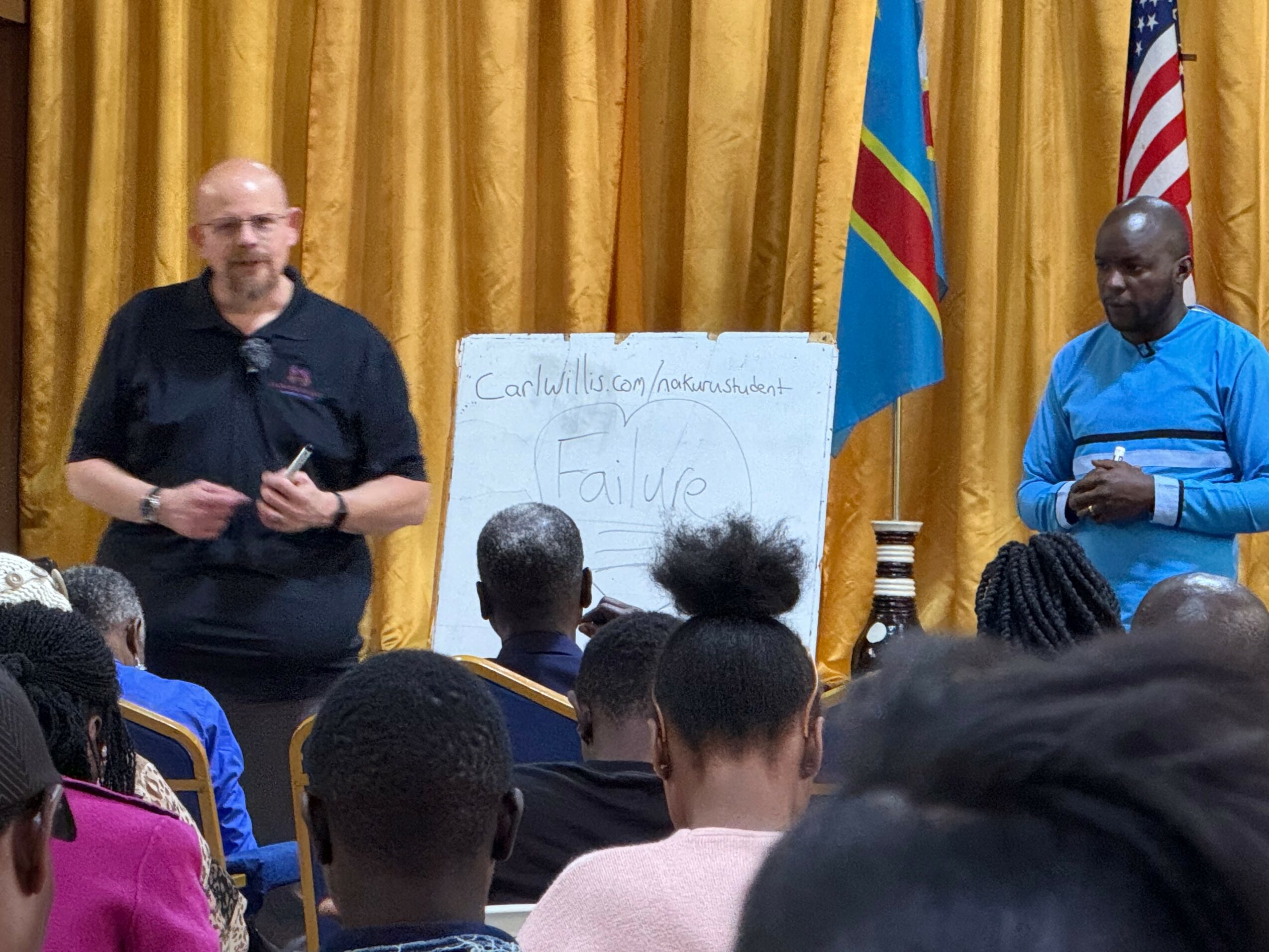
Failure is going to be part of the process, so the issue is not whether you’re going to fail. It’s what you do with that failure.
It’s important to realize that failure is just feedback. What you learn from the failure is what’s most important. Take the feedback, learn the lessons, fail forward fast.
Get up and keep moving forward.
I really wish somebody had emphasized that to me sooner. There are a lot of lessons I could have learned sooner, and I could have moved forward more quickly.
I think one of the biggest things is this: don’t be afraid of failure.
Also realize that you never get ahead by trying to avoid risk. You’re going to have to take risks at times. That doesn’t mean you take foolish risks. You take measured risks and calculated risks.
Always surround yourself with trusted mentors, trusted advisors, people who have walked the path before you, and people who can look at your situation objectively and help you navigate those difficult times.
I find that a mastermind group is one of the most valuable things you can have around you. It has been one of the greatest pieces of my growth, and it’s something I wish I had discovered sooner in my entrepreneurial journey.
I have been part of a mastermind group consecutively now for the last 12 or 13 years, and it’s something I think every entrepreneur should be part of.
The other thing I think is critical, and something nobody had really emphasized to me early on, is knowing your numbers.
I meet too many entrepreneurs who don’t know their numbers. They just don’t have a good handle on their financials. They don’t have a good handle on their marketing numbers or their sales numbers.
The entrepreneur or business owner who knows their numbers—and knows them well—really has an advantage because they know what decisions they need to make. They know what risks they can take, and they can take those risks confidently because they know where they are and have a good feel for the flow of their business.
That’s the other important piece of advice: you need to know your cash flow.
Revenue is a wonderful number, but at the end of the day, it’s about what you are keeping. It’s about what is flowing through your business and the burn rate of your cash. You need to know what that cash flow looks like.
That is a critical piece of information that, again, I think a lot of entrepreneurs don’t really grab hold of soon enough in their entrepreneurial journey.
Contact Info:
- Website: https://simplicitymarketingllc.com
- Instagram: https://instagram.com/remodelingmarketing
- Facebook: https://www.facebook.com/carlswillis
- LinkedIn: https://www.linkedin.com/in/carlwillis
- Twitter: https://x.com/carlwillis_70
- Youtube: https://www.youtube.com/@remodelingmarketingteam5627
- Other: https://podcasts.apple.com/us/podcast/the-digital-remodeler/id1679163962