





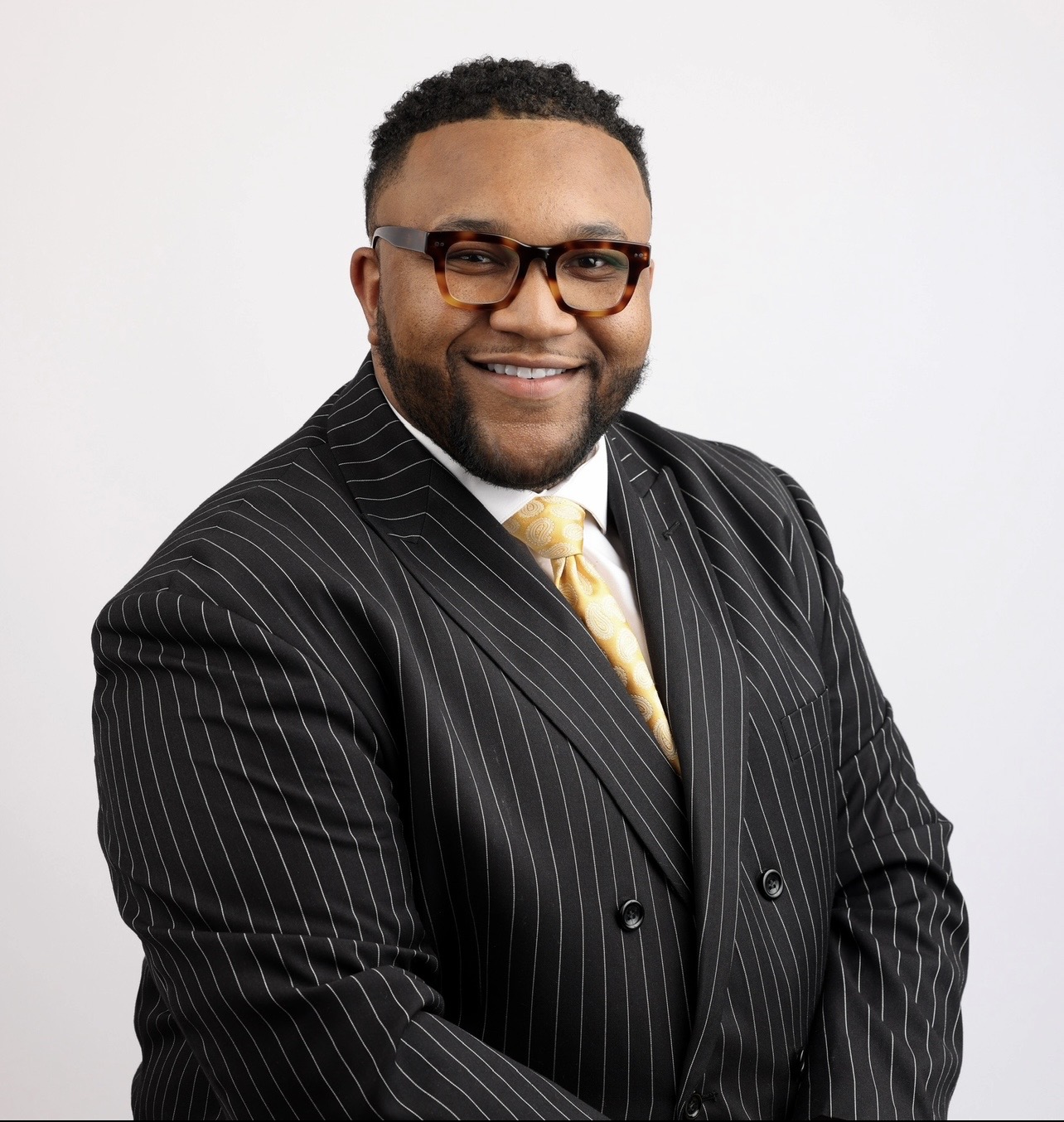
Today we’d like to introduce you to Gary Jones.
Hi Gary , thanks for sharing your story with us. To start, maybe you can tell our readers some of your backstory.
My story begins with my village. My parents and grandparents instilled in me very early that excellence was not optional—not because achievement was the sole measure of a person, but because they understood that preparation, discipline, and character would open doors that had not always been open to people who looked like us. They taught me that whatever opportunity I was given carried with it a responsibility to do something meaningful for others.
I have been blessed by a combination of grace, hard work, and favor. My parents were intentional about ensuring that my sister and I received a strong education, and that foundation ultimately led me to the illustrious University of Arkansas at Pine Bluff. My years at UAPB were transformational. For four years, I was surrounded by talented, ambitious, like-minded people who looked like me, believed in possibility, and understood that our education was about more than individual advancement.
At my “Dear Mother,” I found more than an academic home. I found my voice. I discovered a deeper sense of purpose and began to understand leadership not simply as a position, but as a responsibility to serve. UAPB helped sharpen my passion for public service and awakened in me a commitment to policy, particularly the idea that meaningful policy change can alter the trajectory of families, communities, and generations.
Since then, my journey has been guided by a simple conviction: access should lead to impact, and achievement should lead to service. I have tried to carry with me the lessons of the people who poured into me, the expectation of excellence from my family, the sense of community I experienced at an HBCU, and the belief that our gifts are most valuable when they are used in service to something larger than ourselves.
I am still becoming. I am grateful for how far grace has carried me, but I remain equally conscious of the work that is still before me. For me, success has never simply been about how high one can climb; it is about what we change, whom we bring with us, and whether the institutions and communities we touch are stronger because we were there.
We all face challenges, but looking back would you describe it as a relatively smooth road?
I have come to believe that a completely smooth road rarely produces a memorable journey. Some of the experiences that challenged me most have also refined my understanding of leadership, purpose, and responsibility.
One recurring challenge has been being the youngest person in the room. There have been moments when I have had to establish credibility before my ideas were fully considered not because the ideas lacked merit, but because we sometimes confuse longevity with readiness and age with wisdom. I have learned to meet those moments not with resentment, but with preparation. They have required me to listen more carefully, study more deeply, understand the history behind the decisions being made, and still possess the courage to speak when I believe a different perspective can move the work forward.
History has also taught me that youth has never disqualified a person from consequential leadership. Dr. Martin Luther King Jr. was only 26 when he emerged as a leader of the Montgomery Bus Boycott. John Lewis was 23 when he stood before the nation at the March on Washington. Some of our greatest leaders were called to stand in the gap long before the world considered them seasoned enough to do so. They remind me that leadership is not something that suddenly begins at 40, 50, or 60. Sometimes history places responsibility on your shoulders before convention believes you are ready for it. The question is whether you have done the work: intellectually, morally, and spiritually, to carry that responsibility well.
I have also wrestled with generational tension in leadership. I carry tremendous gratitude for those who sacrificed, endured, and created opportunities that people in my generation now have the privilege to enter. I am at many tables precisely because someone before me fought to make room. That history deserves reverence. We should never become so eager for progress that we forget the price others paid for the ground on which we stand.
But reverence cannot become paralysis. Honoring those who carried the baton before us cannot mean holding the baton indefinitely. Leadership is not merely about occupying a seat; it is about preparing someone else to sit there when your season has passed. Institutions become vulnerable when wisdom, relationships, opportunity, and authority are protected rather than transferred. If we are serious about legacy, succession cannot be an afterthought.
That conviction has shaped the leader I am becoming. I do not simply want to enter rooms that previous generations fought to open; I want to widen the doorway once I am inside. I want to identify talent, cultivate it, entrust emerging leaders with meaningful responsibility, and create environments where younger people are allowed to lead before someone determines they have finally “waited their turn.”
To me, there must be a relationship between generations that is deeper than competition. The wisdom of those who came before us and the imagination of those coming behind us are not enemies. We need both. The strongest institutions are those capable of honoring institutional memory while still making room for new vision.
These experiences have taught me that leadership requires both reverence and courage reverence for the shoulders on which we stand, and courage to recognize when the moment requires us to build differently. The goal is not for one generation to defeat or replace another. The goal is for every generation to leave the next one with more capacity, greater opportunity, and fewer unnecessary barriers than it inherited.
For me, that is stewardship: receive the baton with gratitude, run your portion of the race with excellence, and possess enough humility to know that the race was never meant to end with you.
Thanks – so what else should our readers know about your work and what you’re currently focused on?
Much of my professional journey has been defined by being entrusted with complex roles relatively early in my career. I have learned that when an organization gives you significant responsibility, the expectation is not simply that you maintain what you inherited. The responsibility is to understand the environment, make sound decisions, build trust, strengthen the team, and ultimately leave the organization better than you found it.
That is the standard I have tried to carry into every role.
My work has required me to operate at the intersection of strategy, public policy, organizational leadership, stakeholder engagement, and execution. I enjoy taking complicated issues, identifying what matters most, bringing the right people to the table, and creating a path from conversation to measurable action. I have become particularly comfortable working in environments where there are competing priorities, limited resources, multiple stakeholders, and no perfect answer. Those experiences have taught me that leadership is often less about having every answer and more about having the judgment to ask the right questions, evaluate risk, make a decision, and take responsibility for the outcome.
I am proud that I have not approached my positions as titles to possess, but as organizations and responsibilities to steward. Wherever I serve, I ask myself: Is the operation stronger? Are the relationships stronger? Is the team more capable? Are we making better decisions? And have I helped position the organization for what comes next? For me, those are far more meaningful measures of leadership than the name on a business card.
Being a younger leader has also shaped my management philosophy. I understand that credibility is earned. I do not expect people to follow me because of a position or title. I believe trust is built through preparation, consistency, sound judgment, transparency, and the willingness to be accountable when things do not go as planned. I also believe a strong leader surrounds himself with people who know things he does not know. Leadership at its best is not about being the smartest person in the room; it is about creating the conditions for the collective intelligence of the room to produce the best result.
What I believe sets me apart is my ability to move between vision and execution. I can think about where an organization needs to be three or five years from now while remaining attentive to the decisions that have to be made today to get there. I am comfortable with big-picture strategy, but I also understand that strategy has little value without disciplined execution, clear accountability, strong people, and measurable outcomes.
I have also become increasingly intentional about talent. One of the responsibilities of leadership is identifying people with potential, investing in them, and giving them opportunities to grow. A leader’s legacy should not be an organization that becomes dependent upon his presence. It should be an organization with stronger systems, stronger people, and greater capacity because he was there.
Ultimately, I want to be known as someone who can be trusted with difficult assignments—someone who can enter complexity without being intimidated by it, bring clarity where there is ambiguity, build consensus without surrendering conviction, and make decisions with both confidence and humility.
My aspiration is not simply to reach the C-suite. It is to develop the judgment, discipline, strategic perspective, emotional intelligence, and ability to lead people that make someone worthy of being trusted there. Wherever my career takes me, I want there to be evidence that the institution was stronger, the people were better positioned, and the work moved forward because I had the privilege of serving.
How do you define success?
For me, success is not defined only by title, compensation, or how quickly one advances. I have a saying that has shaped the way I think about leadership: “Success happens at the speed of relationships.”
Almost everything meaningful I have accomplished has been connected to people someone who opened a door, extended trust, offered counsel, challenged my thinking, or chose to work alongside me toward a common goal. The higher the level of responsibility, the more convinced I become that leadership is fundamentally relational. Strategy matters. Execution matters. Results matter. But very few meaningful results are achieved alone.
I have learned that relationships should never be treated as transactional. The strongest ones are built over time through consistency, credibility, listening, and mutual respect. When people trust your character and your judgment, you are able to move difficult conversations forward, navigate complexity, build alignment, and accomplish things that would be nearly impossible through authority alone.
That is especially important to me as I grow as a leader. I want to be known not simply for what I accomplished, but for how I accomplished it and who became stronger in the process. Did I develop people? Did I build teams that trusted one another? Did I create partnerships that outlasted a particular project or position? Did I leave behind relationships that continued producing value after I was gone?
I also believe success has a stewardship component. Achievement becomes much more meaningful when it creates opportunity beyond yourself. As my influence grows, so should my ability to connect people, make introductions, share knowledge, mentor emerging leaders, and help others gain access to opportunities that may have once seemed beyond their reach.
So when I say, “Success happens at the speed of relationships,” I mean that our capacity to lead, build, and create lasting impact is often determined by the strength of the trust we cultivate along the way.
Ultimately, I define success as building something meaningful, leaving it stronger than I found it, developing people along the way, and maintaining the kind of relationships that make others willing to build with you again.
Contact Info:
- LinkedIn: https://www.linkedin.com/in/garyjonesjr