


Today we’d like to introduce you to Robbyn Layne.
Hi Robbyn, please kick things off for us with an introduction to yourself and your story.
I grew up in Kansas City and peaked as an artist at the age of five.
That was the year I won my first “art prize” for a crayon drawing of an apple tree and a very enthusiastic, slightly lopsided American flag inspired by my dad’s red, white, and blue race car. I got a big purple ribbon. My dad was incredibly proud. And somewhere in my little kindergarten brain, I apparently absorbed the message that making art was wonderful…provided you won something.
This turned out to be surprisingly unhelpful.
By the time I was in college, I had decided that “real artists” were people who could afford to be artists. I was a practical Midwestern girl who needed to earn a living, so instead of studying art or creative writing, I got a journalism degree from the University of Kansas with a marketing emphasis and built a perfectly respectable career producing corporate film and video.
Except I secretly wanted to be an artist.
I wanted it so badly, in fact, that other people having the courage to do it could make me furious. I once cornered a woman at a party who was studying painting and grilled her until she finally admitted her parents were paying for art school. Aha! I thought triumphantly. See? That’s why SHE gets to be an artist.
Looking back, poor woman. She was just trying to enjoy a party. I was having an existential crisis.
By my late twenties, I had finally admitted the truth to myself, but I was so terrified of being exposed as a creative fraud that I could barely walk into an art supply store without my heart pounding. So I started doing the slow, awkward work of creative recovery. I quit my job, moved to San Francisco, fell in with a wonderfully scrappy bunch of experimental filmmakers and started making collage films out of discarded 16mm footage. San Francisco felt like Oz to me, except unlike Dorothy, I had absolutely no desire to go home.
I made things. I journaled. I worked my way through The Artist’s Way. I made more things. Eventually, and somewhat miraculously to the terrified 28-year-old version of me, I earned an MFA from San Francisco State University and later an MA in Transpersonal Psychology. I went on to teach Transformative Art in the Arts & Consciousness program at John F. Kennedy University in Berkeley, where I began using the artist’s creative process and the archetypal hero’s and heroine’s journeys as frameworks for understanding the messy business of becoming ourselves.
It was, genuinely, my dream job.
So naturally, my life fell apart.
My marriage ended. The program I loved closed. The future I thought I had carefully constructed disappeared. And I found myself doing what I have apparently always done when life stops making sense: making things and following strange little breadcrumbs toward whatever came next.
One of those breadcrumbs took me to Uganda, where I worked with Kansas City’s HALO Foundation and local artisans to create folk-art stuffed animals to raise money for children in need. That project became Animals for Africa and changed my understanding of art, purpose, and my own place in the world.
Another breadcrumb was a British medical student.
I followed him, and my heart, to England, managed to get myself banned from the UK for ten years over an immigration technicality (a longer story involving love, bureaucracy, and some spectacularly bad timing), and eventually landed, somewhat by accident, in Amsterdam.
I’m still here.
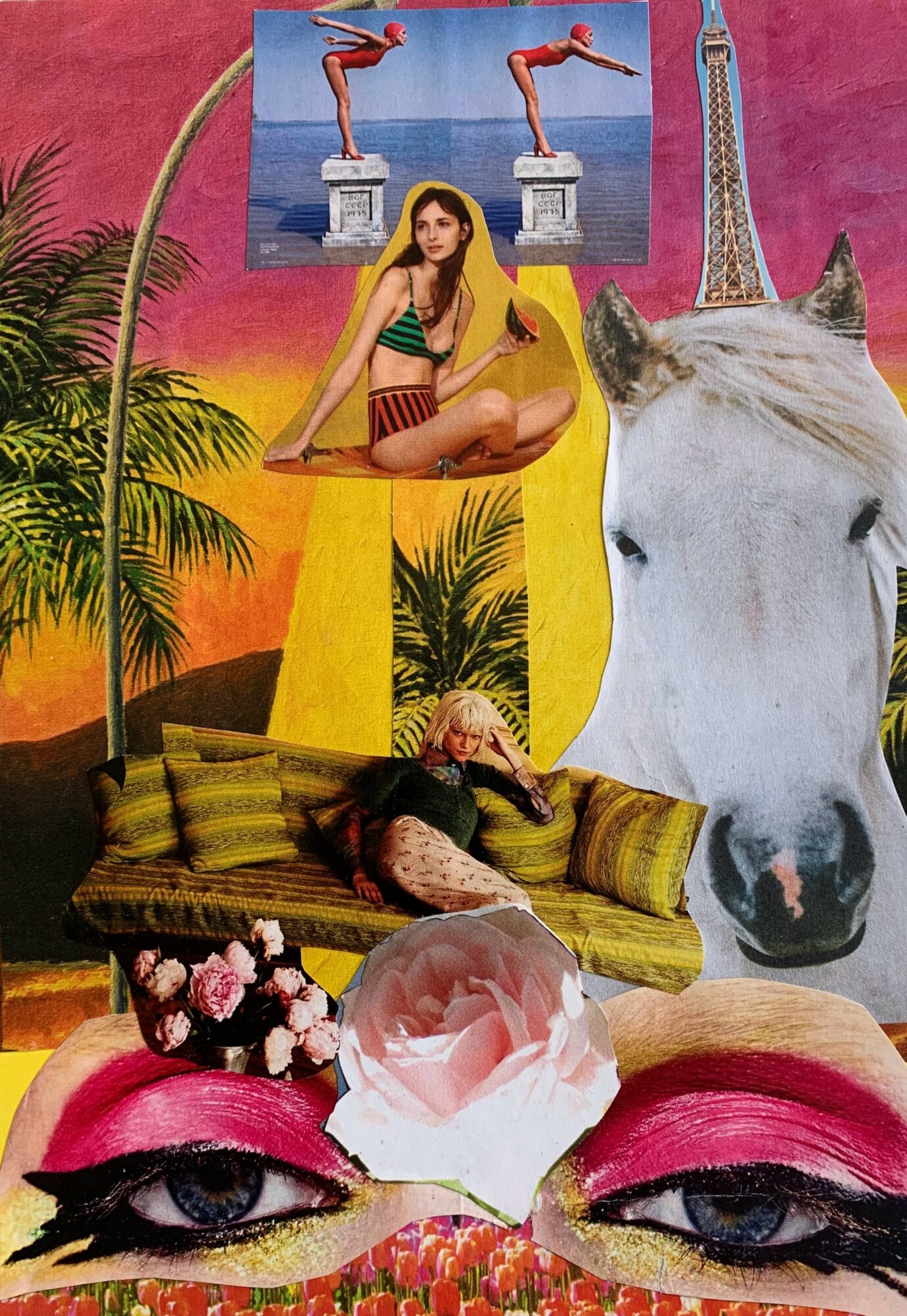
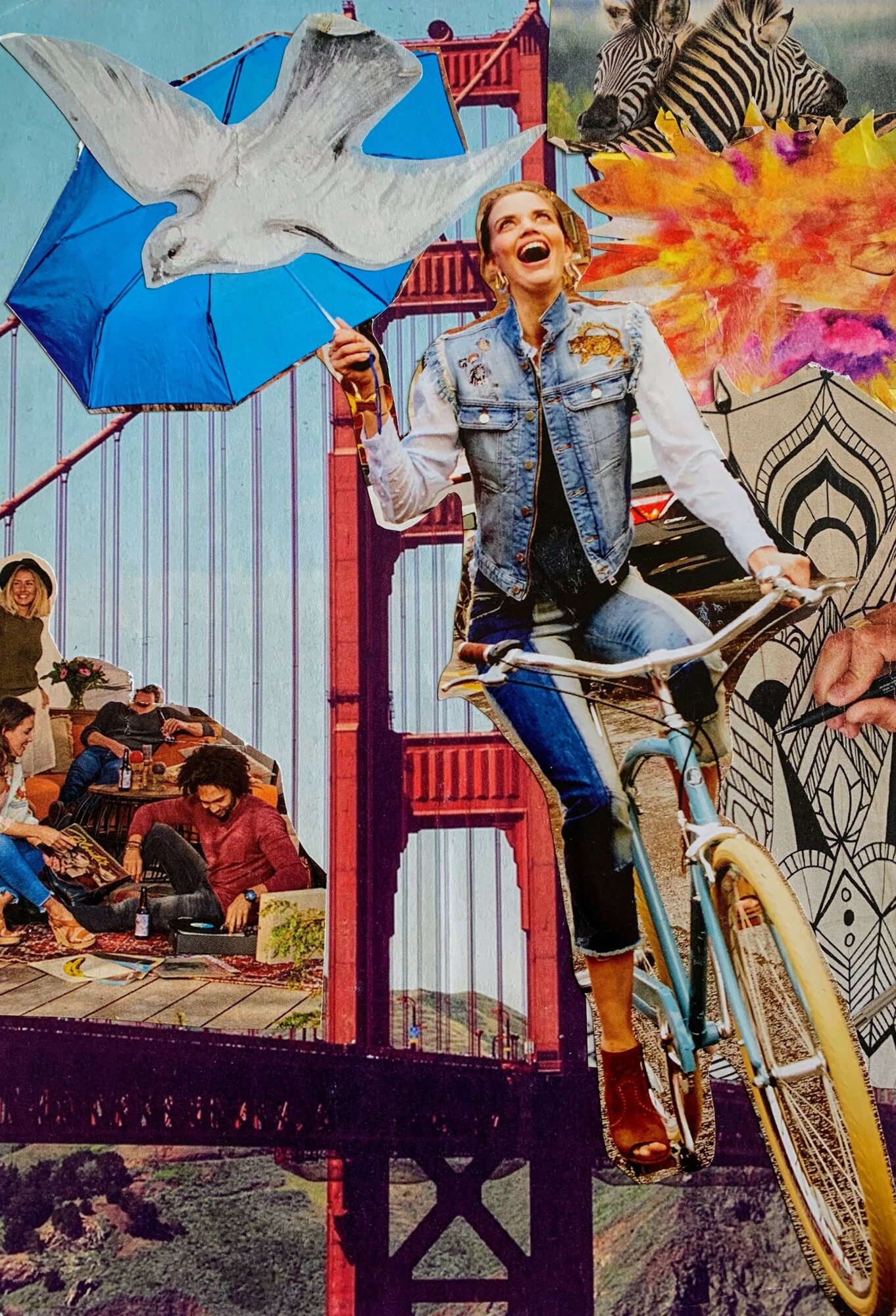
Through it all, I kept returning to collage. I would sit down with old magazines, scissors, and a glue stick, usually without knowing what I was looking for, and somehow the images I chose would begin reflecting something back to me that I hadn’t quite been able to put into words.
I eventually started calling these collages Muse Mirrors.
And slowly I realized that this thing I’d been doing privately for years wasn’t just how I made art. It was how I found my way.
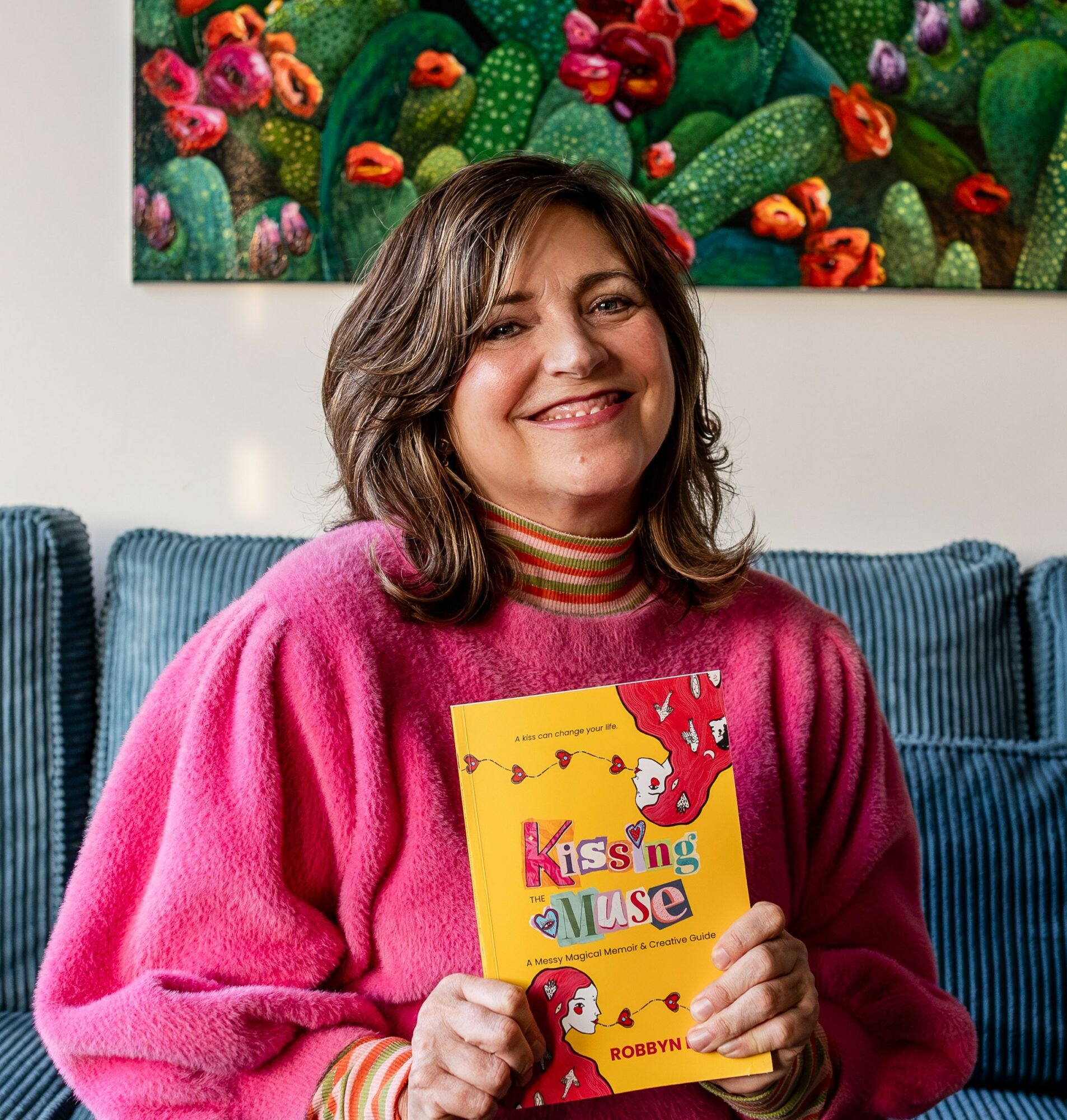
That realization became Kissing the Muse: A Messy, Magical Memoir & Creative Guide, and then The Messy Magical Muse Deck, and workshops, retreats, mentorship, research, teaching, and an ever-expanding body of work around creative expression and what it can teach us about being human.
The funny thing is that after all these years, degrees, exhibitions, teaching and making, I don’t think my story is really about becoming an artist.
It’s about finally giving myself permission to be the creative human I was before I learned I needed a purple ribbon to prove it.
Alright, so let’s dig a little deeper into the story – has it been an easy path overall and if not, what were the challenges you’ve had to overcome?
For a long time, my biggest obstacle was me.
Giving myself permission. Giving myself time. Trusting that my own needs and desires were worthy of attention, even when everyone and everything else seemed to be shouting louder.
We’re told to put on our own oxygen mask first, but that can be surprisingly hard to do. There are people to love, relationships to nurture, jobs to do, bills to pay, dogs to walk. Sitting down for an afternoon to cut pictures out of old magazines can feel ridiculously frivolous when there are so many things we’re supposed to be accomplishing.
But that’s actually why I call this work Kissing the Muse. It’s about creating a relationship, an intimacy, with your Self. Giving yourself enough time and attention to play, explore and listen for what is trying to emerge, simply because you want to know yourself better. No gold star required.
I still struggle with this. I think most of us do. How do we balance our love and responsibility for other people with our responsibility to ourselves? How do we make space for doing something that appears to be going nowhere in a world obsessed with getting somewhere?
Of course, life has given me plenty of external challenges too. We all get those. My marriage dramatically exploded. An immigration mess separated me from a country and a person I loved. I’ve started over more than once, and I’m still figuring out how to build a sustainable creative life without squeezing all the magic out of it in the process.
What I’ve learned is that sometimes the best cure is to do the exact thing that seems most frivolous: stop. Make something. Waste a little time creatively. Play. Not because making a collage magically fixes a broken heart, a visa problem, or a bank account. But because stopping long enough to make something creates a little space in all the noise.
Again and again, those experiences have brought me back to the Muse. It gives me a way to listen to myself, care for myself, and sometimes see something I couldn’t see before.
Thanks for sharing that. So, maybe next you can tell us a bit more about your business?
Kissing the Muse grew out of something I had been doing for myself for years: making art when I didn’t know what else to do.
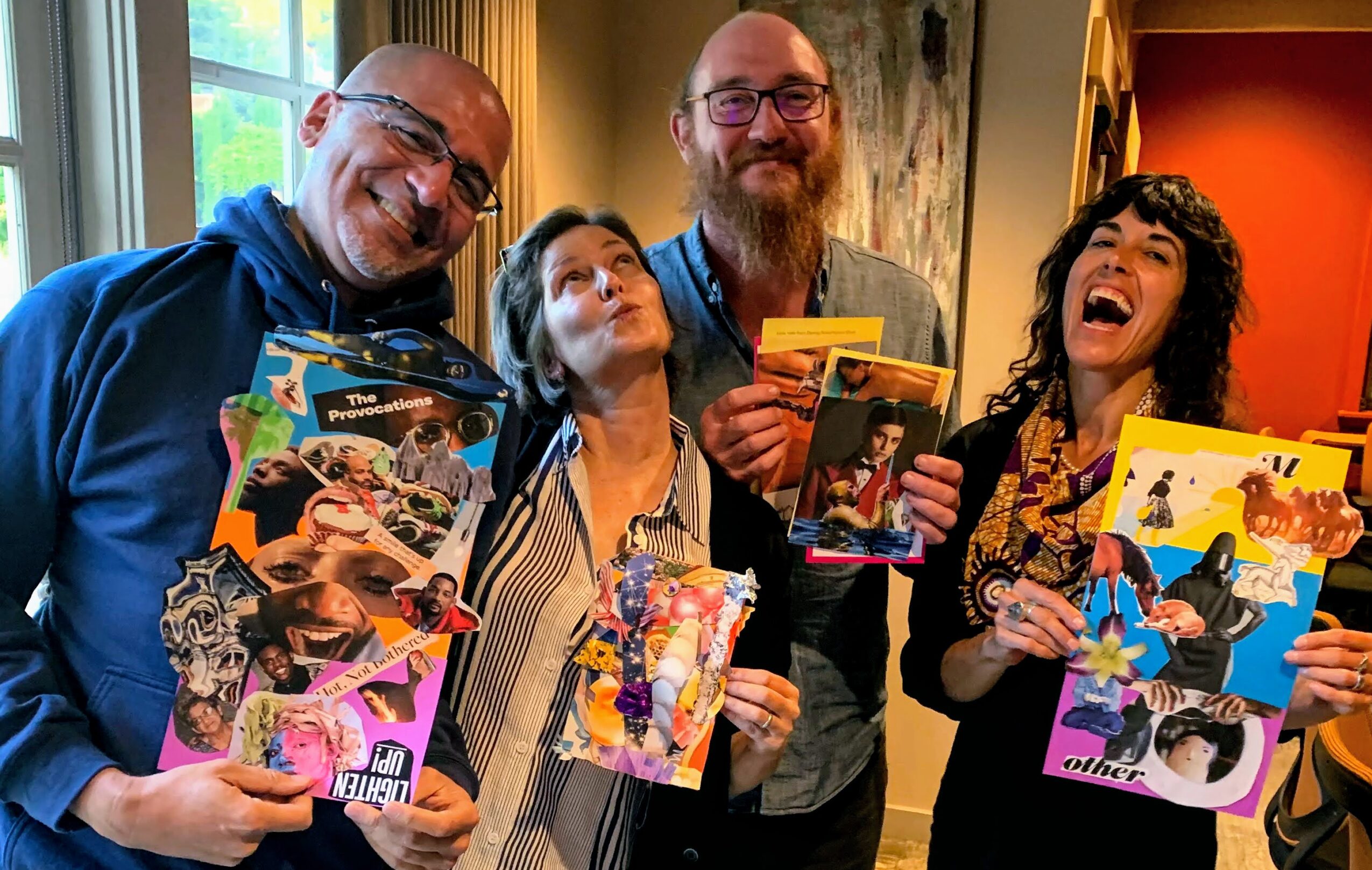
My signature practice is something I call a Muse Mirror: an intuitive collage made from found and recycled imagery. You don’t need to know how to draw. You don’t need to understand composition. You don’t even need to think you’re creative. You choose what pulls at you, put the pieces together, and then get curious about what you’ve made.
The premise underneath all of my work is very simple: we are all innately creative.
I don’t teach people how to become creative. I create experiences that help them reconnect with the part of themselves that already is.
Sometimes that’s playful. Sometimes it’s surprisingly emotional. Sometimes you glue a picture of a rhinoceros next to a woman wearing a ball gown and suddenly understand something about your marriage. The Muse has a sense of humor.
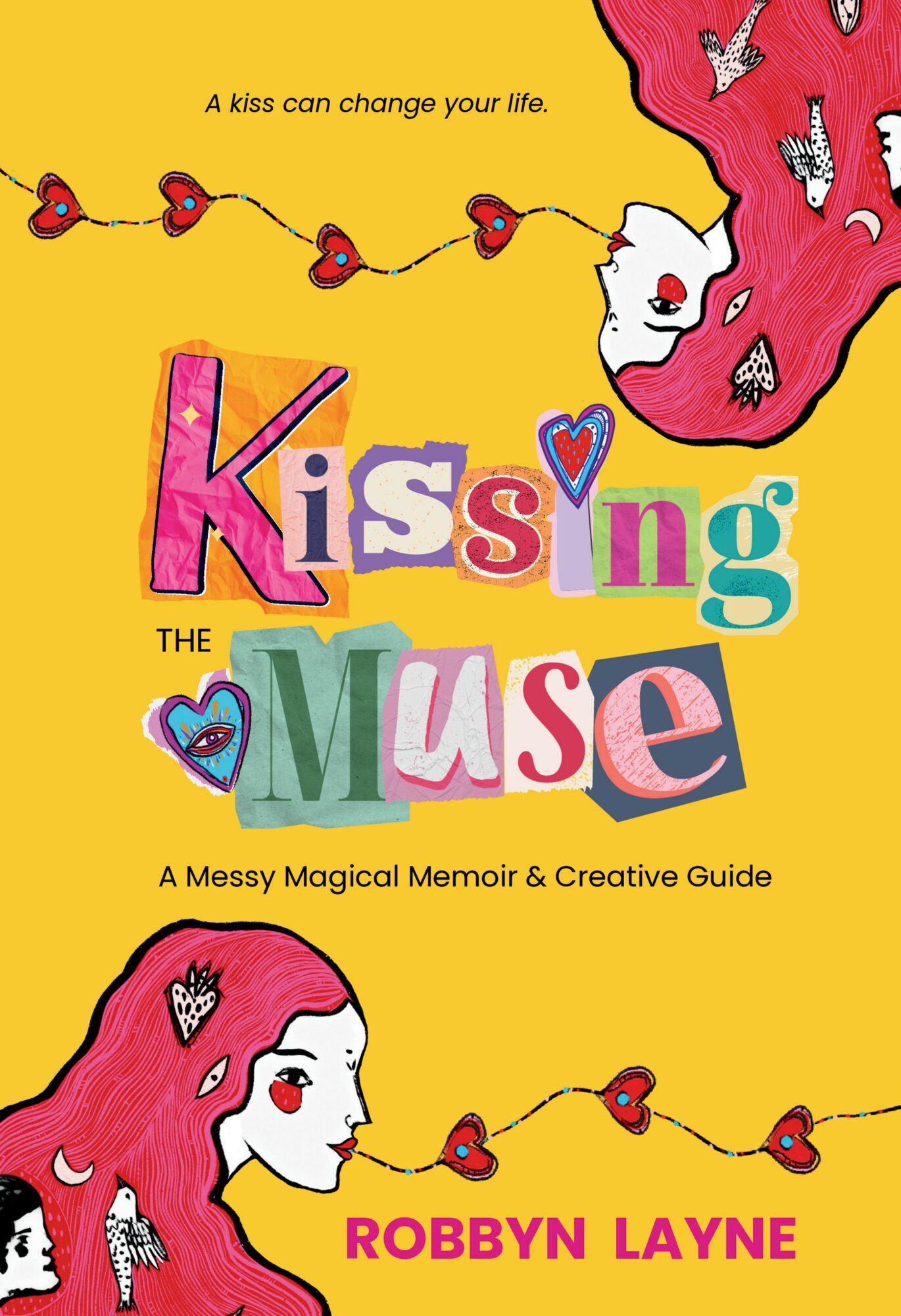
At the center of the work is my book, Kissing the Muse: A Messy, Magical Memoir & Creative Guide. It’s part memoir, part creative companion, and part invitation to come along on what I call the Messy Magical Creative Adventure: a 12-phase journey through archetypes, creative practices, personal stories and prompts designed to help readers explore their own lives.
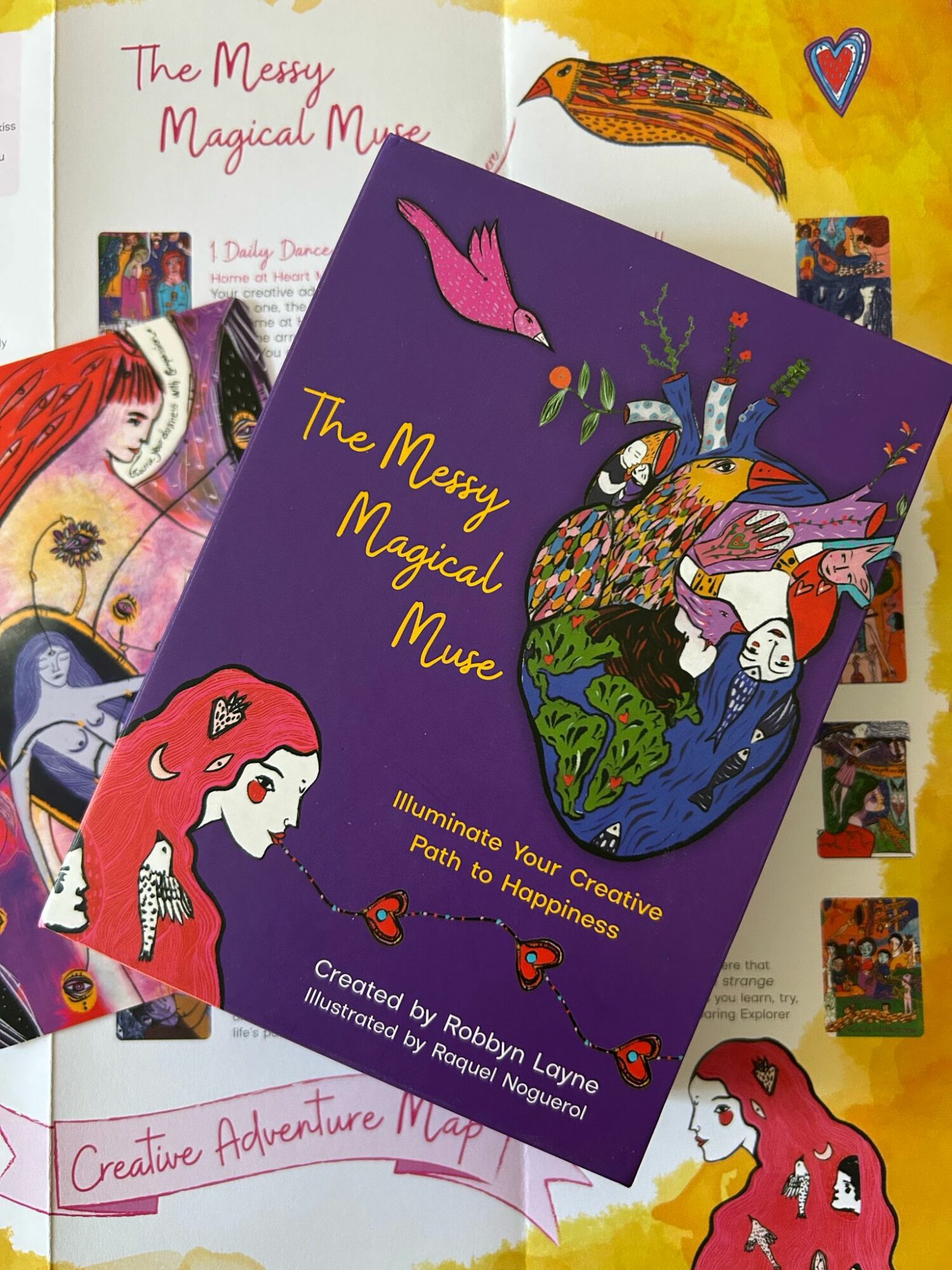
I also created The Messy Magical Muse Deck, illustrated by Raquel Noguerol, which turns that journey into a deck of insight-sparking creative prompts that can be used on its own or alongside the book.
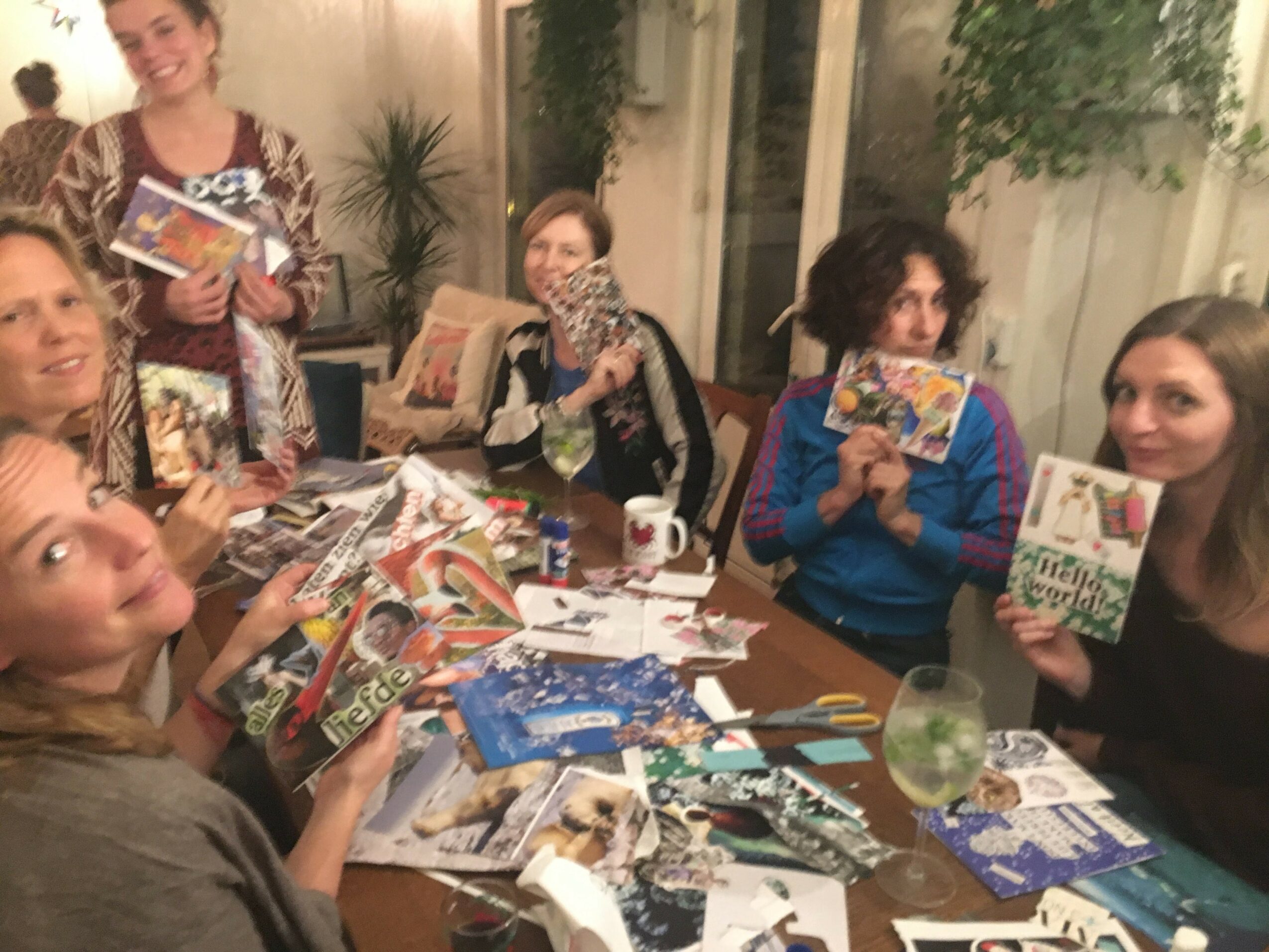
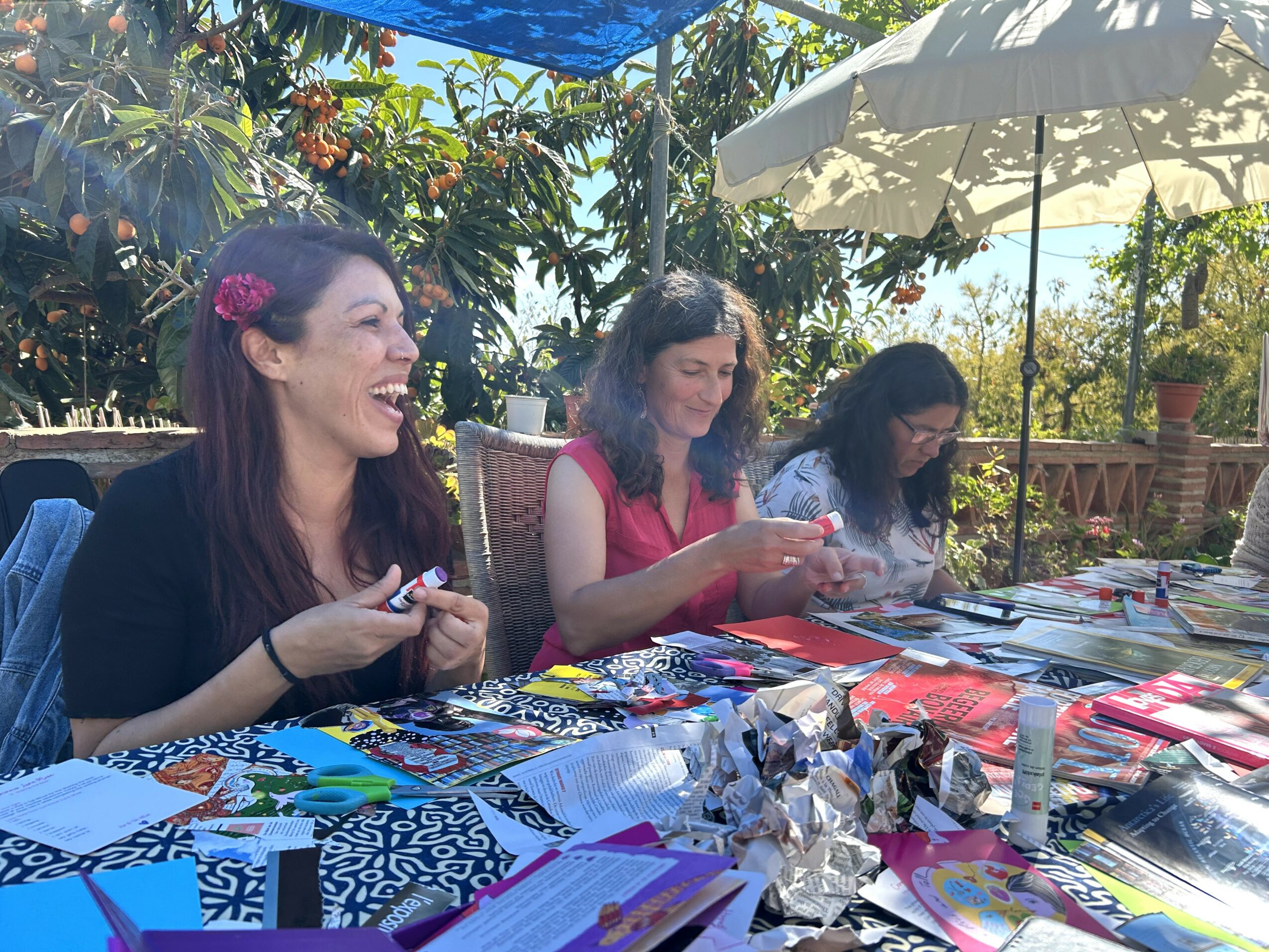
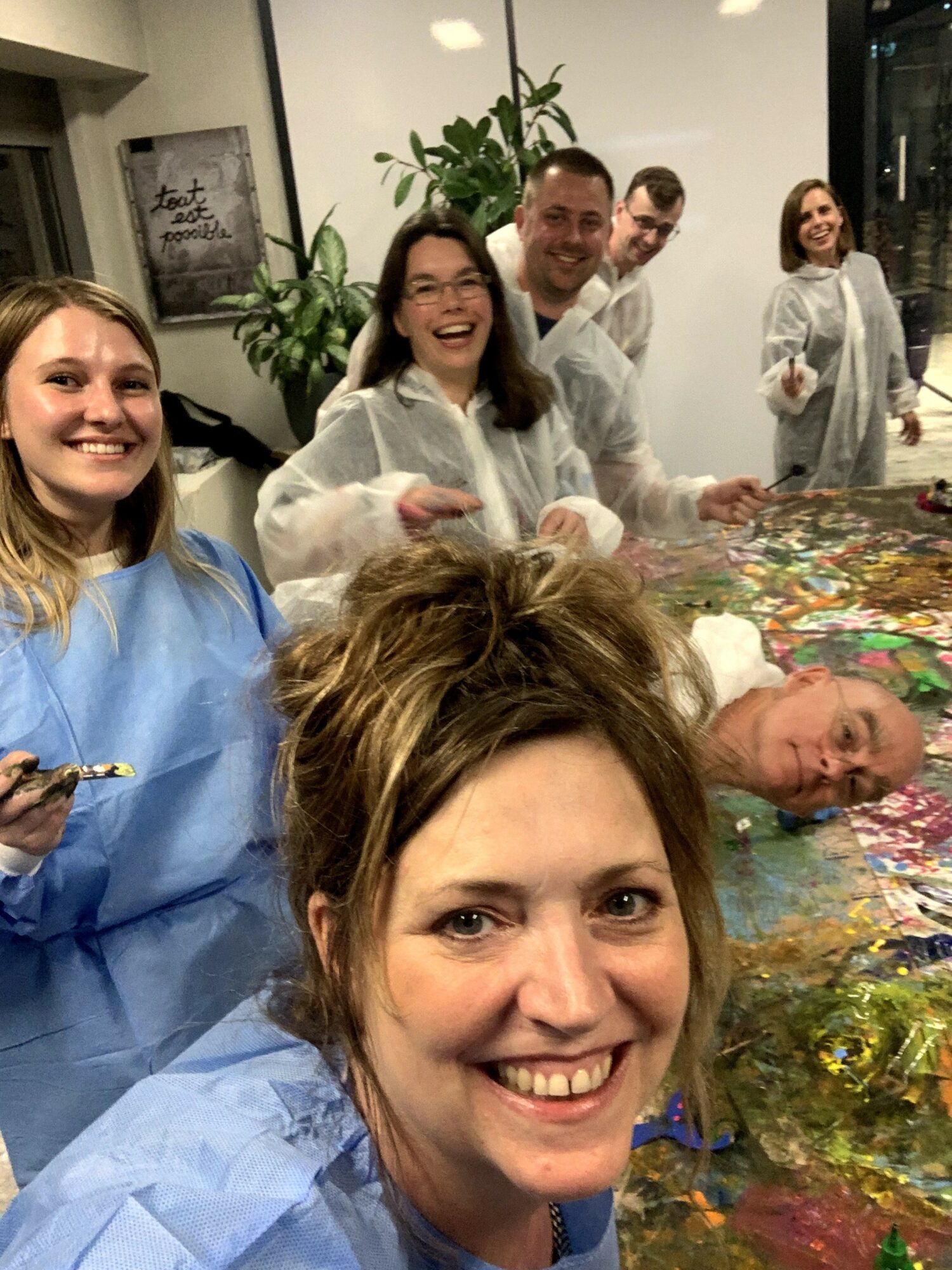
Today I bring this work into organizations and communities through corporate wellbeing programs, creative workshops and retreats, talks, and facilitated experiences. With bases in Amsterdam, Kansas City, and San Francisco, I work internationally, bringing Kissing the Muse to conferences, organizations, and communities wherever the work takes me.
I hold an MFA in New Practices and an MA in Transpersonal Psychology, taught Transformative Art for seven years in a university Arts & Consciousness program, and am now bringing the Muse Method into conversation with the growing arts-and-health field through research, writing and my involvement with the American Psychological Association’s Division 10 and the International Society for Arts and Medicine.
But you don’t need any of those credentials to come play with me.
You don’t need talent. You don’t need training. You definitely don’t need a tidy life.
Bring your curiosity.
I’ll supply the glue sticks.
What’s next?
Right now, it feels like Kissing the Muse is entering a new chapter, and I’m excited to see how big I can let it become.
I’m expanding my workshops, retreats, speaking, and corporate wellbeing programs internationally, while continuing to build creative communities around the work in Amsterdam, Kansas City, and San Francisco.
I’m also increasingly focused on the growing field of Arts & Health and exploring how the Muse Method can contribute to that conversation. A big part of the next chapter is building partnerships and collaborations with universities, medical institutions, researchers, and arts and health organizations to explore, develop, and eventually study the work in different settings.
Alongside that, I’m developing the research and theoretical foundations of the Muse Method within the psychology of creativity and arts and health, with the longer-term goal of a second, more research-based book about how creative expression can help us understand ourselves, navigate change, and meet the challenges of being human.
Ultimately, I’d love to spend more and more of my professional life doing this: writing, teaching, speaking, collaborating, making things, and bringing people together around the role creative expression can play in our individual and collective wellbeing.
And after years of feeling like I needed to know exactly where I was going before I started, I’m also trying to leave plenty of room for surprise.
The Muse, after all, has never been particularly interested in my five-year plan.
Contact Info:
- Website: https://www.kissingthemuse.com/
- Instagram: https://www.instagram.com/kissingthemuse/
- Facebook: https://www.facebook.com/theArtofKissingtheMuse
- LinkedIn: https://www.linkedin.com/in/robbyn-layne-1a307728/
- Youtube: https://www.youtube.com/@KissingtheMuse/videos
- Other: https://www.linkedin.com/company/kissingthemuse/?viewAsMember=true