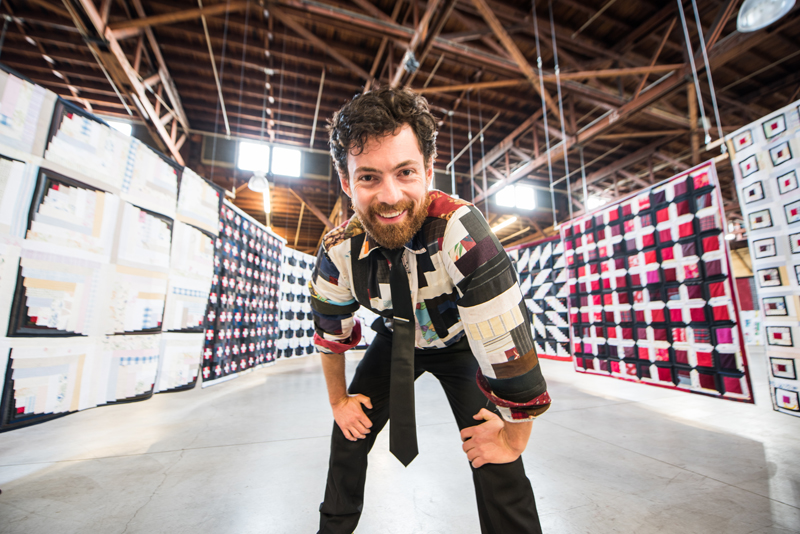




Today we’d like to introduce you to Luke Haynes.
Hi Luke, please kick things off for us with an introduction to yourself and your story.
I came to art through making things with what was available to me. I grew up without much money, and that shaped the way I understood materials from the beginning. I learned to see possibility in things that had already lived a life, and that instinct has stayed at the center of my work.
I eventually studied architecture at The Cooper Union in New York, where I received a full scholarship. That training deeply influenced the way I think about structure, scale, composition, and space, but I found myself increasingly drawn to textiles. Quilts offered me a way to combine architecture, portraiture, history, labor, and material culture in one form.
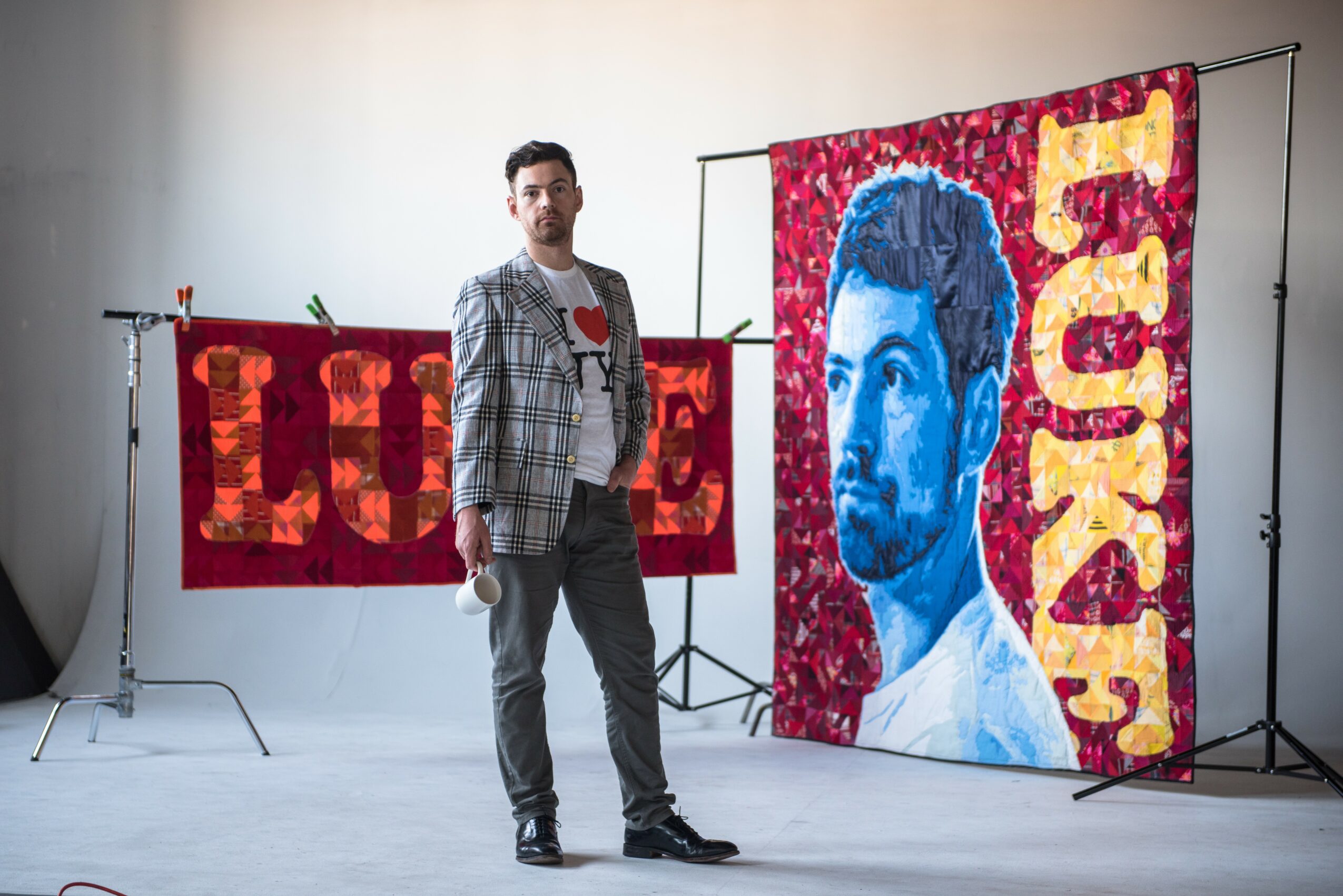
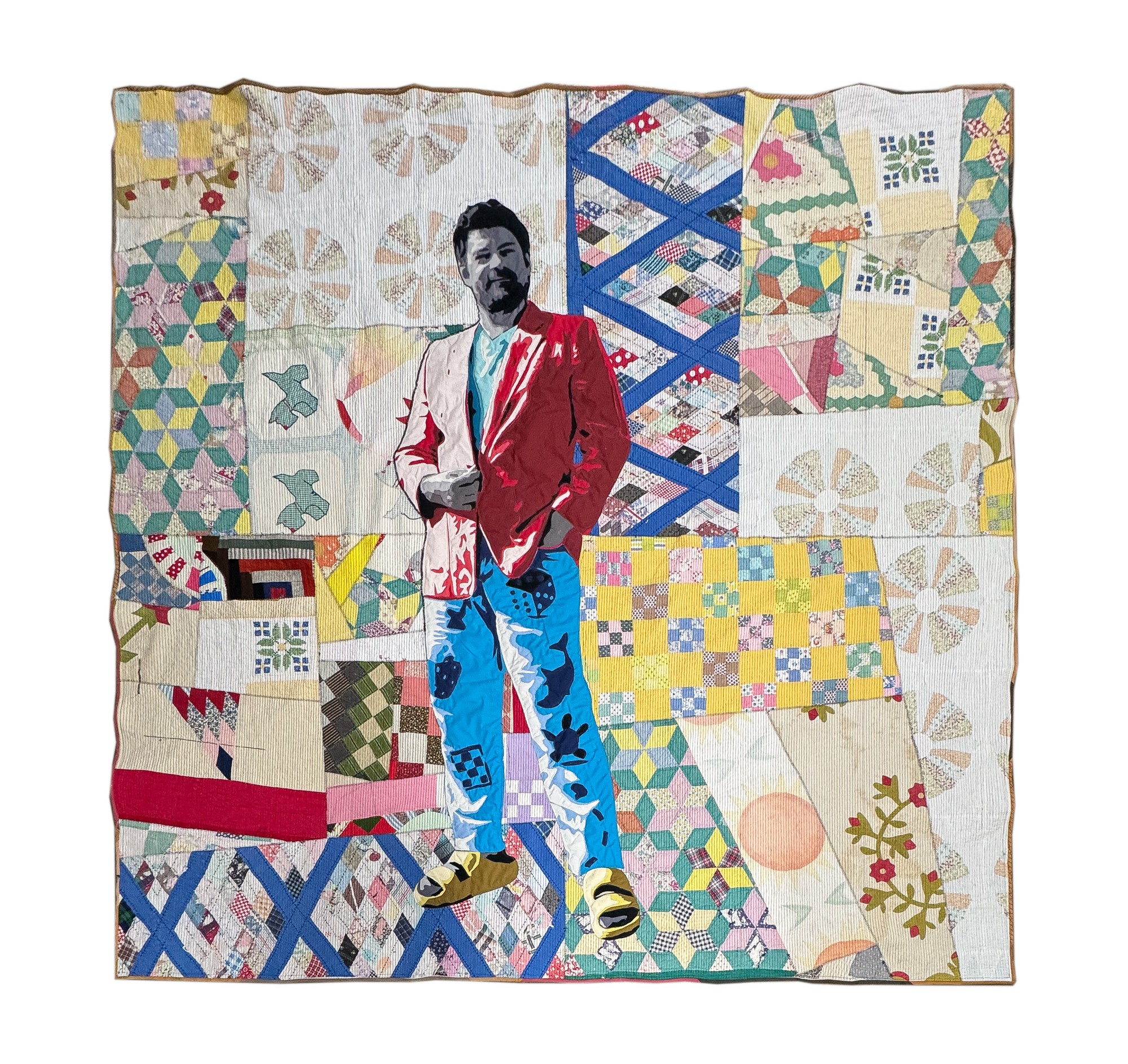
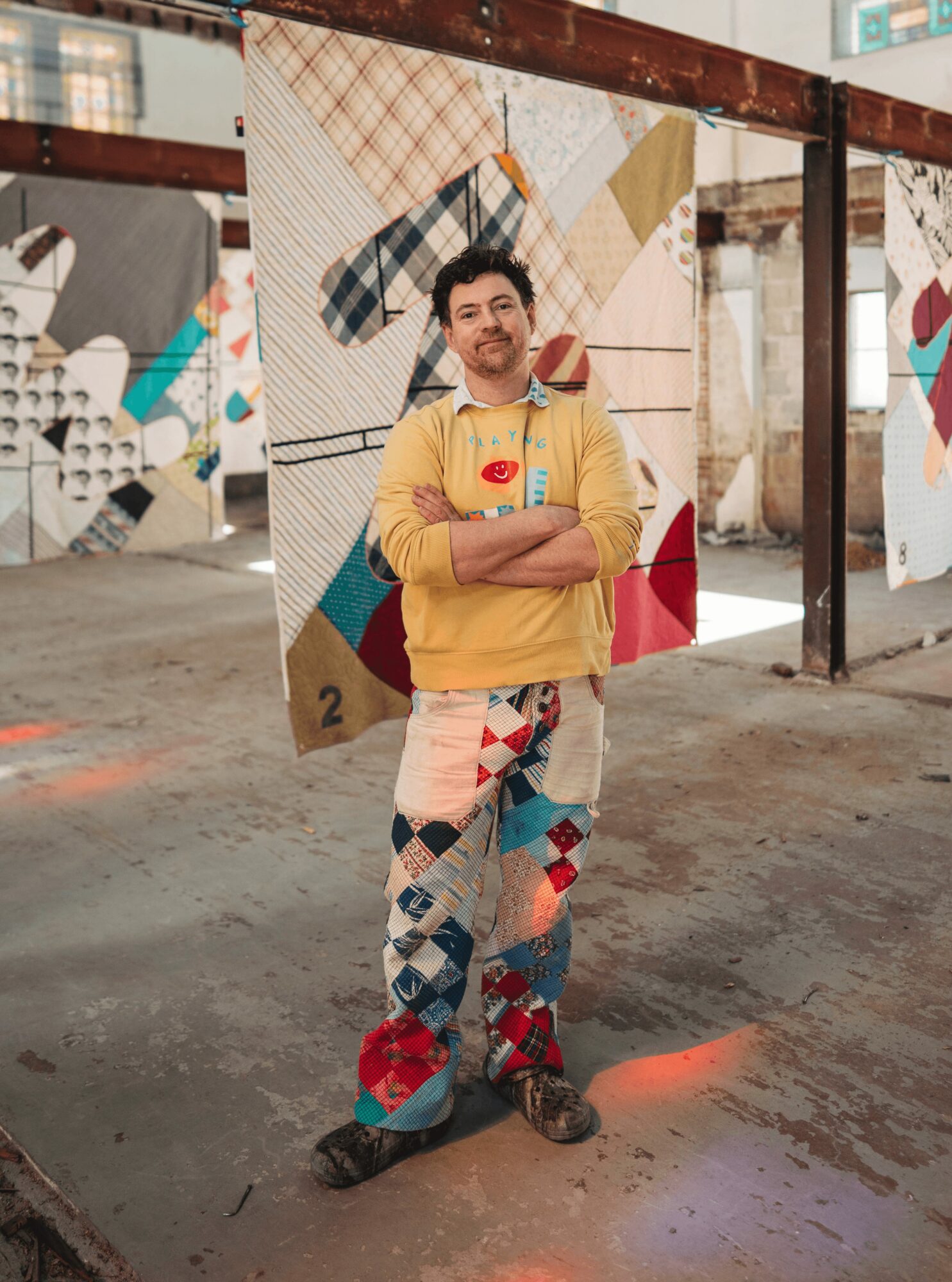
I began developing my portrait quilts in the early 2000s, using clothing and reclaimed textiles to build images of people at a large scale. Over time, that became a central part of my practice. I have now spent more than two decades working as an artist, exhibiting internationally and creating work for museums, public spaces, institutions, and private collections.
Sustainability has also remained fundamental to what I do. I work heavily with reclaimed materials, and over the course of my career I have diverted more than 100 tons of textiles from the waste stream. For me, reuse is not simply an environmental choice. The history embedded in worn fabric is part of the content of the work.
My practice has expanded from quilts into large-scale installations, public art, architecture, teaching, and collaborative projects, but the core questions are still very similar to where I began: What can a material carry? How do we see one another? How can something discarded become monumental?
Today, my work is held in permanent collections including the Brooklyn Museum, the American Folk Art Museum, the Museum of Arts and Design, the Newark Museum, the International Quilt Museum, and others. I’ve exhibited in more than 200 shows around the world, but I still think of the work as an ongoing investigation. I’m always looking for the next way to push the language of quilts, portraiture, and reclaimed material into a new space.
I’m sure it wasn’t obstacle-free, but would you say the journey has been fairly smooth so far?
It has definitely not been a smooth road.
I grew up in poverty, and that shaped nearly every part of how I entered the art world. I did not come from a family with connections, financial stability, or a roadmap for building a creative career. For a long time, I was figuring things out through instinct, persistence, and necessity.
I am also autistic, and for much of my life I did not have the language to understand the ways that affected how I moved through school, work, relationships, and professional spaces. The art world can be especially difficult because so much depends on networking, social cues, self-promotion, and navigating systems that are often unspoken. I have had to build a career while also learning how to advocate for myself and create ways of working that actually fit who I am.
Financial instability has been another major challenge. Being a working artist for more than two decades means there have been periods of real uncertainty, and I have often had to be extremely resourceful. In some ways, that is connected to why reclaimed materials became so central to my practice. I learned early that limitations can become a language rather than just an obstacle.
There have also been the normal but difficult realities of sustaining a long career: rejection, projects that fall apart, institutions that move slowly, being underestimated, and continuing to make ambitious work without always having ambitious resources.
But I think those struggles have also clarified what matters to me. They made me persistent, inventive, and less interested in waiting for permission. I have learned how to build with what is available, how to keep working through uncertainty, and how to create a practice that is genuinely my own.
Thanks – so what else should our readers know about your work and what you’re currently focused on?
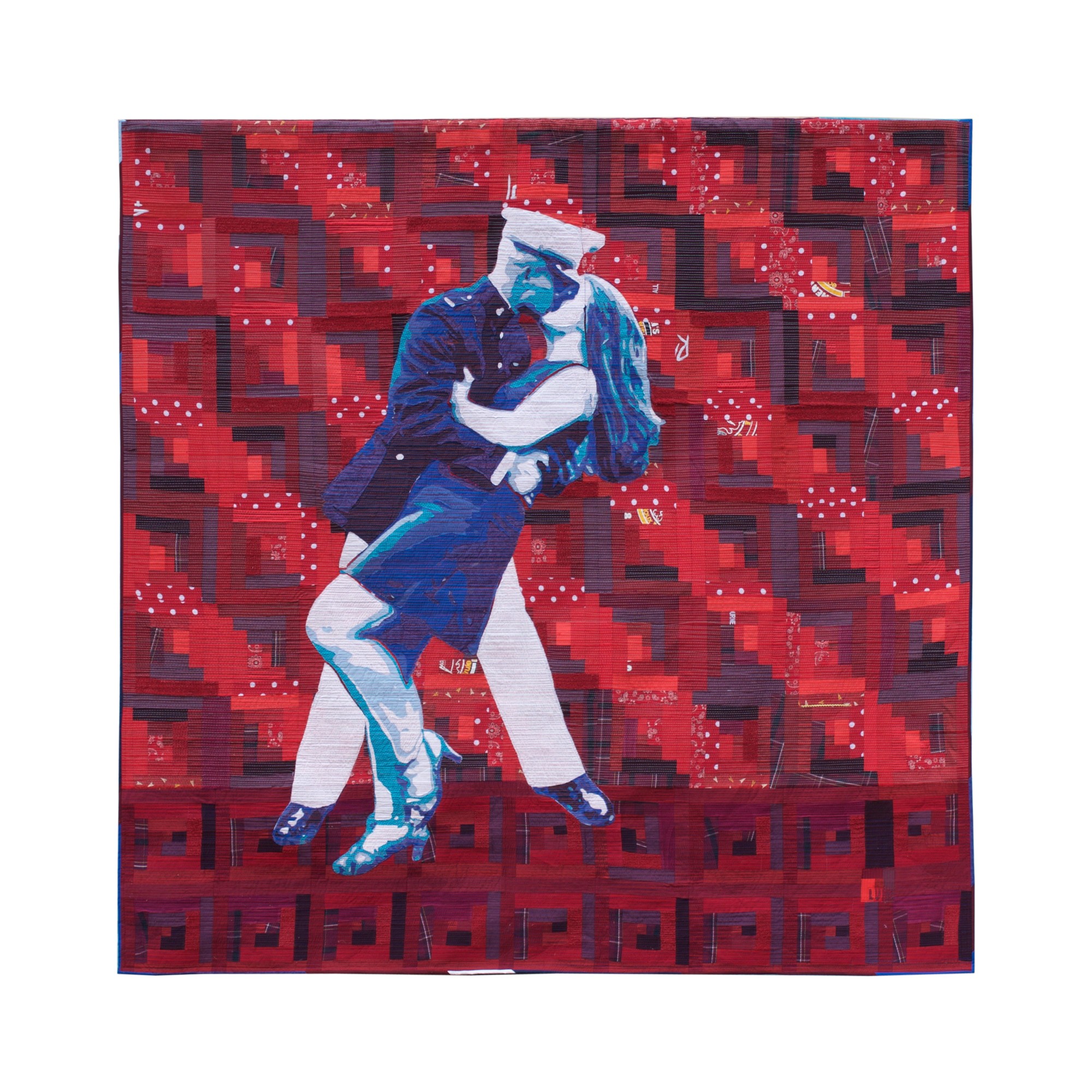
I am a multidisciplinary artist, but I am probably best known for my large-scale portrait quilts made from reclaimed textiles. I began developing that body of work in the early 2000s, using clothing and other discarded fabrics almost like a painter uses color and mark-making. From a distance, the work reads as portraiture. Up close, it becomes a landscape of seams, histories, wear, and individual pieces of cloth.
My background in architecture has a major influence on how I work. I think about composition structurally, and I am interested in scale, space, repetition, systems, and how a viewer physically encounters an object. Over the years, my practice has expanded beyond portrait quilts into large-scale installations, public art, architectural interventions, teaching, and collaborative projects, but textiles remain at the center of how I think.
I am also deeply committed to working with reclaimed materials. Over the course of my career, I have diverted more than 100 tons of textiles from the waste stream. I am proud of that not simply as a sustainability statistic, but because reuse is embedded in the meaning of the work. Clothing has memory. It carries evidence of bodies, labor, class, identity, and time. I am interested in what happens when those ordinary, overlooked materials are reorganized into something monumental.
What sets my work apart is probably the combination of portraiture, architecture, material history, and scale. I have spent more than twenty years pushing against assumptions about what a quilt can be, where it belongs, and how it can function. I am not especially interested in preserving strict boundaries between fine art, craft, design, and architecture. I would rather see what happens when those categories start colliding.
I am proud that the work has entered permanent collections including the Brooklyn Museum, the American Folk Art Museum, the Museum of Arts and Design, the Newark Museum, the International Quilt Museum, and others, and that I have exhibited in more than 200 shows internationally. But honestly, I am most proud that I have built a sustainable practice that is recognizably my own. I have stayed curious, continued evolving, and kept finding new possibilities inside a material and tradition that people sometimes assume they already understand.
Who else deserves credit in your story?
Absolutely. No career like this is built alone.
My wife, Nicole, deserves an enormous amount of credit. She is an artist and writer in her own right, and she has been my partner, collaborator, advocate, sounding board, and often the person who can see the larger possibility in something before I can. We have very different brains and different approaches to making work, which is part of why the partnership is so valuable. She challenges me, helps me communicate ideas more clearly, pushes projects forward, and has been beside me through both the exciting opportunities and the deeply uncertain periods that come with building a life in the arts.
I have also been fortunate to have collectors, curators, museums, galleries, students, clients, and collaborators who have taken the work seriously and opened doors at critical moments. Sometimes a career changes because one person recommends you for an exhibition, acquires a work, introduces you to an institution, commissions something ambitious, or simply says your name in a room you are not in. I am very aware of how much those acts of advocacy matter.
My education at The Cooper Union also played a major role in shaping me. Studying architecture gave me a foundation in rigorous thinking, critique, structure, and scale that continues to influence everything I make. The teachers and peers I encountered there helped expand my understanding of what an art practice could be, even though I ultimately moved into a material language that was very much my own.
I also give a great deal of credit to the communities around quilting and textiles. I have spent much of my career pushing at the boundaries of the form, but I am still part of a much larger history built by generations of makers. Teachers, guilds, fellow artists, craftspeople, and students have all influenced the way I think about labor, knowledge, tradition, and experimentation.
And honestly, there have been countless people along the way who helped in ways they may not even realize. Someone gave me fabric. Someone offered a wall. Someone invited me to teach. Someone bought work when I needed it. Someone trusted me with a project bigger than anything I had done before. I think a long career is built from hundreds of those moments, and I feel a real responsibility to recognize that.
Contact Info:
- Website: https://www.LUKE.art
- Instagram: https://www.instagram.com/entropies