





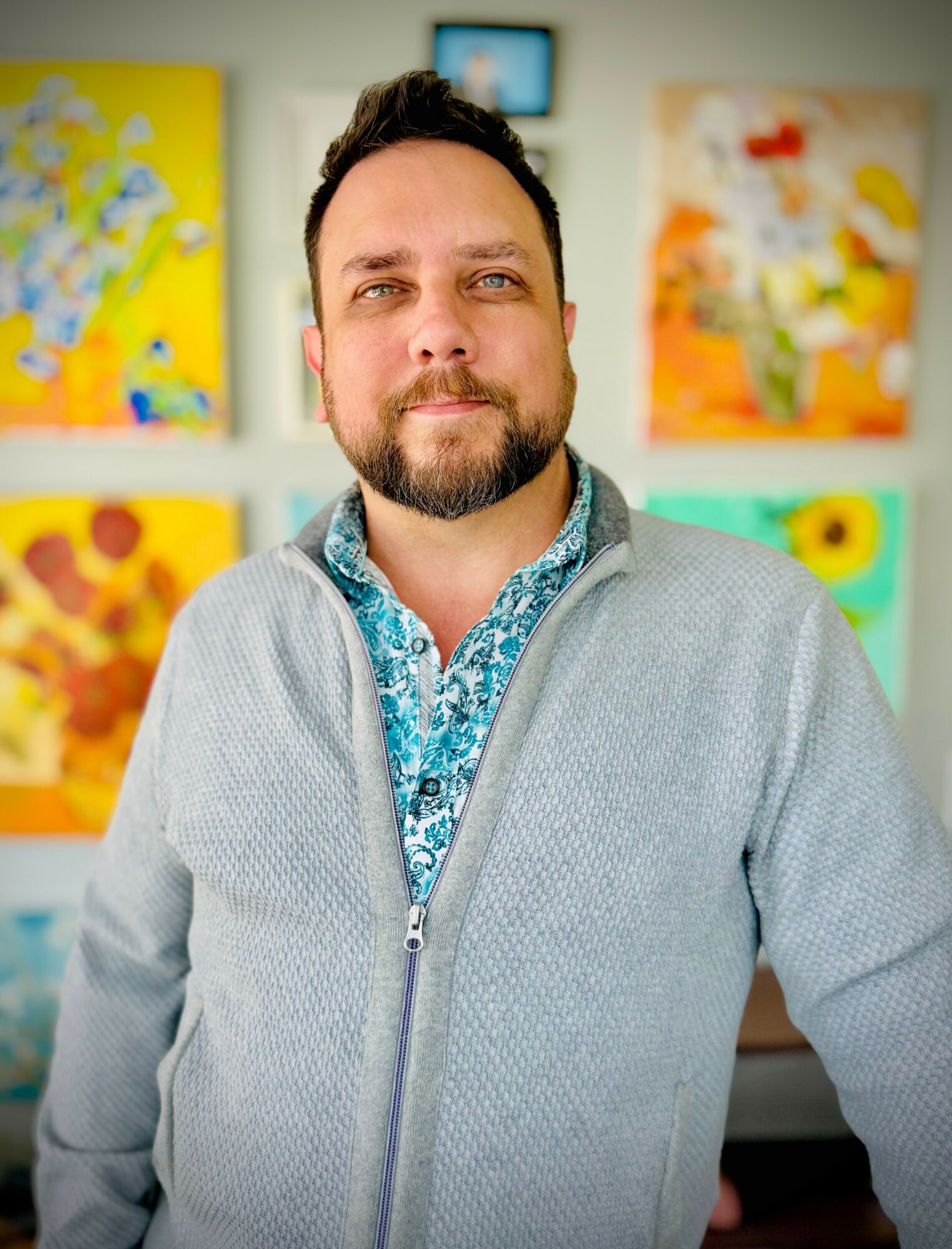
Today we’d like to introduce you to Rick Chamness.
Hi Rick, so excited to have you on the platform. So before we get into questions about your work-life, maybe you can bring our readers up to speed on your story and how you got to where you are today?
My personal journey has taken me all over the world and back again. I was born and raised in Kansas City. After high school, I bounced around the country a bit working my undergrad and my first graduate degree. Eventually, I ended up in Taiwan where I taught English and worked with a Christian Church. This travel would prove to greatly shape my outlook and personal faith journey.
When my partner and I moved back to the U.S., I didn’t start out with a traditional business path—I started in people work. For years, I was working in recovery and community settings, eventually leading a residential addiction treatment program in Los Angeles. That experience put me on the front lines of human pain, resilience, and systems that either help people heal or quietly keep them stuck.
Over time, I realized that what mattered most to me wasn’t just crisis response, but long-term change—helping individuals, couples, and families understand the patterns shaping their lives and learn how to interrupt them. That led me back to school for marriage and family therapy, where my clinical training gave language and structure to what I’d already been doing intuitively: working systemically, relationally, and with meaning at the center.
Today, I’m a supervised Marriage and Family Therapist building a private practice while still operating with an entrepreneurial mindset. I see my work as sitting at the intersection of mental health, leadership, and values—helping people navigate addiction, grief, relationships, and identity with both compassion and accountability.
I’m sure it wasn’t obstacle-free, but would you say the journey has been fairly smooth so far?
It has certainly not been a smooth road along the way. But I think that’s true for most people. For me, it was about finding meaning in what I was doing. In the helping professions, there is a tension between care and capacity—learning how to set boundaries, make hard decisions, and still stay aligned with your values. I had to unlearn the idea that struggle or burnout was just “part of the calling.”
As my partner and I moved from place to place, we were largely following her career. I was happy to support her in that way. And it meant I had to find work in each new place. My resume was a winding path for many years. But along the way, my desire was always to help people. Working with the unhoused communities in Los Angeles and Kansas City taught me that I had a real capacity to sit with people going through immense hardship. I also found that I had a capacity to be present in the midst of people’s pain.
But getting here was tough. There were a lot of very long work days. A lot of being on call. A lot of crisis management. A lot of reading. A lot of school. And some more school. Did I mention the reading? LOL. But at the end of the day, I am so blessed to both have the opportunity to go through those hard seasons and to be doing the work I’m doing now.
Alright, so let’s switch gears a bit and talk business. What should we know?
I am a Marriage and Family Therapist building a private practice that works with a wide range of individual, relational, and life-transition concerns. My background running a residential addiction treatment program means I have deep experience with addiction and recovery, couples work, grief, trauma, and spiritually integrated counseling—but the common thread in all my work is helping people understand the systems they’re part of and how those systems shape their lives.
Something that sets me apart from others is a belief in integrating the body and the mind. In conjunction with my training on cognitive and emotional approaches, I’m also training to become a Somatic Experiencing Practitioner. Our minds and our bodies are intricately connected. We need both new frameworks of how we see the world as well as an ability to recognize and manage what’s happening in our bodies. I’m also comfortable working with complexity—faith and doubt, accountability and compassion, strength and vulnerability—without collapsing into extremes. Clients often tell me they feel both challenged and deeply respected, which is exactly the balance I aim for.
What I’d want readers to understand is that this isn’t therapy built around quick fixes—though I do care deeply about helping people feel some relief early on. It’s a long-view approach. None of us arrive at our struggles overnight; we’re shaped by years of relationships, experiences, and beliefs.
My focus is on lasting change and ethical care—work that respects both the person sitting in the room and the larger story that shaped them. That doesn’t mean clients need to be in therapy forever. If anything, part of my job is to help people become more self-directed, using therapy as support or a tune-up when life calls for it. Some growth happens quickly, some unfolds slowly—and that pace is something I try to honor.
In terms of your work and the industry, what are some of the changes you are expecting to see over the next five to ten years?
Over the next 5–10 years, I think we’ll continue to see mental health move away from being viewed as purely individual and toward a more systems-aware understanding. The COVID pandemic accelerated that shift. It exposed how deeply our mental health is shaped by disruptions in relationships, work, community, and meaning—not just by what’s happening inside our heads. That systems lens is something Marriage and Family Therapists are particularly trained to hold, and I think it will become increasingly essential.
Another lasting change is access. Telehealth is no longer a temporary solution—it’s a permanent expansion of care. Technology has made therapy available to people who were previously limited by geography, mobility, or stigma, and that’s an important and hopeful development for the field.
At the same time, we’re entering an era where information is abundant but connection is thinner. AI and digital tools make it easier than ever to access insight, coping strategies, and language for what we’re experiencing—but often in isolation. I see a growing and irreplaceable role for therapists here. Being informed is not the same as being seen. Real change happens in the presence of another human who can witness, reflect, and engage with your story.
Used ethically, technology can be a powerful supplement—for clinicians and clients alike—but it can’t replace relationship. I believe the future of mental health care will depend on how well we integrate innovation without losing the human core of the work.
Pricing:
- $150/hr for individuals, relationships, and families
Contact Info:
- Website: https://www.richtapestrykc.com
- Instagram: https://www.instagram.com/richtapestrykc/
- LinkedIn: https://www.linkedin.com/in/rick-chamness-7297463/
- Other: https://www.psychologytoday.com/us/therapists/rick-chamness-kansas-city-mo/1584872