





Today we’d like to introduce you to Jennifer Reed.
Hi Jennifer, please kick things off for us with an introduction to yourself and your story.
I have always loved history and geography. The stories of our collective past run the gambit of emotions from heartbreaking tragedy to awe inspiring triumph. When I got to college, I wasn’t sure what I could do with a history degree other than teach. So that is what I started with, a teaching degree in secondary education. I taught middle and high school history, civics, and geography. I quickly learned that though I loved the kiddos, the politics of the educational system was not something with which I wanted to be involved. So I went back to school to earn a masters in history. I focused on public history and westward expansion in American history. For a while I worked some odd jobs not related to history at all until finally I was hired as a part time assistant at the Cass County Historical Society (CCHS) in 2017. From that initial position, I worked my way up until I was offered the Executive Director position in late 2019. Honestly this position encompasses the type of work I envisioned for myself when I started my masters program. But it also has responsibilities that I was not really prepared for, so there has been quite a bit of learning on the job as well. Thankfully there are amazing organizations like the Missouri Association of Museums and Archives (MAMA), the American Association for State and Local History (AASLH), and the State Historical Society of Missouri (SHSM) that offer amazing professional development opportunities that have definitely helped me become a more well rounded leader at CCHS.
Can you talk to us a bit about the challenges and lessons you’ve learned along the way. Looking back would you say it’s been easy or smooth in retrospect?
Trying to find a job that will lead to a career in the field of history is tough. It was through a personal connection after getting involved in my community that led me to CCHS. I think the biggest struggle was just knowing where to look. I also have an amazing husband who has been so supportive of me finding a job that I love, even if it doesn’t pay a major company CEO salary. Yes it is important to make enough money to live, but I love that I don’t hate going to work every day. Not a lot of people can say that unfortunately. Sure there are some days that are better than others, but what I love the most about my job is that I literally learn something new everyday!
Alright, so let’s switch gears a bit and talk business. What should we know about your work?
The discipline of Public History is relatively knew in the field of history. What drew me to it was that it focused on how to take history from academia and social theory and put it into a format that the general public would find not just informational, but interesting and even interactive. Working for such a small organization, I do nearly all of the public facing work including our social media presence, newsletters, displays and exhibits, presentations in the community, and programs for all ages.
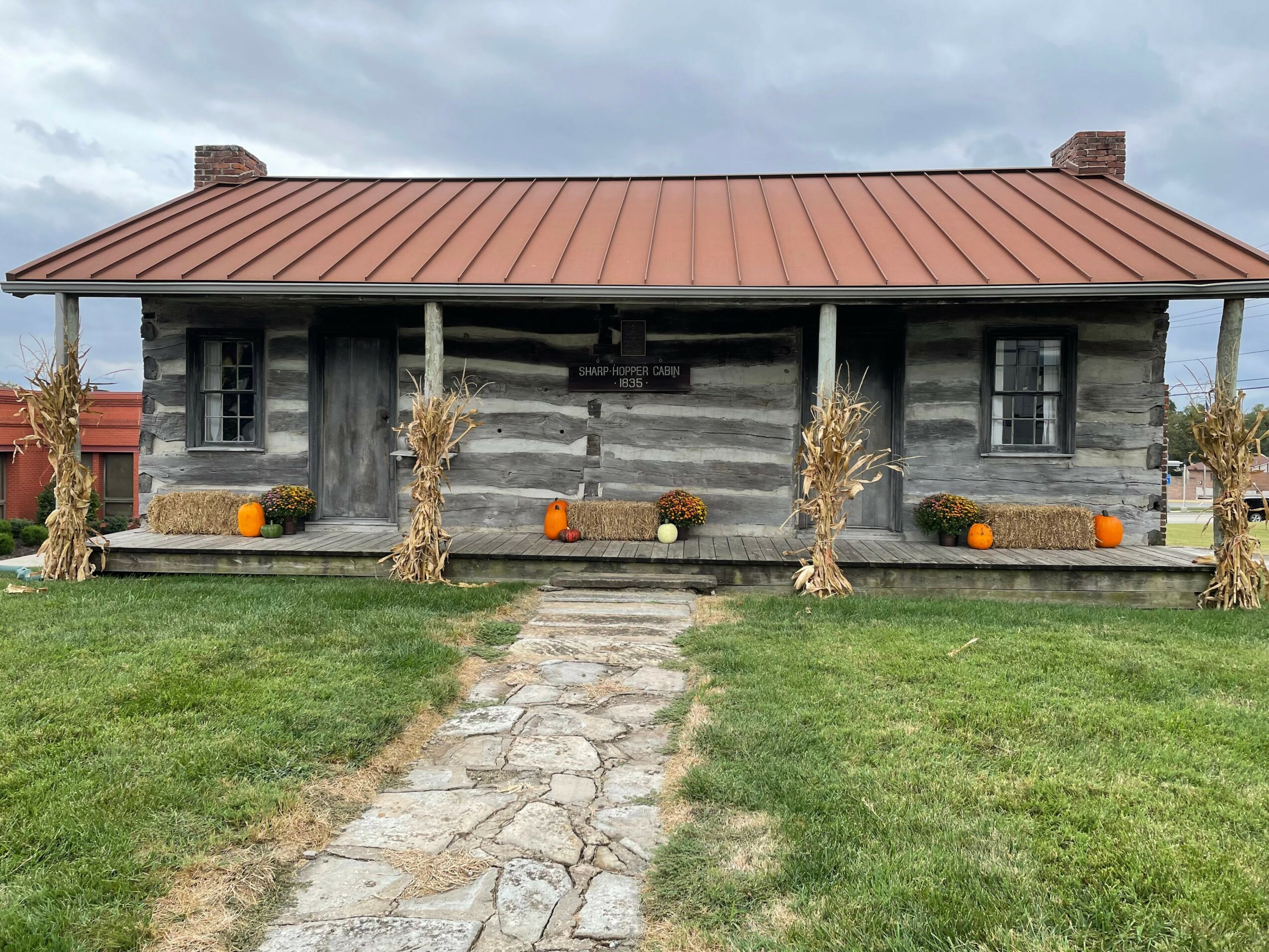
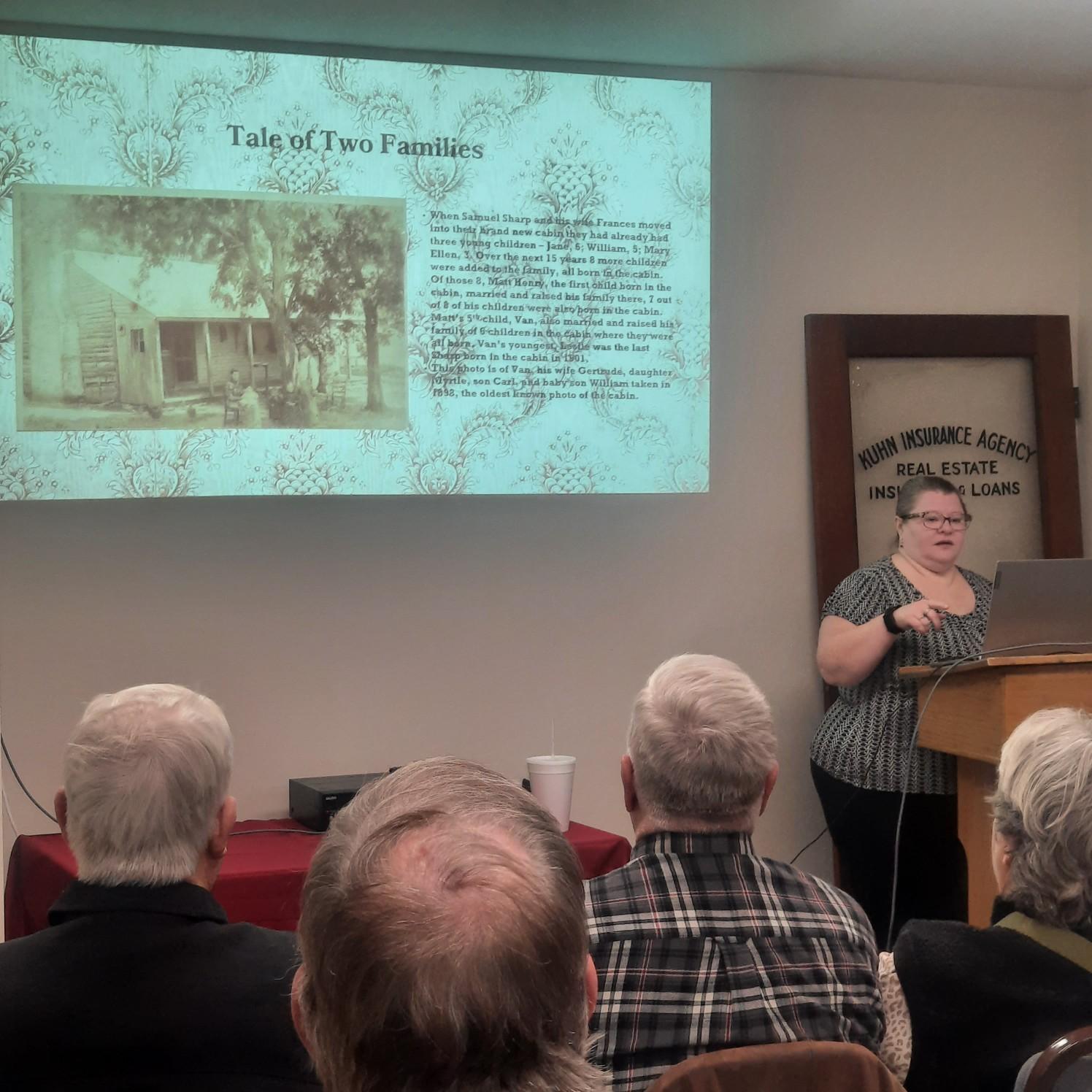
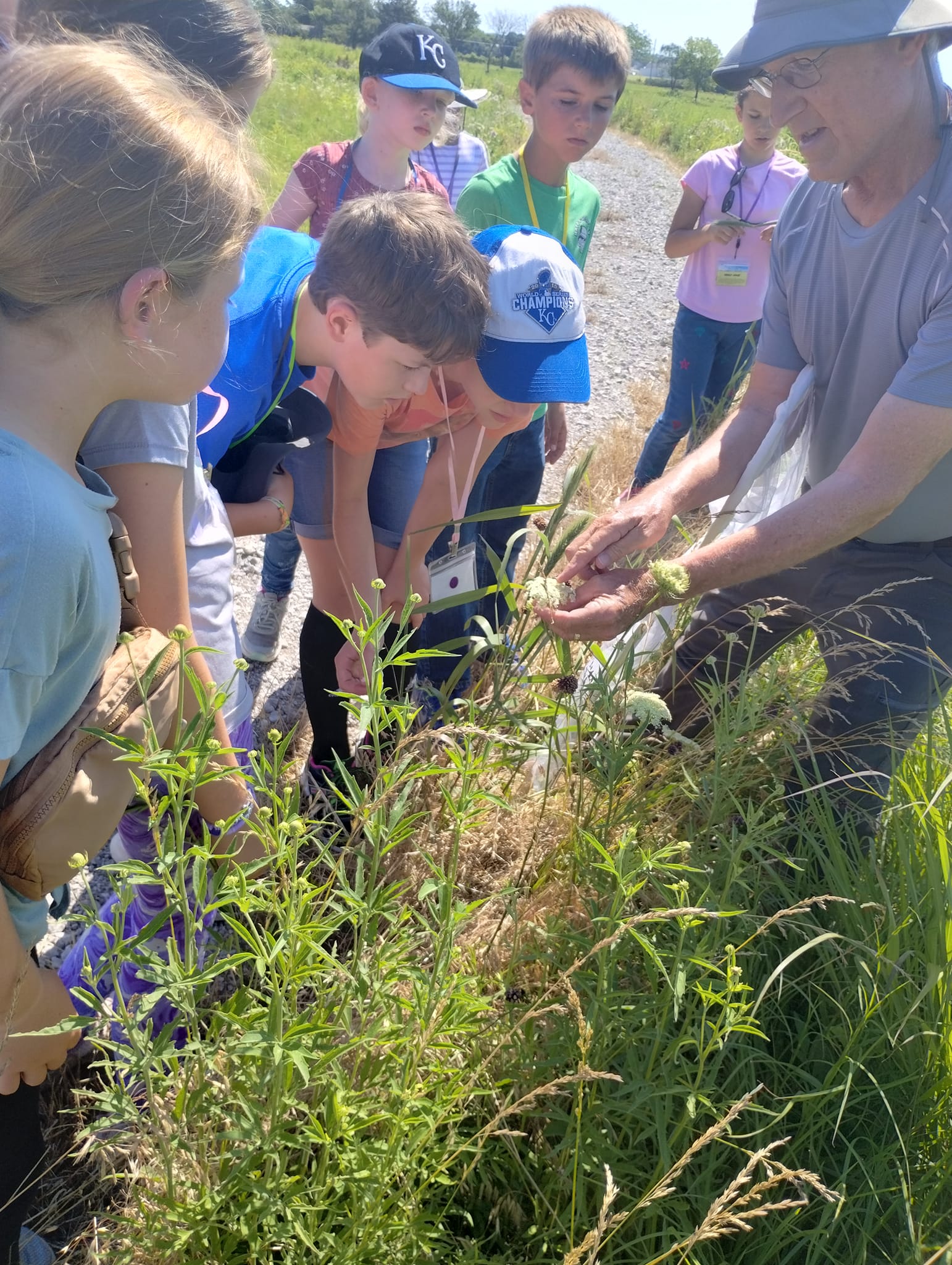
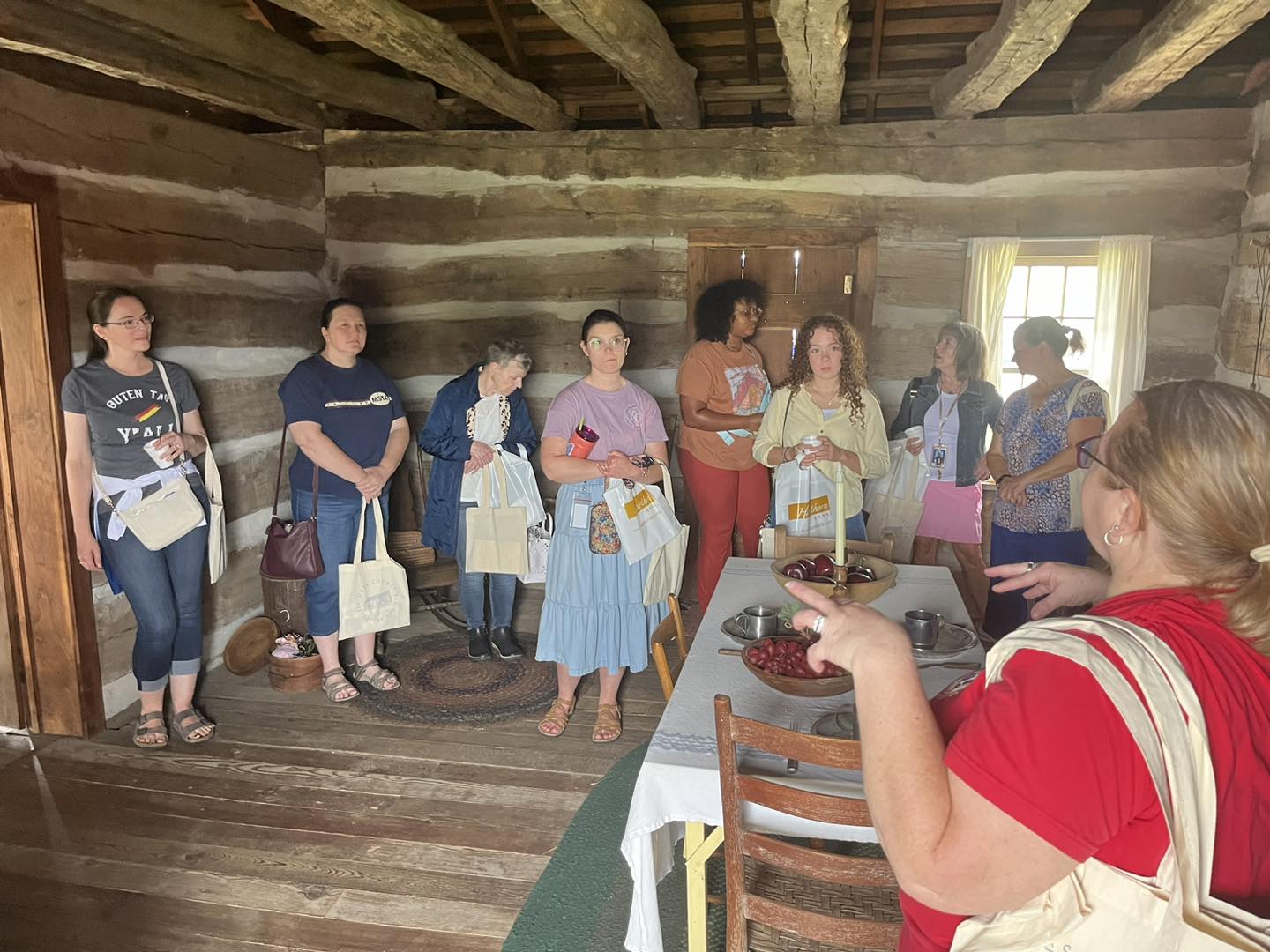
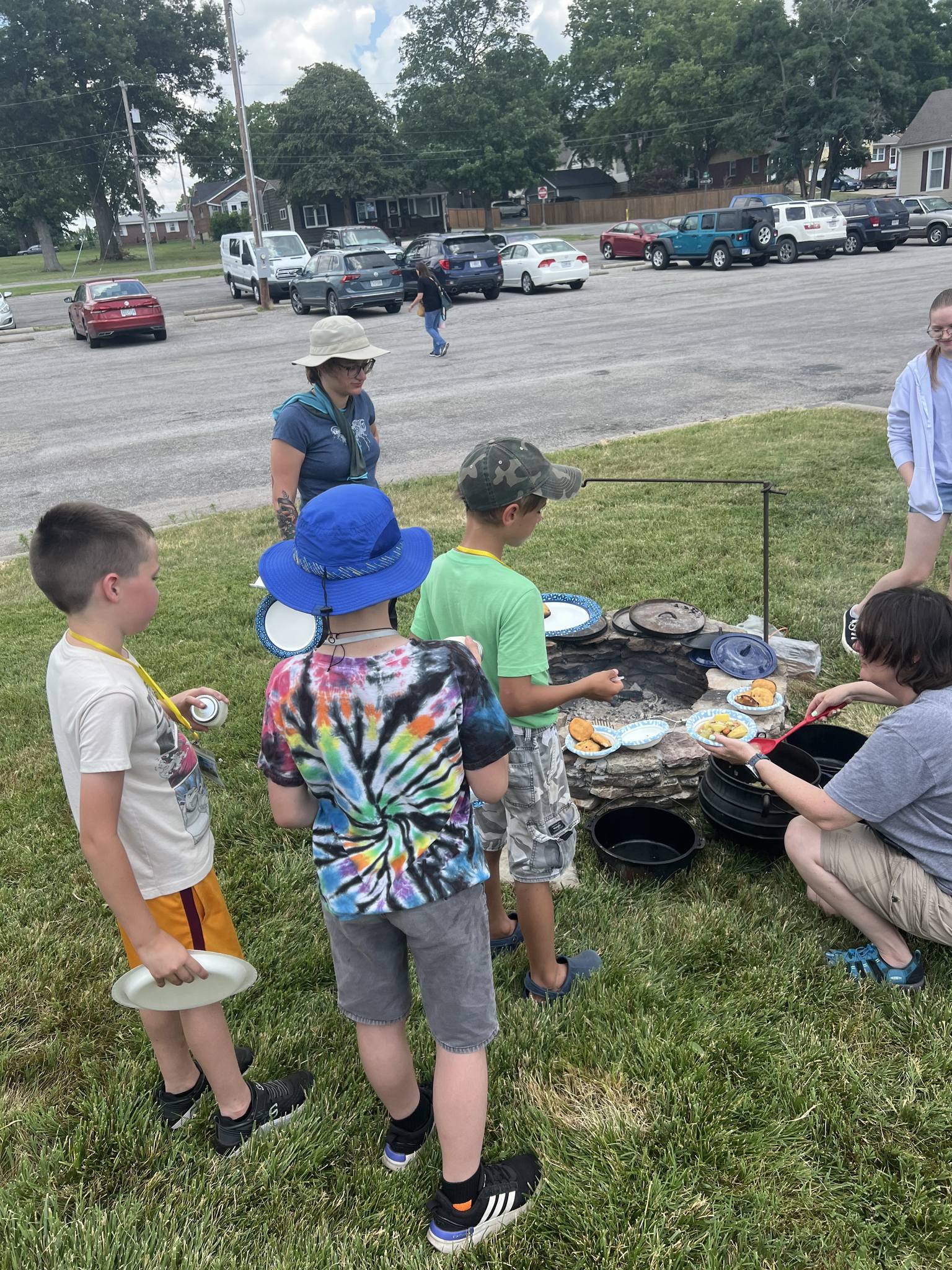
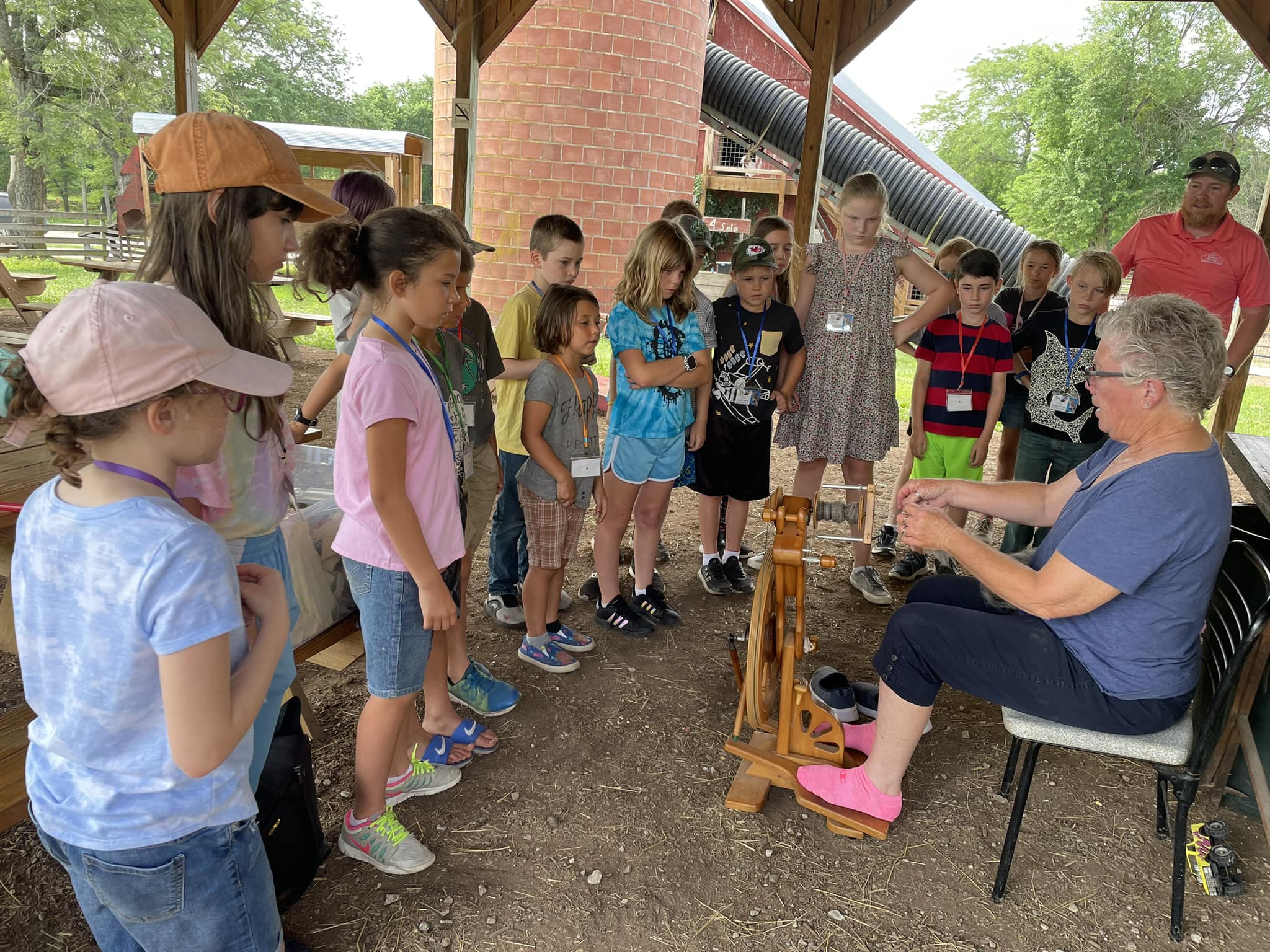
Developing programing was a bit challenging at first. As I looked at other organizations of similar size and structure, I started thinking of ways to do similar programs with our history focus in mind. I created several summers of day camps for area youth that included learning how to cook over an open fire (some recipes were more successful than others), learning about natural prairie ecology at the only native prairie preserve in Cass County, Snowball Hill, and learning from a local artisan about what it means to take wool from a sheep to creating scarves, hats, and socks. I’ve also been asked for the past several years to give tours of the Sharp-Hopper Cabin to new teachers in Harrisonville school system which is always a lot of fun. It is also my privilege to speak to various groups around our county about the history of our area.
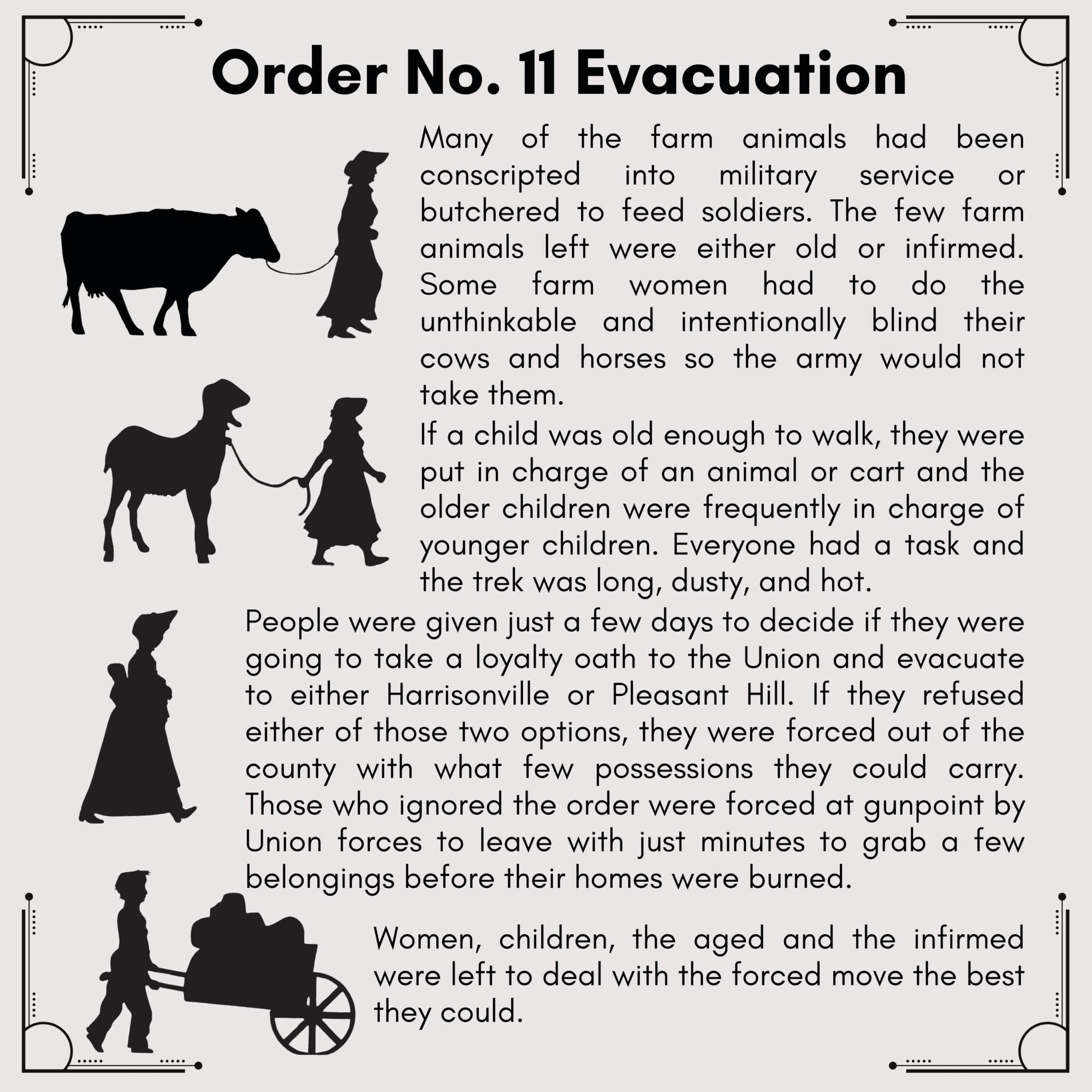
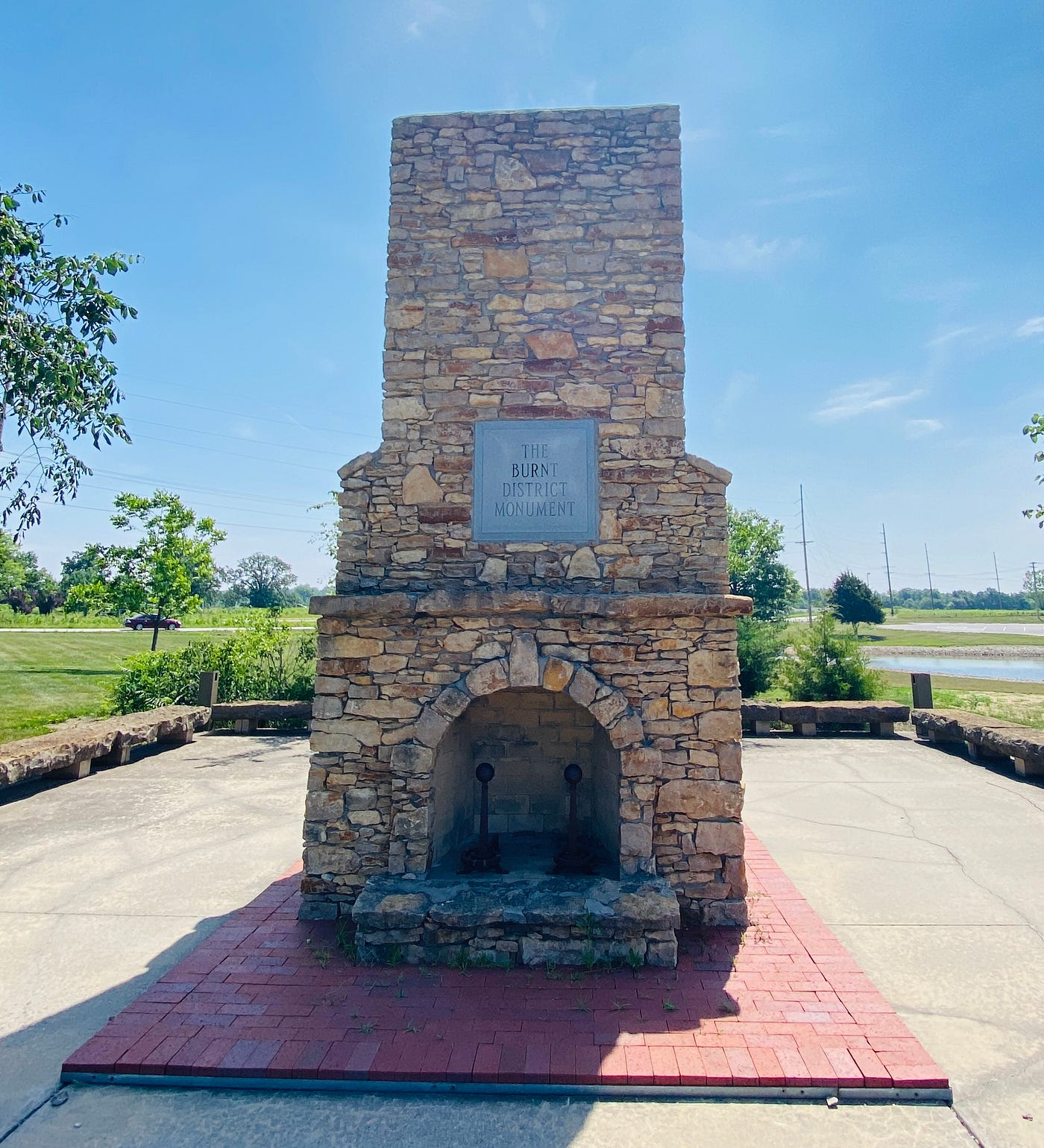
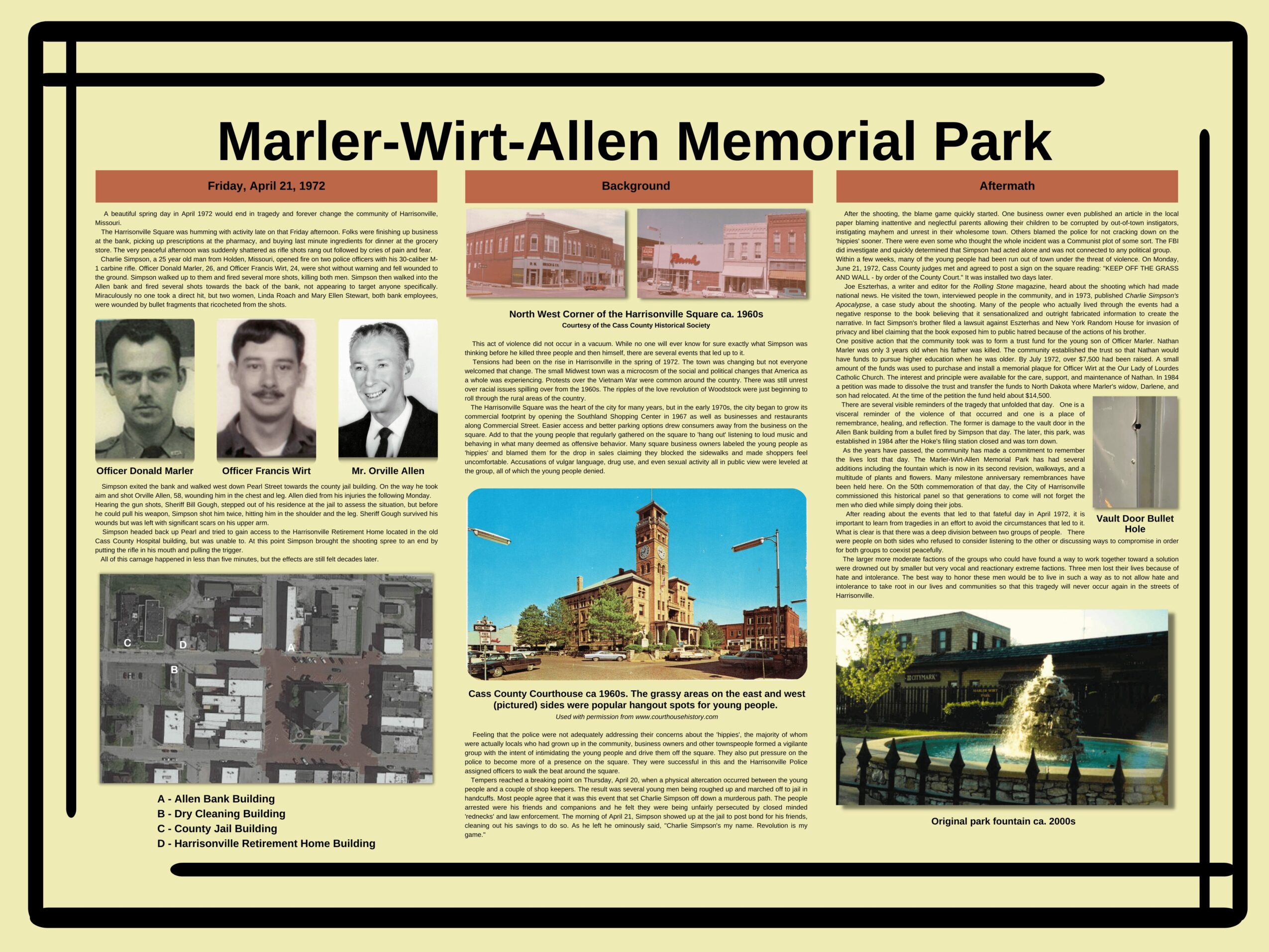
One of the things I am most proud of is the permanent historical information panels that have been installed in our community that I was asked to create. These panels, one located at the Marler-Wirt-Allen Memorial Park and two at the Burnt District Monument, relate the history of our area to visitors and community members alike. Hopefully they will be here even after I am gone. At the very least, they are able to reach many more people than I will every have the opportunity to meet in person. They are a legacy I am proud of and I hope to be able to create more if asked.
So maybe we end on discussing what matters most to you and why?
What I consider of vital importance is that the true story of history is shared in all is glory and its ugliness, because both encompass the human experience. History is not binary because it is about very complicated people. If anyone has ever read a really truthful biography of someone, there will be aspects of that person’s life and character that are admirable and others that range from questionable to repugnant. Humans are often very perplexing. People are very rarely (I would say never, but I’m sure someone would find some example to refute that absolute statement) the exact same throughout their entire life when it comes to their beliefs, character, or values. People learn and change. People have life experiences and change. That is why history is so fascinating and must be told truthfully. If we, as historians, were only to present the positive accomplishments of a person or people, we would be denying first, the truth of history, and second, the ability for current generations to learn from mistakes of the past. Both extremes and everything in between have to be told, but there is a current push to ignore any of the history that makes specifically white people uncomfortable. If learning about the truth of our collective past makes someone uncomfortable then it means they are learning and if they embrace that new knowledge there is a good chance they will internalize it and make better choices than the people before them did. That is why history matters to me and why I strive to make it accessible and truthful to others.
Pricing:
- $25 per year for individual membership in CCHS
- $50 per year for family membership in CCHS
- $20 per year for military/first responders membership in CCHS
- $10 per year for students (under 18) membership in CCHS
- $1,000 one time for Life membership in CCHS
Contact Info:
- Website: https://www.cchsmo.org
- Facebook: https://www.facebook.com/cchsmo