






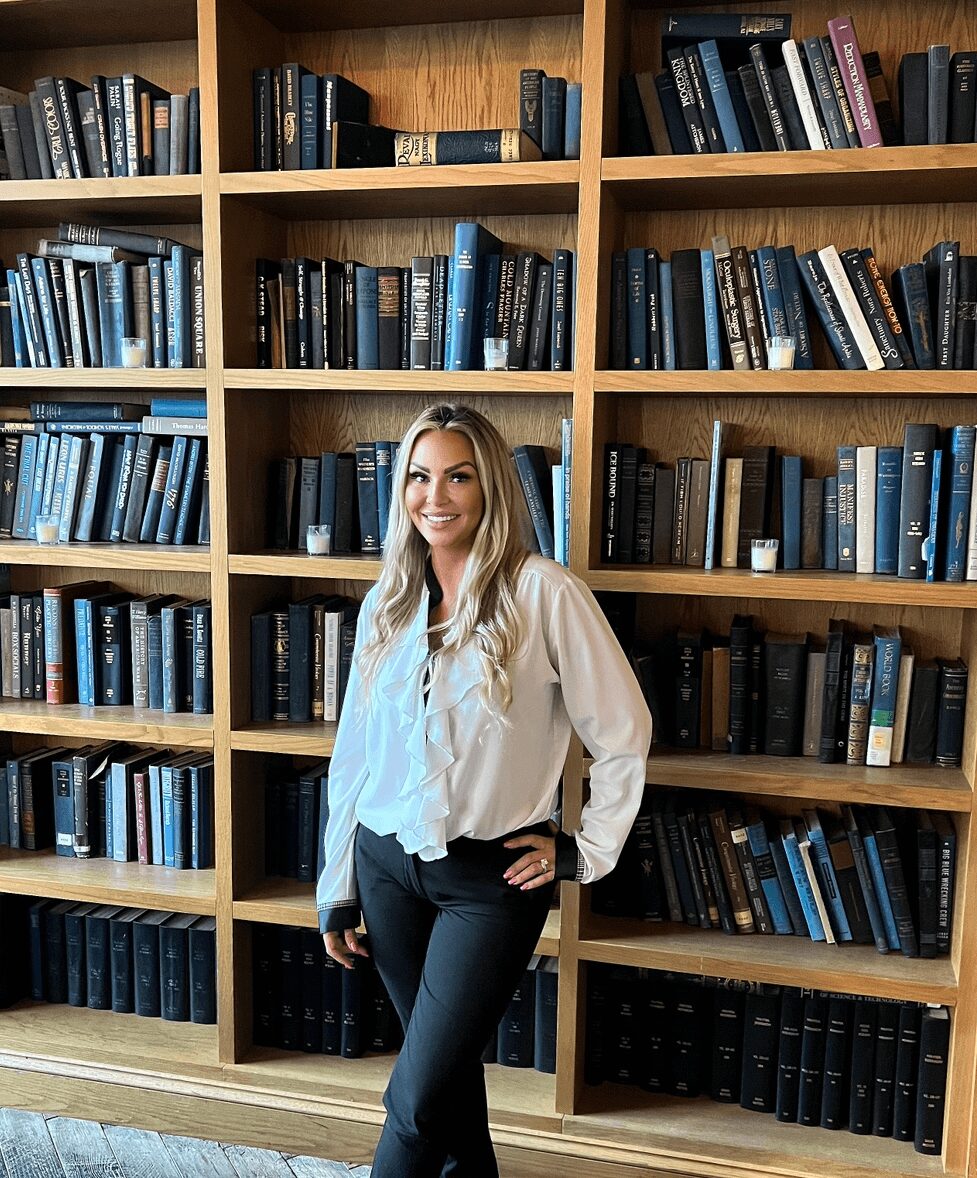
Today we’d like to introduce you to Chanel Kittle.
Hi Chanel, we’d love for you to start by introducing yourself.
Chanel Kittle is a Mental Health Psychotherapist, Life Coach, Executive and CEO Business Coach, financial expert, keynote speaker, and published author. She was a part owner in a finance firm for over 10 years, where she specialized in financial portfolio management and financial advising. She is the Founder and CEO of Fortier Therapy Group, where she currently provides mental health therapy, and she also hosts healing wellness retreats. Chanel holds a Master of Science in Business Management and a second Master’s Degree in Social Work, pursued from a deep calling to support others in their mental health and personal growth.
Her debut book, unWAVEring Confidence, is being published just in time for the New Year.
________________________________________________________________________________________________________________
From an early age, I’ve been drawn to words, not just as language, but as meaning. Words are human-made constructs, symbols we use to translate inner experience into something shareable, something that can be held between people. Long before I understood psychology or neuroscience, I sensed that words were bridges, imperfect but powerful tools that allow us to give shape to emotion, memory, longing, and truth.
As a child growing up in Florida, I wrote a poem titled Sunflower that was published in an adult poetry magazine. I didn’t yet understand why writing felt essential, only that it allowed me to name what otherwise lived silently inside. Years later, I would find myself living in the Sunflower State, a full-circle moment that still feels symbolic of how meaning often reveals itself in hindsight.
Writing became my first way of exploring emotion, and the spaces between what we feel and what we can explain. Before I had clinical language, theory, or diagnosis, I had metaphor. I had sentences that helped me translate experience into something coherent. That instinct never left. I wrote everywhere. I wrote anywhere. I wrote in quiet moments, in transition, in the in-between spaces of life. Over the years, I traveled extensively, carrying notebooks with me, writing when inspiration struck, whether grounded in stillness or motion. Writing was never confined to a desk. It was a way of listening.
Before entering the mental health field, I built a successful career as a financial advisor and portfolio manager. I worked with individuals and families around strategy, risk, performance, and long-term planning. On paper, the work was analytical and numbers-driven. In reality, it was deeply human. Money, like words, is a construct, a system we use to organize value, fear, hope, and control. Sitting across from clients, I watched how unspoken beliefs, identity, and emotional history influenced decisions far more than spreadsheets ever could. I learned how pressure narrows perception, how fear masquerades as logic, and how even highly successful people struggle with self-trust.
Over time, it became impossible to ignore that most struggles were not tactical problems to be solved, but internal experiences asking to be understood. No strategy could override an unregulated nervous system. No financial plan could heal unresolved trauma or restore a fractured relationship with oneself. That realization led me back to school, where I earned a second Master’s degree and became a psychotherapist so I could work at the level beneath behavior, beneath performance, beneath the story people thought they were living.
As a mental health therapist, I integrate structure with meaning, neuroscience with narrative. I work from the understanding that healing often begins when we find language for what has been felt but never named. Words do not fix us, but they orient us. They help us recognize patterns, soften the inner critic, and create coherence where there was once confusion.
Throughout my life and career, I have begun and paused many writing projects, each an attempt to translate lived experience, clinical insight, and embodied wisdom into something usable and true. Even the unfinished work mattered. It was part of the listening. Bringing a book to completion is a long-held and deeply personal milestone. It represents the integration of who I have always been with who I have become. This work lives at the intersection of language and nervous system, insight and embodiment, story and regulation.
As both a psychotherapist and author, I am committed to helping people develop confidence that is not performative or fragile, but grounded, resilient, and aligned with their deepest values. Confidence that grows not from proving, but from understanding and self-trust.
I’m sure it wasn’t obstacle-free, but would you say the journey has been fairly smooth so far?
No, it was not a smooth road, and it was never meant to be.
Writing unWAVEring Confidence was less a linear process and more a long, unfolding relationship with the material, with my own growth, and with timing. One of the greatest challenges was that the book itself required me to live what I was writing. The kind of confidence I describe is not something you can rush or manufacture. It is built through regulation, self-trust, and alignment. That kind of growth is necessary, and it takes time.
As my clinical work expanded and my understanding deepened, the material continued to evolve. I would write chapters, then later recognize that the framework needed greater depth or clarity. That meant revising, rethinking, and sometimes letting go of earlier versions that no longer fully captured the truth of the work. While challenging, that process was essential to the integrity of the book.
Another challenge was translating complex, embodied clinical work into language. Much of what happens in therapy lives beneath words, in the nervous system, in awareness, and in subtle internal shifts that are felt more than explained. Finding language that was both precise and accessible, without oversimplifying or intellectualizing the work, required patience and discipline. I was intentional about not writing a book that simply sounded good, but one that could genuinely support meaningful change.
Life also played a role. Building and sustaining a practice, holding space for clients through real pain and transformation, and honoring the responsibility that comes with that work meant that writing often had to pause. At times, those pauses felt frustrating. In hindsight, they were necessary. The book needed time to mature alongside the work itself. This was not a book that could be written from theory alone. It required lived experience, clinical depth, and integration.
Perhaps the most personal challenge was internal. Writing a book asks you to be visible, not only as a professional, but as a human. Releasing unWAVEring Confidence means trusting that the message is clear, the framework was solid, and the work did not need to prove anything.
In that way, the process of writing the book mirrors its message. Confidence grows not through force or urgency, but through alignment, patience, and truth.
Alright, so let’s switch gears a bit and talk business. What should we know?
My mental health therapy practice, Fortier Therapy Group, is dedicated to creating a safe, compassionate, and supportive environment where individuals can explore their thoughts, emotions, and lived experiences. I am licensed in Kansas, Missouri, and Florida.
As a therapist, I am committed to guiding clients toward greater self awareness, emotional healing, and personal growth. I believe therapy is a collaborative journey, and I tailor my approach to each person’s unique needs, goals, and life circumstances.
I welcome clients across a wide range of backgrounds and experiences, and I provide services to adults, teens, couples, and families. Whether you are navigating anxiety, depression, trauma, relationship challenges, or major life transitions, I am here to support you.
At the heart of my work is a simple intention. To be of service to others.
What do you like best about our city? What do you like least?
What I love most about Kansas City is how often it surprises people. When I meet people from other parts of the country or the world and tell them I’m from Kansas City, they usually ask if it’s just farmland and cows. I smile and tell them that while we respect our agricultural roots, there is so much more here than people expect. Kansas City has creativity, culture, heart, and a strong sense of community. It feels authentic, grounded, and quietly special.
What I like least about Kansas City
If I had to choose, I would say it still flies under the radar. Those of us who live here know how much it has to offer, but it often gets underestimated. That said, it is also part of what keeps the city approachable and unpretentious.
Contact Info:
- Website: https://fortiertherapy.com
- Instagram: https://www.instagram.com/fortiertherapy
- Facebook: https://www.facebook.com/fortiertherapy
- LinkedIn: https://www.linkedin.com/in/chanelkittle