






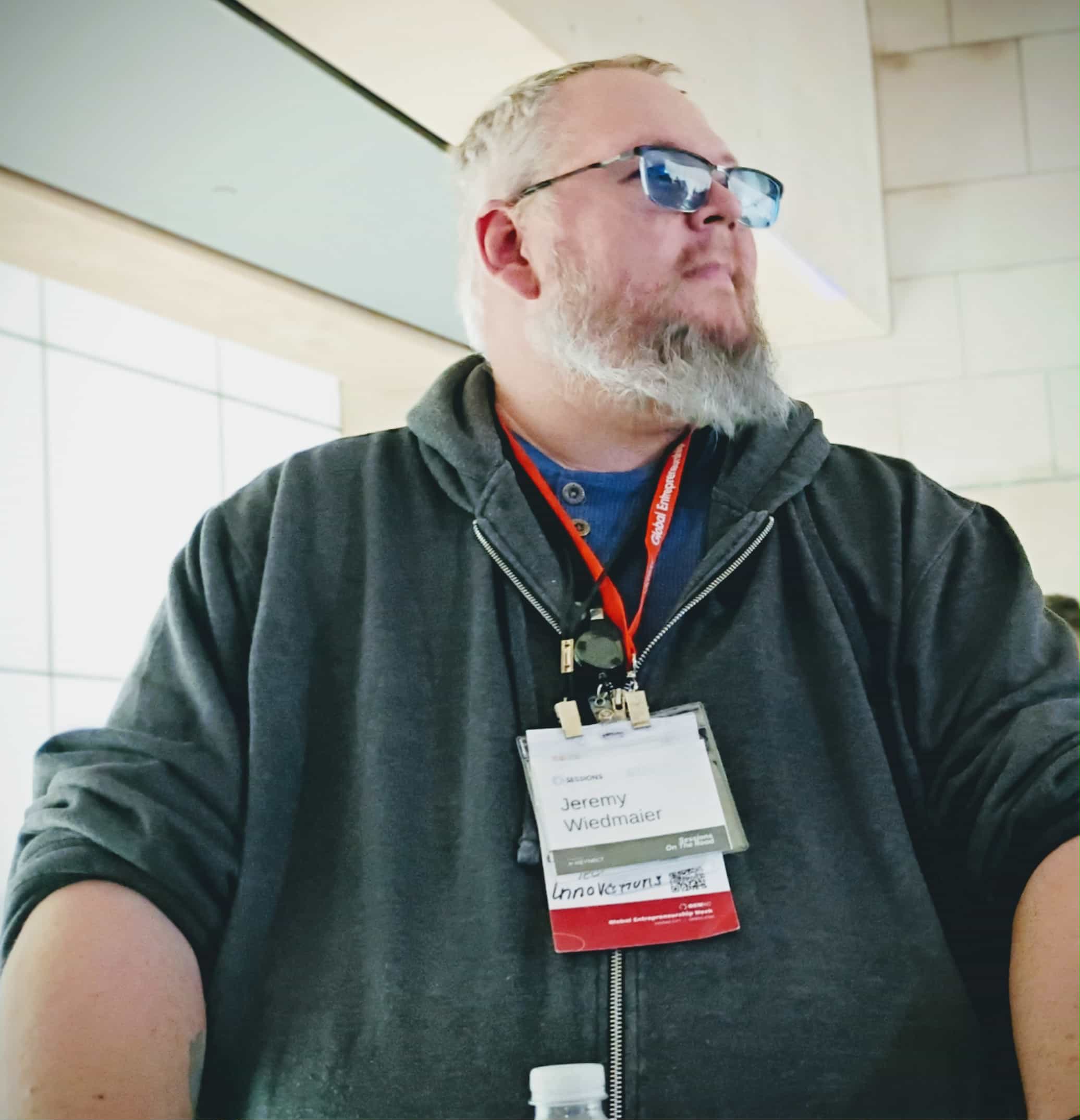
Today we’d like to introduce you to Jeremy Wiedmaier.
Hi Jeremy, so excited to have you with us today. What can you tell us about your story?
My journey started out of necessity, not inspiration. I’ve always been the kind of builder who reverse-engineers everything in front of me, and a few years ago I found myself trying to solve a problem that didn’t have a playbook: how to create an actuator system that behaves more like a human muscle. That early curiosity grew into years of research, prototyping, and refining what eventually became the foundation for my company, Wiedmaier Tech Innovations.
For a long time, it was just me in a small rural Missouri apartment, working nights after my job, sketching ideas, learning everything from C# actuator logic to AI design. It wasn’t glamorous; it was survival. Over time, the pieces started to compound: the Flywheel Zero actuator concept, the Sentinel Syntax robotics OS, and eventually the AI layer that ties it all together.
The real turning point came in 2025. I officially formed WTI, built our first working demos, and started bringing the technology out into the Kansas City entrepreneurial ecosystem. I went from quietly building alone to pitching to other founders at GEWKC, meeting advisors, talking with VCs, landing demos, and realizing we weren’t just tinkering, we were building a new category: Adaptive Motion Intelligence.
That same year, I launched VisionBot, our AI productivity platform. I built the first version in about 20 hours because I needed a tool to manage the chaos of building a deep-tech company while still working full-time. It ended up becoming a real product, something people could touch and use, and it gave WTI early traction and visibility.
Today, we’re a company with momentum. We have interest from investors, discussions in med-tech, a growing early-access user base, and a clear roadmap to bring our hardware and AI systems to market. What started as a survival project has turned into a category-defining company with a mission to improve mobility and quality of life.
It’s been a long road, but every setback, every hack-together prototype, every late night pushed the vision forward. And we’re only getting started.
I’m sure it wasn’t obstacle-free, but would you say the journey has been fairly smooth so far?
Not even close to a smooth road. I’ve bootstrapped this entire company from a rural apartment while working full-time, building prototypes at night, and teaching myself every skill I didn’t already have. There were days I was choosing between paying bills and buying parts for the next actuator iteration. There were a lot of moments where giving up would’ve been the easier option.
On the technical side, I wasn’t just building one product; I was creating a robotics OS, an actuator, and an AI system all at the same time. There’s no manual for that. Every breakthrough was followed by three new problems, failed prints, broken code, or entire concepts I had to reinvent from scratch.
On the founder side, it was equally rough. I had to learn how to pitch, how to operate in the KC startup ecosystem, how to talk to investors, and how to build traction with almost no resources. I showed up to events exhausted from working and building nonstop, but still pushed through because I knew the work mattered.
And personally, there was a constant pressure to keep my family afloat while trying to build something big enough to change our future. Burnout was always stalking me. But every small win, a working demo, a VC conversation, someone believing in the vision, kept me going.
The road has been anything but smooth, but that pressure is exactly what forged the momentum we have today.
Appreciate you sharing that. What should we know about Wiedmaier Tech Innovations, LLC?
Wiedmaier Tech Innovations is building something most people don’t expect to come out of rural Missouri: a full Adaptive Motion Intelligence stack, a fusion of advanced actuators, robotics OS technology, and AI designed to improve human mobility and performance.
At the core is our flagship hardware concept, Flywheel Zero, a counter-torsion actuator modeled after how fascia and muscle behave. It’s designed for next-gen rehab equipment, assistive robotics, prosthetics, and sports-medicine applications. Instead of forcing the body to adapt to a machine, the actuator adapts to the user.
Supporting that hardware is Sentinel Syntax, a robotics operating system I wrote from the ground up in C#. It’s built around deterministic control loops, responsive actuator logic, and a clean handshake layer for AI, something most robotics systems don’t get right.
Layered on top is REACH, our hybrid adaptive–generative AI model built to learn through real-world usage. It’s designed to grow smarter the more it interacts with the user, giving us a true “brain” for human-machine motion.
But the product most people know us for today is VisionBot, our AI productivity and planning platform. I built it originally to keep myself on track while building deep-tech, but it’s grown into its own SaaS product with real users, investors watching, and a roadmap toward enterprise adoption. It’s fast, simple, and powerful enough to run a business from your desk.
What sets us apart?
We’re not just building AI. We’re not just building hardware. We’re creating a unified stack where the actuator, the OS, and the AI are designed as one system, exactly how the human body works. Big companies tend to silo those pieces; we fuse them.
I’m proud of the fact that we’re doing this from the Midwest, without a giant lab or million-dollar budget. Everything we have, demos, prototypes, AI systems, and traction, was built from scratch, piece by piece, through actual engineering work and relentless execution.
What I want readers to know is simple:
We’re building technology that will genuinely improve people’s lives. Whether it’s helping someone walk more comfortably, giving a therapist better tools, or giving founders and professionals an AI that keeps them focused, WTI’s mission is to make advanced technology feel human, adaptive, and accessible.
And we’re only at the beginning of what this system can do.
Is there anything else you’d like to share with our readers?
Yeah, if there’s one thing I want people to take away, it’s that you don’t need a perfect background, a fancy lab, or a big city address to build something meaningful. I started this company with a laptop, a 3D printer, and a ridiculous amount of stubbornness. If you’re willing to learn fast, solve real problems, and keep moving even when it feels impossible, you can create momentum from nothing.
WTI is proof that deep-tech can be built anywhere. The Midwest has talent, grit, and creativity; we’re just showing what happens when you put that energy into something big.
And if you’re curious about VisionBot or the mobility tech we’re developing, follow along. This is the ground floor of something that’s going to grow fast, and we’d love Kansas City to be part of that story.
Pricing:
- VisionBot Pro – Monthly: $50/month Ideal for founders, creators, and professionals who want a powerful AI productivity and planning tool.
- VisionBot Pro – Lifetime Access: $500 one-time Full access to all current features and future updates.
- Enterprise Licensing (Teams & Companies): Starts at $50,000 for a 20-seat deployment Includes admin controls, custom dashboards, and priority support.
- Custom Integrations & Specialized Builds: Pricing varies by scope
Contact Info:
- Website: https://wiedmaiertech.net
- Facebook: https://www.facebook.com/profile.php?id=61579322410119
- LinkedIn: https://www.linkedin.com/in/jeremy-wiedmaier-abb756254/
- Twitter: https://x.com/WiedmaierTech