





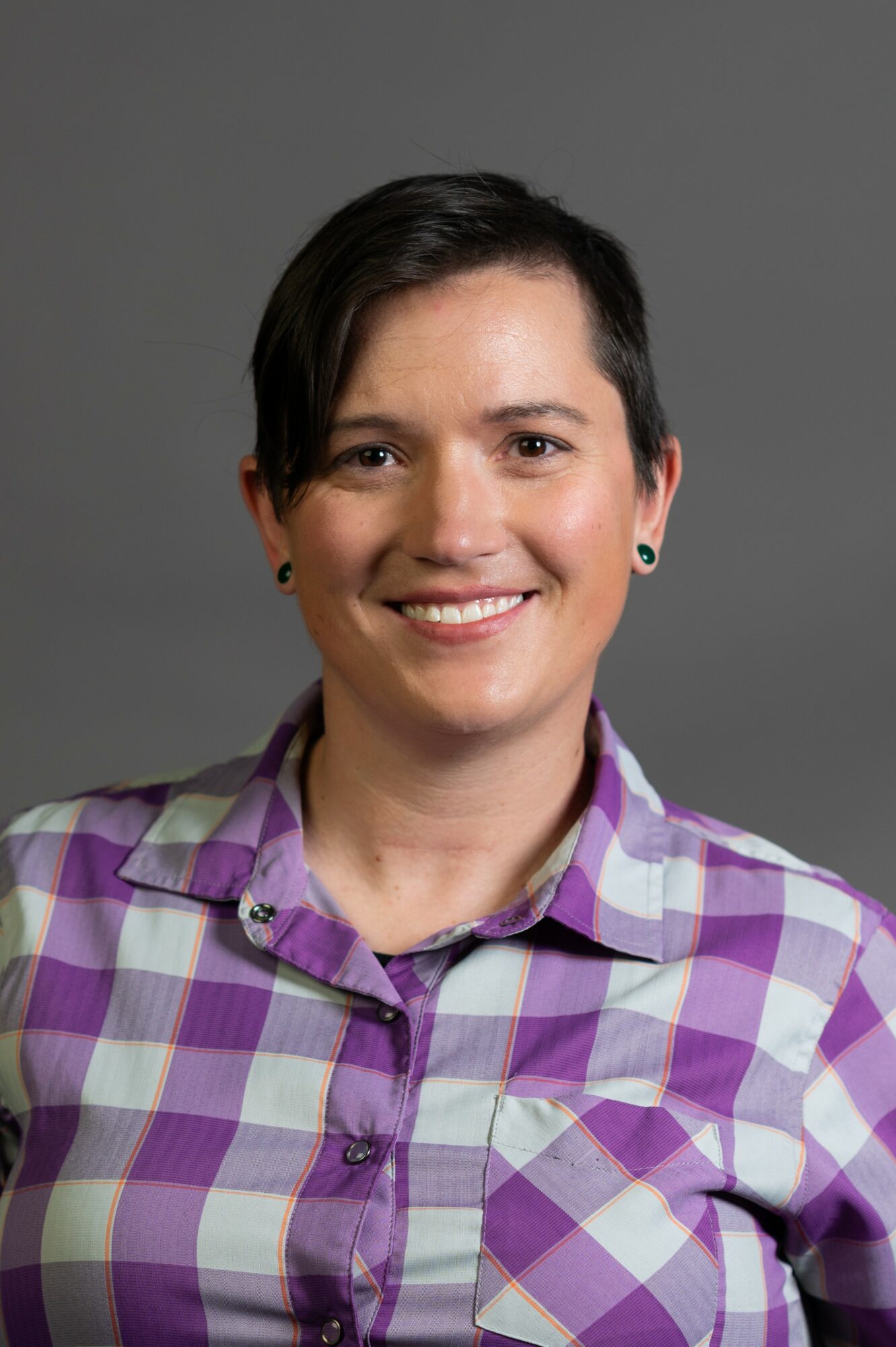
Today we’d like to introduce you to Dr. Kasey Flynt.
Hi Dr. Kasey, thanks for sharing your story with us. To start, maybe you can tell our readers some of your backstory.
My career has always centered on service, education, and building infrastructure that helps communities thrive. Before joining the Haskell Foundation, I spent years working in higher education, research, and program development supporting communities, students, and initiatives that promote health, access, and equity. That work naturally evolved into grant writing, organizational strategy, and capacity-building, which became the backbone of my professional path.
I came to the Haskell Foundation because I believe deeply in Haskell Indian Nations University and its national significance as a premier Tribal university in the United States. I saw the Foundation as a place where long-term, sustainable impact could be created through scholarships, student support programs, partnerships, or initiatives that expand opportunities for Haskell students and the broader Indigenous community.
Since stepping into my role, I’ve worked to strengthen systems, modernize operations, and expand the Foundation’s ability to secure funding and build relationships with donors, partners, and stakeholders. My goal has always been to create clear processes, transparent structures, and a strong development framework that allows the Foundation to grow in a way that truly reflects and supports Haskell’s mission.
Today, my work remains grounded in the same principles that guided me from the beginning: service, accountability, community-centered leadership, and a commitment to helping institutions like Haskell thrive for generations to come.
I’m sure it wasn’t obstacle-free, but would you say the journey has been fairly smooth so far?
It definitely hasn’t been a smooth road, but resilience has shaped every step of my journey. Working within higher education and nonprofit development means navigating complex structures, limited resources, and rapid institutional changes. My role requires building systems, strengthening communication, and creating reliable processes. It’s work that is incredibly meaningful, but often challenging.
Those professional challenges were compounded by significant personal ones. In the middle of a leadership transition, I underwent treatment for cancer and managed recovery while continuing to support and co-lead essential operations at the Foundation. I also live with hypermobile Ehlers-Danlos syndrome (hEDS) and Autism, which means I move through the world with a different set of physical and sensory demands than most. These conditions require me to be very intentional about how I problem-solve, communicate, and structure my work.
But rather than limiting me, these experiences have strengthened me. They taught me to stay grounded, adapt quickly, and approach obstacles with empathy and precision. They reinforced the importance of accessible systems, transparent processes, and community-centered leadership.
What carried me through was the mission of supporting Haskell students and ensuring the Foundation can be a reliable, forward-looking partner for the University and the community. Every challenge clarified why this work matters so much. Students deserve stability, opportunity, and an institution that functions with integrity. I’ve learned that resilience isn’t just something you endure; it becomes a skill you bring back to the organization, helping it grow stronger, more responsive, and more aligned with its purpose.
Alright, so let’s switch gears a bit and talk business. What should we know about your work?
My work at the Haskell Foundation focuses on strengthening the infrastructure that supports student success. I specialize in organizational development, grant strategy, fundraising operations, and creating systems that ensure programs run smoothly and sustainably. My role has a heavy emphasis on building the processes, policies, and partnerships that allow a small nonprofit to function with the reliability of a much larger institution.
I’m known for being a systems thinker and a problem solver. I love taking complex, sometimes messy challenges and turning them into clear pathways that support students, staff, and partners. Whether it’s writing multimillion-dollar grants, modernizing development workflows, designing strategic plans, or coordinating with external partners, my goal is always the same: create long-term stability and open doors for Haskell students.
One of the things I’m most proud of is helping bring structure, clarity, and forward momentum to areas that desperately needed it. I’ve helped expand the Foundation’s ability to pursue external funding, strengthened donor relations, supported policy development, and built operational systems that didn’t previously exist. Each of those improvements directly strengthens the University’s capacity to serve students.
What truly sets me apart is the combination of my lived experience, my academic background, and my commitment to accessibility. As a disabled professional and cancer survivor, I approach leadership through a lens of empathy, precision, and sustainability. I understand what it means to navigate barriers, so I’m passionate about creating environments where people don’t have to fight to be supported.
I bring a blend of research, strategy, community-centered thinking, and resilience to every project I take on. I believe deeply in the power of Indigenous education, and I’m proud to contribute to an institution with such profound cultural, historical, and future significance.
Do you have any advice for those just starting out?
One of the biggest lessons I’ve learned is that in mission-driven work—especially in education, nonprofit development, and community advocacy—there will always be another problem waiting. If you tell yourself you’ll rest “as soon as things calm down,” you’ll never rest at all. The challenges don’t disappear; they evolve. And the more passionate you are, the easier it becomes to pour everything you have into solving them.
What I wish I knew earlier is that sustainability includes you, too. Your well-being isn’t separate from the work. If you want to make a meaningful, long-term impact, you have to pace yourself like you’re building a marathon, not sprinting a series of emergencies. Centering yourself (your health, your boundaries, your relationships) isn’t indulgent. It’s strategic. It’s what allows you to keep showing up with clarity, creativity, and resilience rather than running on fumes.
Give yourself permission to pause, to breathe, to delegate, and to prioritize. Build systems that don’t depend on you sacrificing your health. Listen to your body before it forces you to. And most importantly, understand that you do not need to “earn” rest by fixing everything first. In work shaped by community need, institutional history, and systemic challenges, there will always be more to do.
Your longevity and your leadership depend on how well you protect your energy. When you take care of yourself, you serve your community better and you model the kind of sustainability we desperately need in this field.
Contact Info:
- Website: https://www.haskellfoundation.org
- Facebook: haskellfoundation