






Today we’d like to introduce you to Katie Jones.
Hi Katie, so excited to have you on the platform. So before we get into questions about your work-life, maybe you can bring our readers up to speed on your story and how you got to where you are today?
After college I worked abroad and in refugee resettlement for several years. I loved getting to know people and their stories and being a support in the ways that I could. I moved to Austin, TX in 2011 and started working at Casa Marianella, a cluster of houses in East Austin that provides shelter and support services to displaced immigrants. I remember we partnered with an agency in Austin called Center for Survivors of Torture, which provided free therapy to a few Casa residents. There were a couple therapists there that used somatic modalities, primarily Somatic Experiencing (SE). SE is a body oriented approach to healing trauma that helps us release stuck protective patterns in our nervous system so that we can recover and feel a wider range of emotion without getting overwhelmed.
I think that was the first time I had heard of SE and I was amazed by how helpful it seemed to be. There was one resident who was having a lot of trouble eating and after seeing an SE therapist for a while, she was able to eat again and eventually do other things that used to be overwhelming to her, like take the bus by herself. It was so moving to me. I thought one day, I want to learn more about Somatic Experiencing.
Eventually I moved back to my hometown, Kansas City, in 2014 and continued working in refugee resettlement and then at the Intercultural Center at KCK Community College before beginning my masters of social work at KU in 2017. I enjoyed case management and mentoring because I loved building relationships with people, but I wished there was more time to focus on their emotional selves and the trauma affecting them, not just weaving our way through bureaucratic red tape. I finally decided it was time to become a therapist.
After finishing grad school in 2019 I started working as a school social worker at an alternative school and started the three year Somatic Experiencing training not long after that. SE changed the whole way I relate to therapy, the world, my body, my whole self. I’ve learned the difference between between tolerance and real capacity in my own body and help guide people to feel that in themselves too.
I started my private practice in 2020, providing individual therapy in English and Spanish to teens and adults after work part-time. I named my business Capaz Counseling, capaz meaning capable or capacity in Spanish. I like to describe capacity as the natural resiliency in all of us. I want people to feel capable- of healing, of relating to others and the world, and knowing their needs and desires.
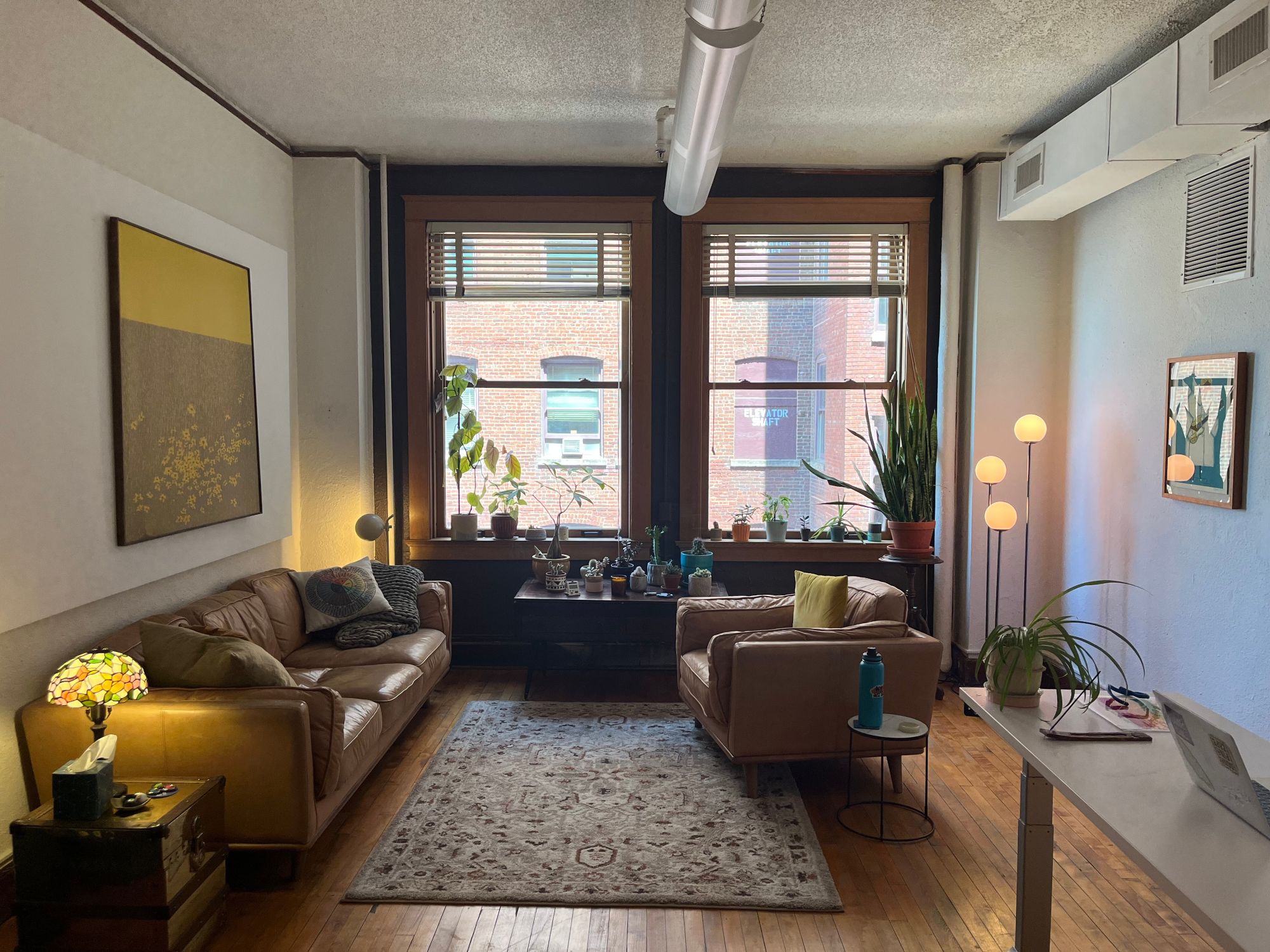
After my last year working at the school, I went full time at Capaz in 2022. I now offer therapy to teens, adults and couples virtually and in person at my office in the Livestock Exchange Building in the West Bottoms. I also offer free in-school therapy to uninsured students in the KCK school district. I primarily work with organizers & healers, immigrant communities, LGBTQ+ & polyam communities, neurodivergent folks, and survivors of sexual trauma. I’m always seeing through an SE lens but I also love incorporating Emotionally Focused Therapy, Acceptance and Commitment Therapy, and parts work.
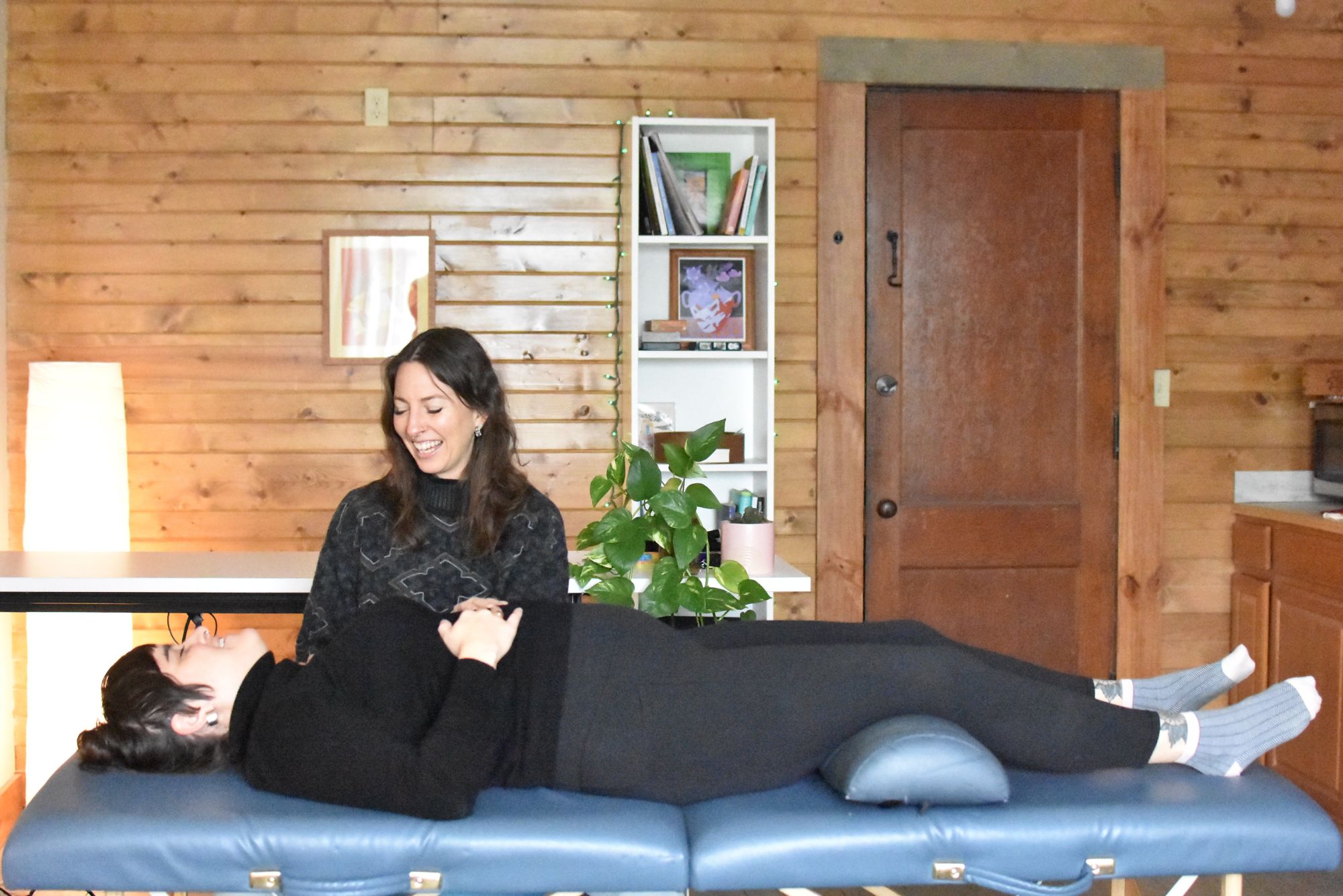
A few years ago I also began receiving more training in co-regulating touch with Kathy Kain. Co-regulating touch can be especially helpful in working with developmental, complex trauma as well as shock trauma. It is a form of supportive touch that places attention and presence on different systems in the body that might be overworking or overprotecting, helping both the client and me learn about and release protective patterns in the body and restore a more tangible sense of safety and connection.
Capaz has been an even dreamier job than I could have imagined. I love collaborating with other healers, building close client relationships, hosing retreats, groups, and workshops, and continuing to learn more about myself and the world through this work. It brings me life and hope amidst all the grief and darkness we are all processing on a micro and macro level.
We all face challenges, but looking back would you describe it as a relatively smooth road?
It has been both smooth and bumpy! Social work has never been easy, whatever role you land in. You have to be scrappy and creative to navigate never-ending bureaucracy and systemic injustice to help advocate and collaborate with folks. Interning at MOCSA in grad school during the Kavanaugh trials wasn’t easy, as was working at a school post Covid shutdown. Currently, being a therapist amidst fascism and genocide can be overwhelming depending on the moment. I have to really prioritize taking care of myself, giving myself time to grieve, be angry, and also joyful!
Along the way I’ve always had really solid support. Quitting my job and starting a private practice was a scary leap, but I had a lot of cheerleaders and other private practice therapists willing to answer all my random questions. There’s a lot of people out there, therapists and otherwise, that help me feel loved and grounded in my community. That is everything to me. I’ll never take it for granted.
Appreciate you sharing that. What should we know about Capaz Counseling?
I am a licensed specialist clinical social worker (LSCSW) & somatic experiencing practitioner (SEP) who works alongside humans ages 13+ to heal from symptoms of complex trauma, like depression, anxiety, panic, overwhelm & feeling disconnected or lost.
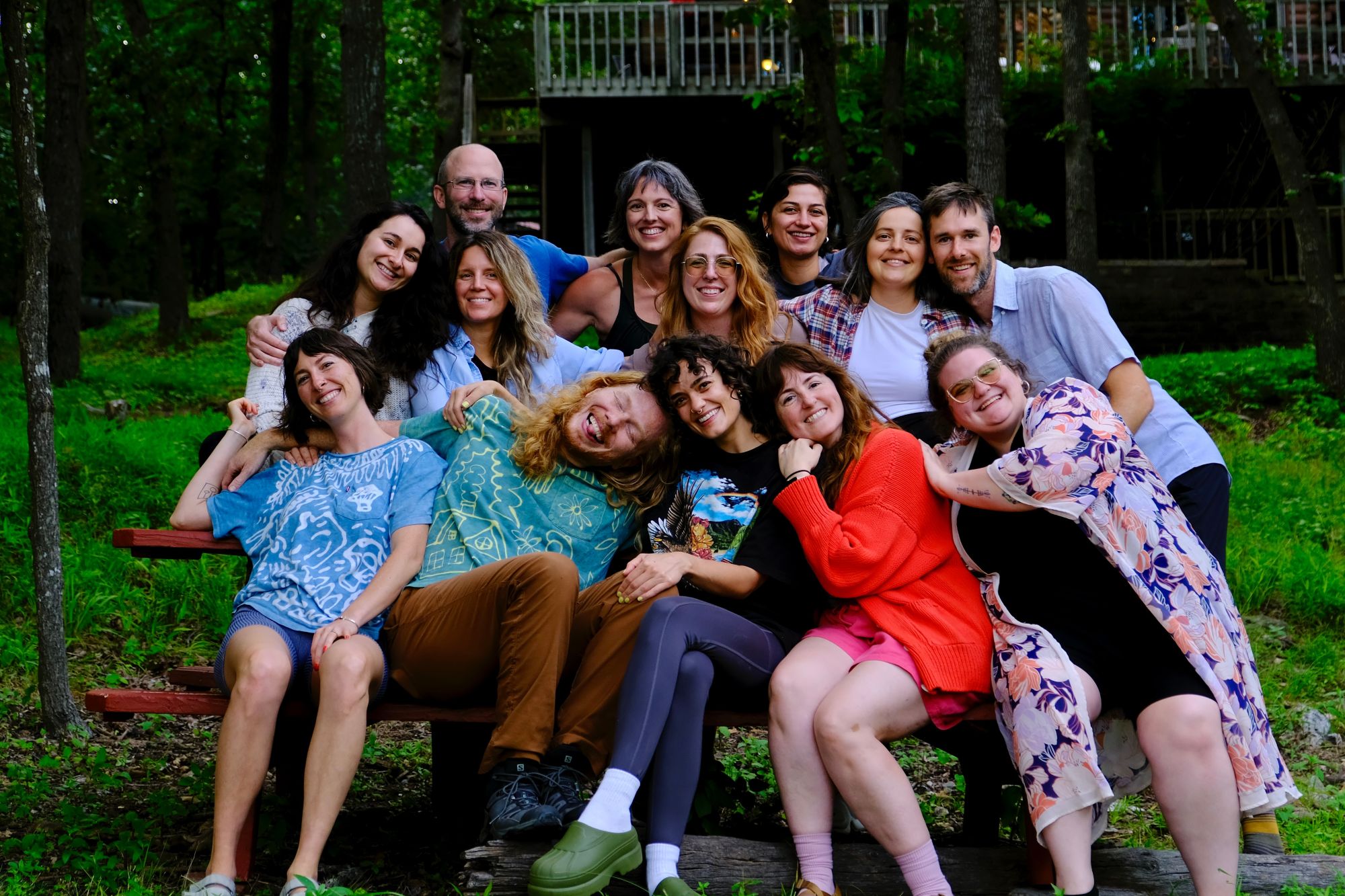
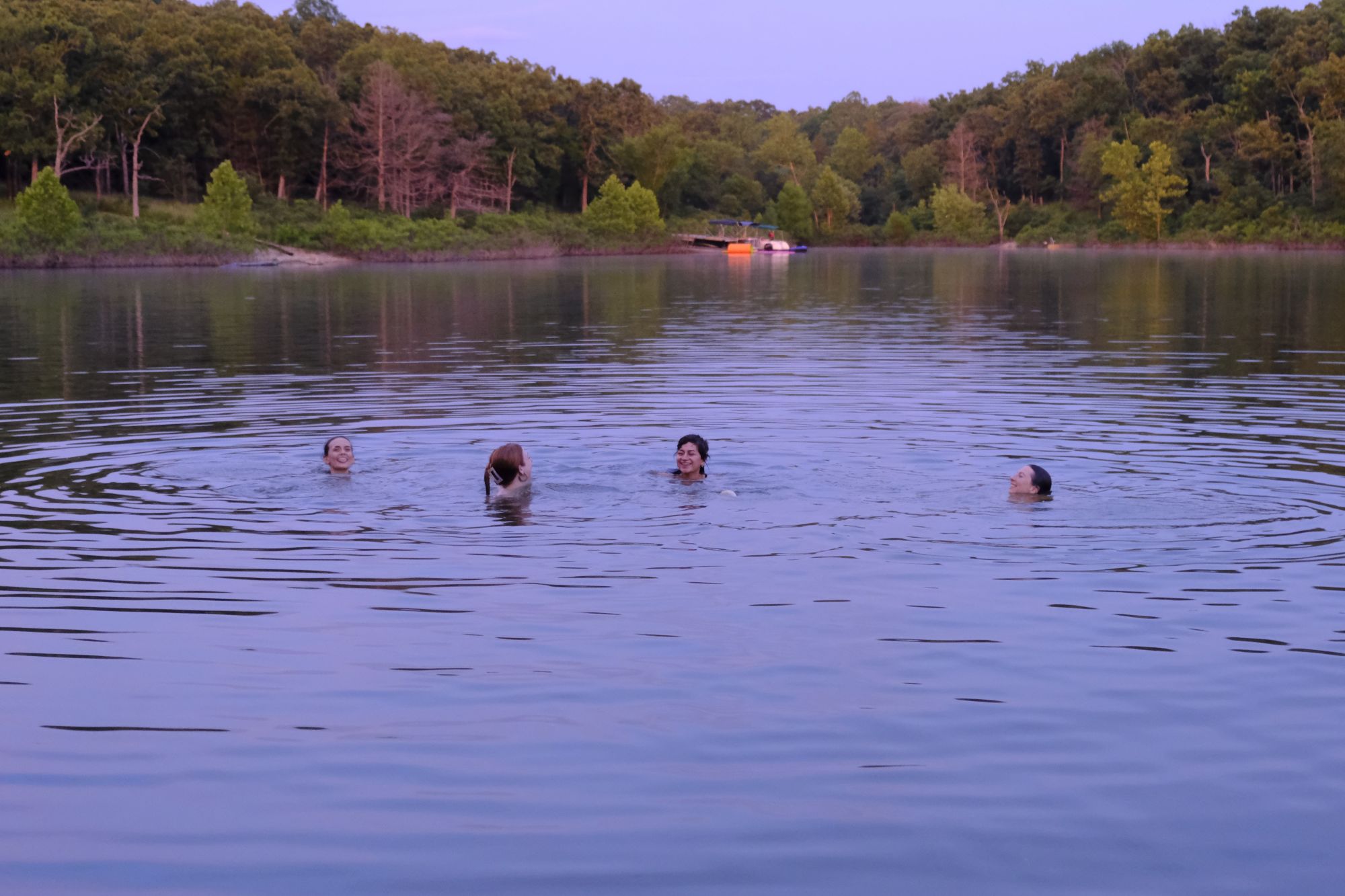
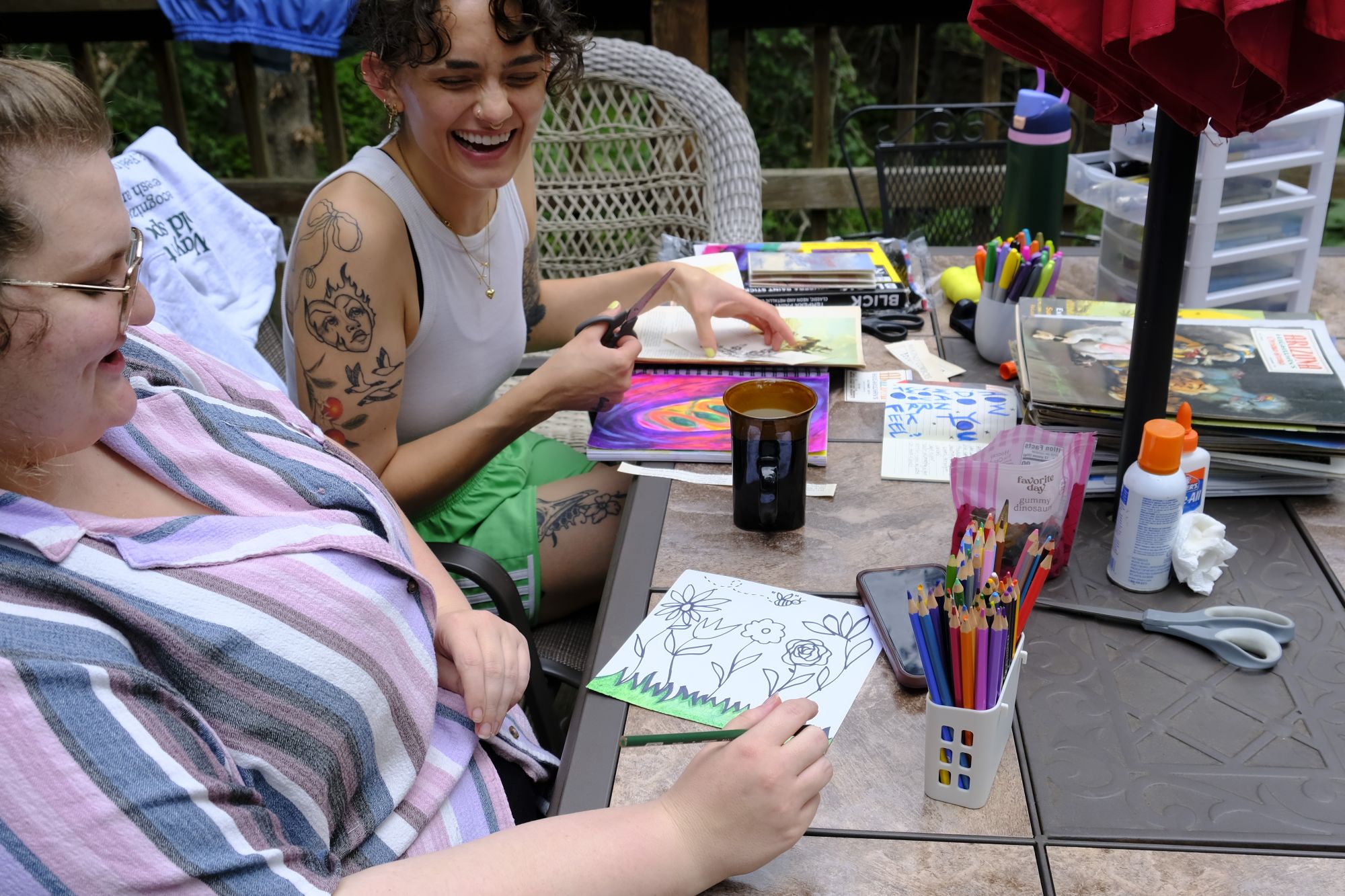
I primarily work with organizers & healers, immigrant communities, LGBTQ+ & polyam communities, neurodivergent folks, survivors of sexual trauma, & KCKPS high school students. I offer both individual and couples/relationship therapy. I’ve also really enjoyed hosting groups and a couple retreats in the last few years, and want to offer more in the future.
A lot of folks reach out to me because their interested in a more somatic and less cognitive approach to therapy. Somatic Experiencing can be effective even without talking about the story or incident we’re working on, which can be a relief to people. We can pay attention to other aspects of the self experience, including the body, to process a feeling, pattern, or event that we’re working with. Story and dialogue can be important but it’s not the whole picture, which sometimes gets missed in other therapy approaches.
Any big plans?
If everything keeps going well I’ll be a new mom in April 2026! So that will change a lot for me, in ways I don’t even know yet. I was thinking about planning another retreat next summer but that won’t be happening now. I hope to gradually return to work in the early summer and eventually offer more group work and CEU trainings. Some groups I’m excited about starting include an ADHD support group and another Book Club Therapy group.
Pricing:
- $200 intake
- $160 50 min session
- $200 50 min couples session
- sliding scale available
- I take Aetna insurance in MO
Contact Info:
- Website: https://www.capazkc.com/
- Instagram: https://www.instagram.com/capazkc
- Facebook: https://www.facebook.com/CapazKC/
- Linkedin: https://www.linkedin.com/in/katie-jones-lcsw-lscsw-sep-ryt-0648b087/
- Other: https://linktr.ee/capazkc